Abstract
Introduction
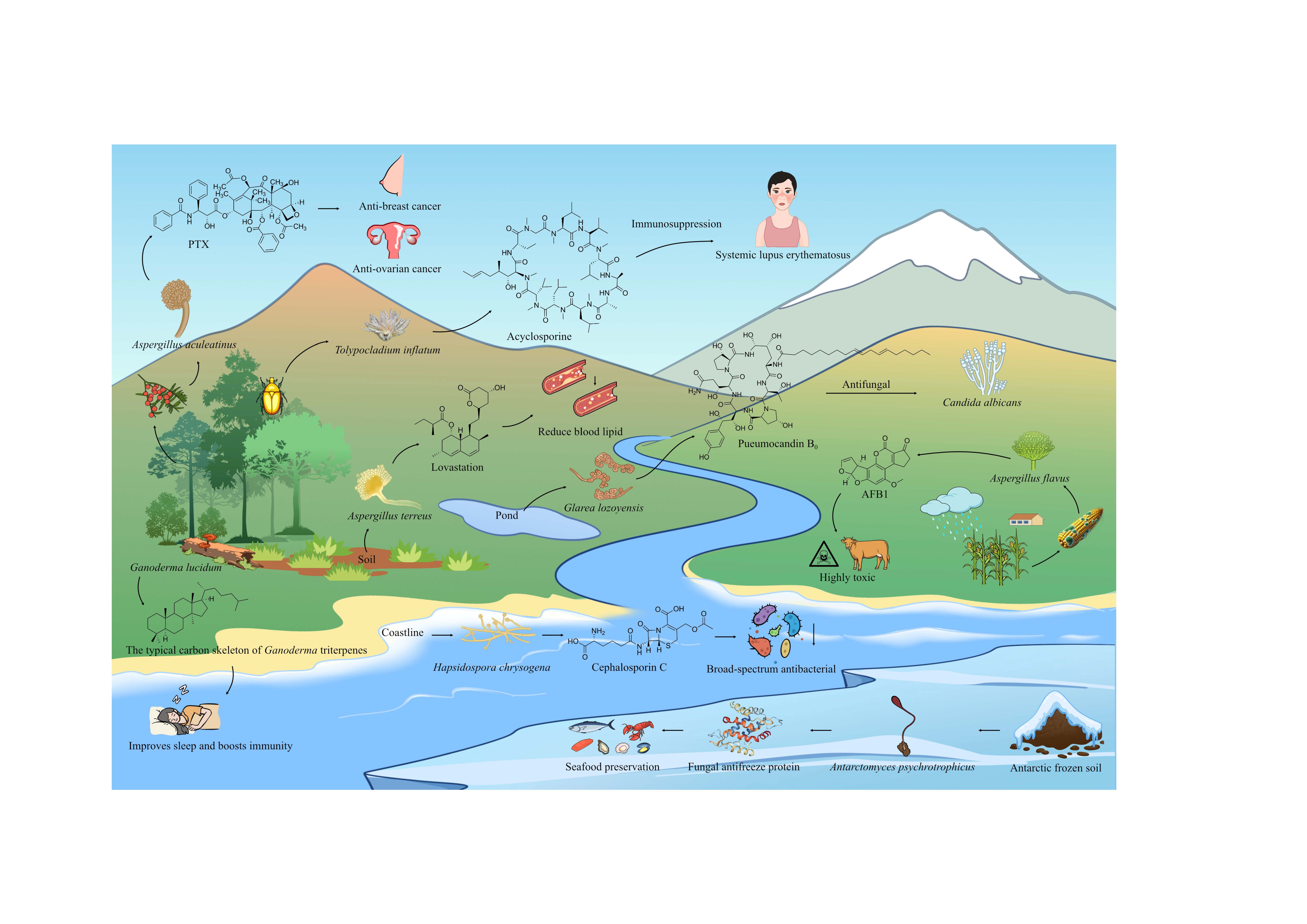
Fungi host an extensive repository of secondary metabolites, which are bioactive compounds that enable adaptation to their environment and host (Fig. 1). These metabolites often serve as defense mechanisms, allowing fungi to compete with other microorganisms. Notably, penicillin and cephalosporins, first identified as antibiotics, exemplify this function. Penicillin, produced by Penicillium species, was the first antibiotic demonstrated to effectively inhibit Gram-positive bacteria (Ligon 2004). Cephalosporins, initially obtained from the fermentation products of Cephalosporium acremonium (now known as Acremonium chrysogenum), marked the discovery of the first broad-spectrum antibiotic (Brotzu, 1945; Abraham, 1979; Bo, 2000). Additionally, many fungi produce potent toxins that aid in colonizing other organisms. For instance, aflatoxins, produced by Aspergillus flavus, are toxic to plants and carcinogenic to animals and humans (Amaike & Keller 2011; Bartholomew et al. 2021). These toxins not only suppress host defenses but also facilitate fungal colonization.
In response to environmental stress, fungi adapt by producing secondary metabolites. For example, some fungi secrete antifreeze secondary metabolites that enable survival in low-temperature environments (Xiao et al. 2010). Additionally, certain fungi produce glutathione and antioxidants to resist oxidative stress (Ogbe et al. 2020). Fungal secondary metabolites (SMs) not only serve as defense mechanisms for fungi but also have significant applications in human health and medicine. Caspofungin, derived from Glarea lozoyensis, is one of the safest and most effective antifungal drugs (Balkovec et al. 2014). Statins, obtained from Penicillium compactum and Aspergillus terreus, remain among the most effective lipid-lowering drugs (Yadav & Mohite 2020). Furthermore, the entomogenous fungi act as natural regulators of insect populations, particularly in the absence of predators or under adverse environmental conditions, where they control insect populations by infecting and killing them. Tolypocladium inflatum, a soil fungus and insect pathogen, produces the potent immunosuppressant cyclosporin, which typically targets scarab beetle larvae (Yang et al. 2018; Dong et al. 2022). The mechanism behind such interaction helps to maintain insect population balance, benefiting agriculture and forestry (Sharma et al. 2020). Additionally, macrofungi serve as natural decomposers, playing a crucial role in breaking down complex organic materials like dead plants and wood (Niego et al. 2023). For example, Ganoderma lucidum, a medicinal and edible mushroom, is rich in triterpenes and polysaccharides, which exhibit hepatoprotective and anti-tumor effects (Galappaththi et al. 2022).
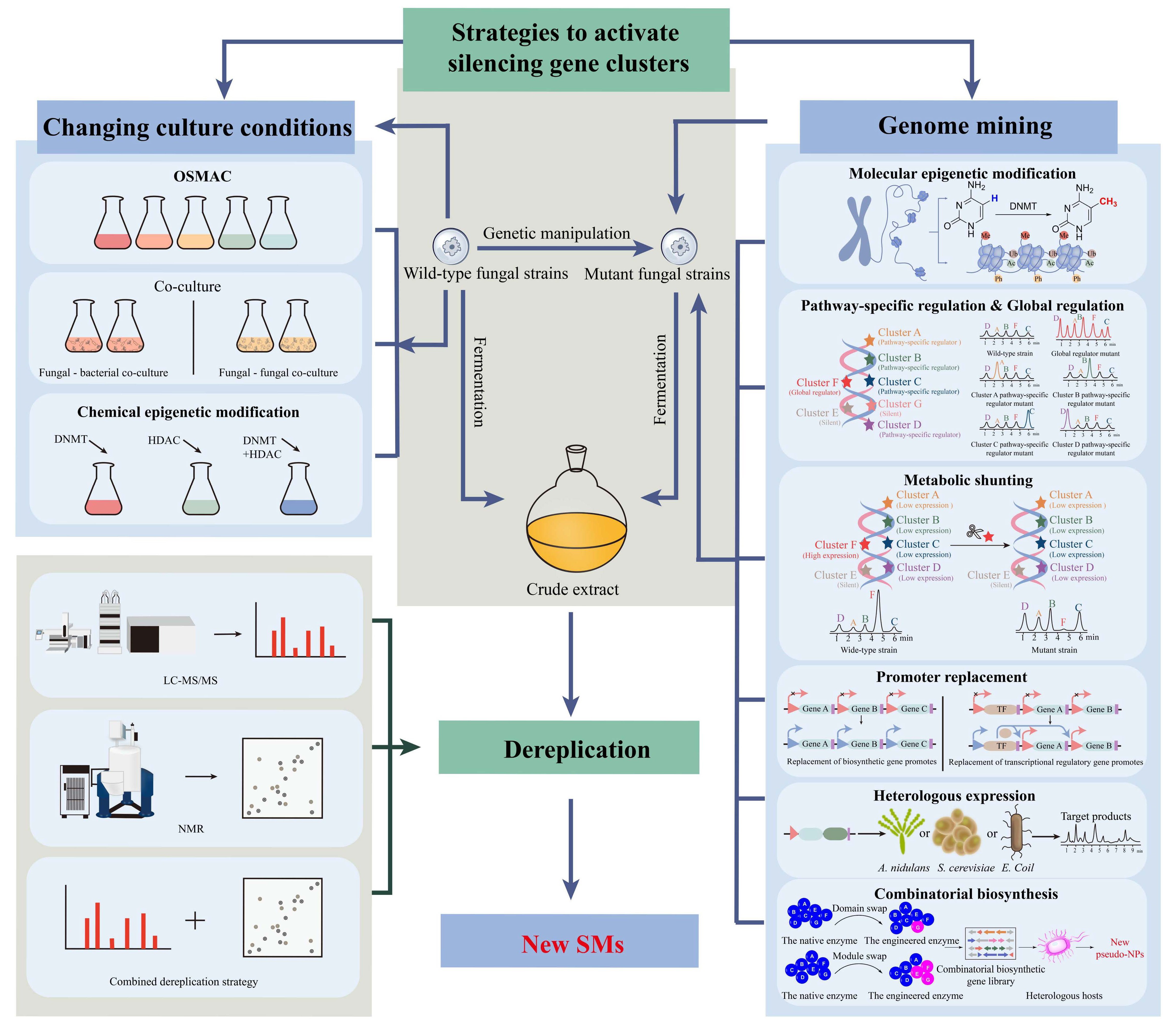
Despite the diverse functions of fungal secondary metabolites, opportunities for discovering new natural products from fungi are diminishing (Lyu et al. 2020; 2022). This trend is primarily due to the vast number of undiscovered fungal species and the tendency of biosynthetic gene clusters responsible for secondary metabolite production in many wild strains to remain dormant under laboratory conditions (Lyu et al. 2020; 2022). This review is structured as follows. First, we classify methods of activating silent gene clusters into two categories: strategies to indirectly activate biosynthetic gene clusters by optimizing culture conditions, detailed in Section 2, and approaches involving gene mining, discussed in Section 3. Second, we systematically address dereplication strategies in Section 4. Section 5 provides examples of integrated strategies for novel secondary metabolite discovery. This review comprehensively explores methods for leveraging fungal resources to discover new natural products (Fig. 2).
Strategies for activating fungal silencing biosynthesis gene clusters based on changing culture conditions
It is well-established that environmental and cultural factors significantly influence the biosynthesis of fungal secondary metabolites. Conventional culture methods are insufficient to address the increasing demand for novel chemical entities. While replicating natural conditions in the laboratory presents challenges, researchers can activate latent biosynthetic gene clusters and stimulate secondary metabolite production by modifying culture parameters, such as light exposure, temperature, pH, carbon sources, and nitrogen sources. The discovery of novel secondary metabolites through cultural adjustments encompasses various techniques, including the One Strain/Many Compounds approach, co-culturing with other microorganisms, and chemical epigenetic modifications.
One strain/many compounds’ strategies (OSMAC)
The "One Strain/Many Compounds" methodology was introduced by Bethe and Fuchser (Bethe 1994; Fuchser & Zeeck 1997) and later formalized by Hans-Jörg, who coined the term OSMAC (Schieve & Zeeck 1999). This strategy leverages the latent biosynthetic capacities of microorganisms to produce a diverse range of compounds by modulating culture conditions, including medium composition, environmental parameters, and cultivation techniques (Pan et al. 2019). Key adjustable factors include nutrient composition, temperature, oxygen levels, pH, light exposure, metal ion concentrations, physical growth medium (solid vs. liquid), agitation, salinity, and culture maturity (Pan et al. 2019; Salim et al. 2021).
Changes in culture medium composition
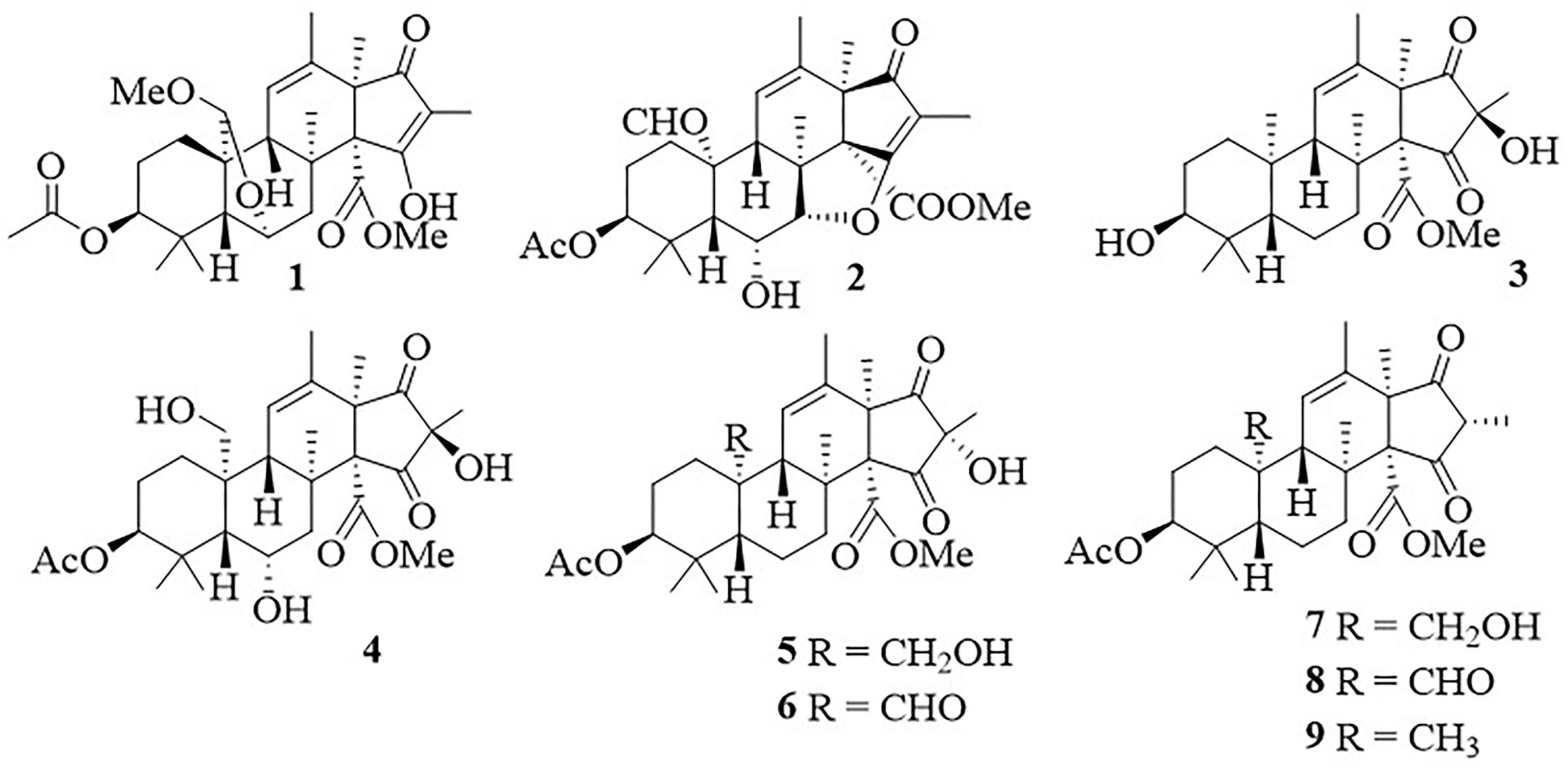
Carbon and nitrogen sources are primary nutrients that significantly influence microbial metabolism, providing essential building blocks for the biosynthesis of secondary metabolites (Satyanarayana 2013; Xie et al. 2019). These studies studied the deep-sea-derived fungus Penicillium allii-sativi (MCCC 3A00580) and identified three androstanes from rice fermentation products. When the rice culture medium was replaced with an oat culture medium, nine new andrastones (1–9) were discovered (Xie et al. 2021). This finding suggests that optimizing the carbon-to-nitrogen (C/N) ratio enhances the exploration of andrastones. Among these compounds, compound 1 features a novel hemiketal moiety, while compound 2 represents the first reported example of a tetrahydrofuran moiety linked via C-7 and C-15 (Fig. 3) (Xie et al. 2021).
Altering pH
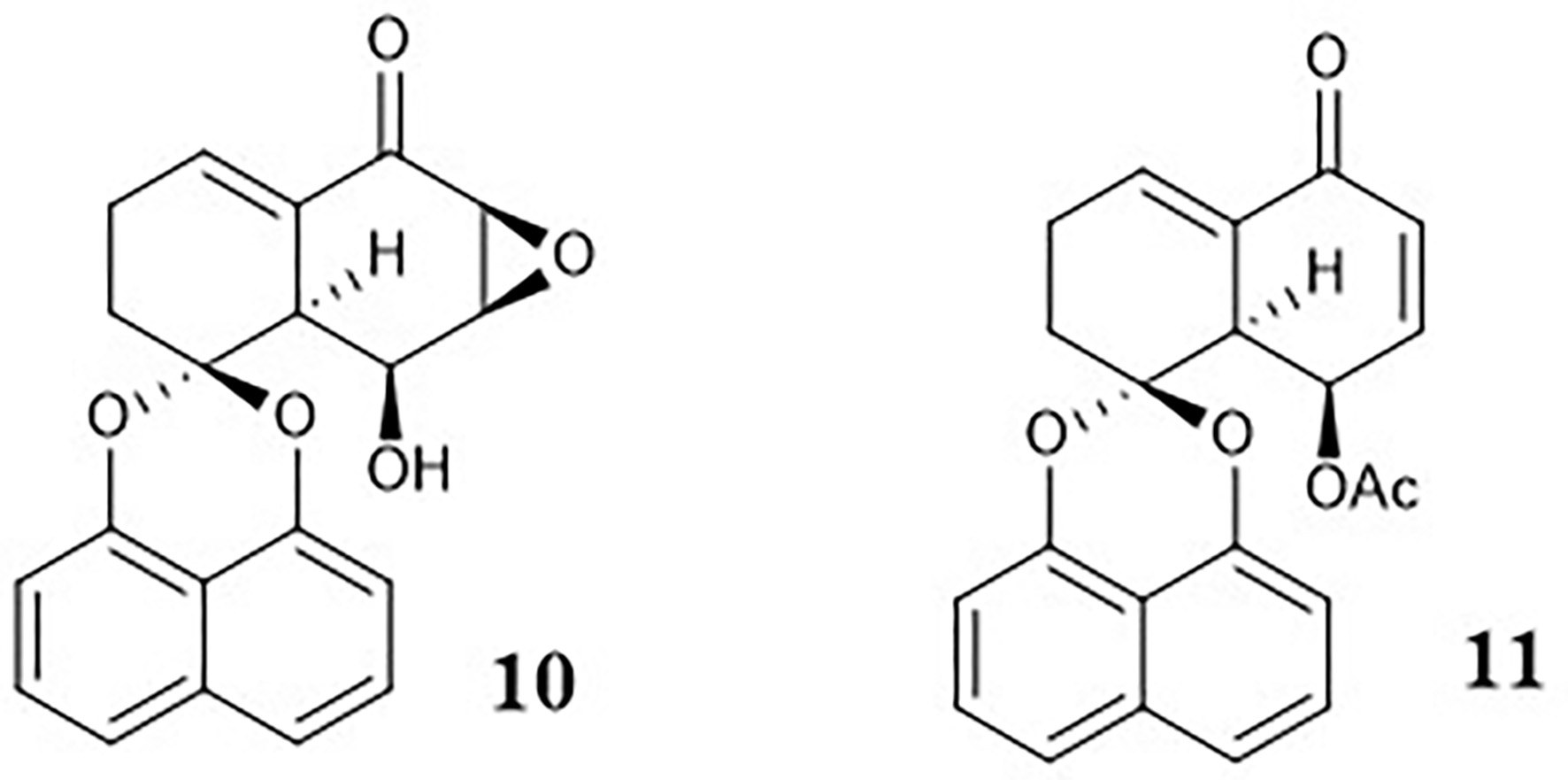
The pH is a key factor influencing fungal growth and the production of secondary metabolites. The production of trichothecene in Fusarium graminearum depends on the pH of the medium and is regulated by the pH regulatory factor pac gene (Merhej et al. 2011). Siridechakorn et al. (2017) also demonstrated that the endophytic fungus Rhytidhysteron rufulum AS21B produces significantly more diverse spirobisnaphthalene derivatives (10–11) (Fig. 4) under acidic conditions (pH ∼ 5) compared to neutral conditions.
Adjusting fermentation time
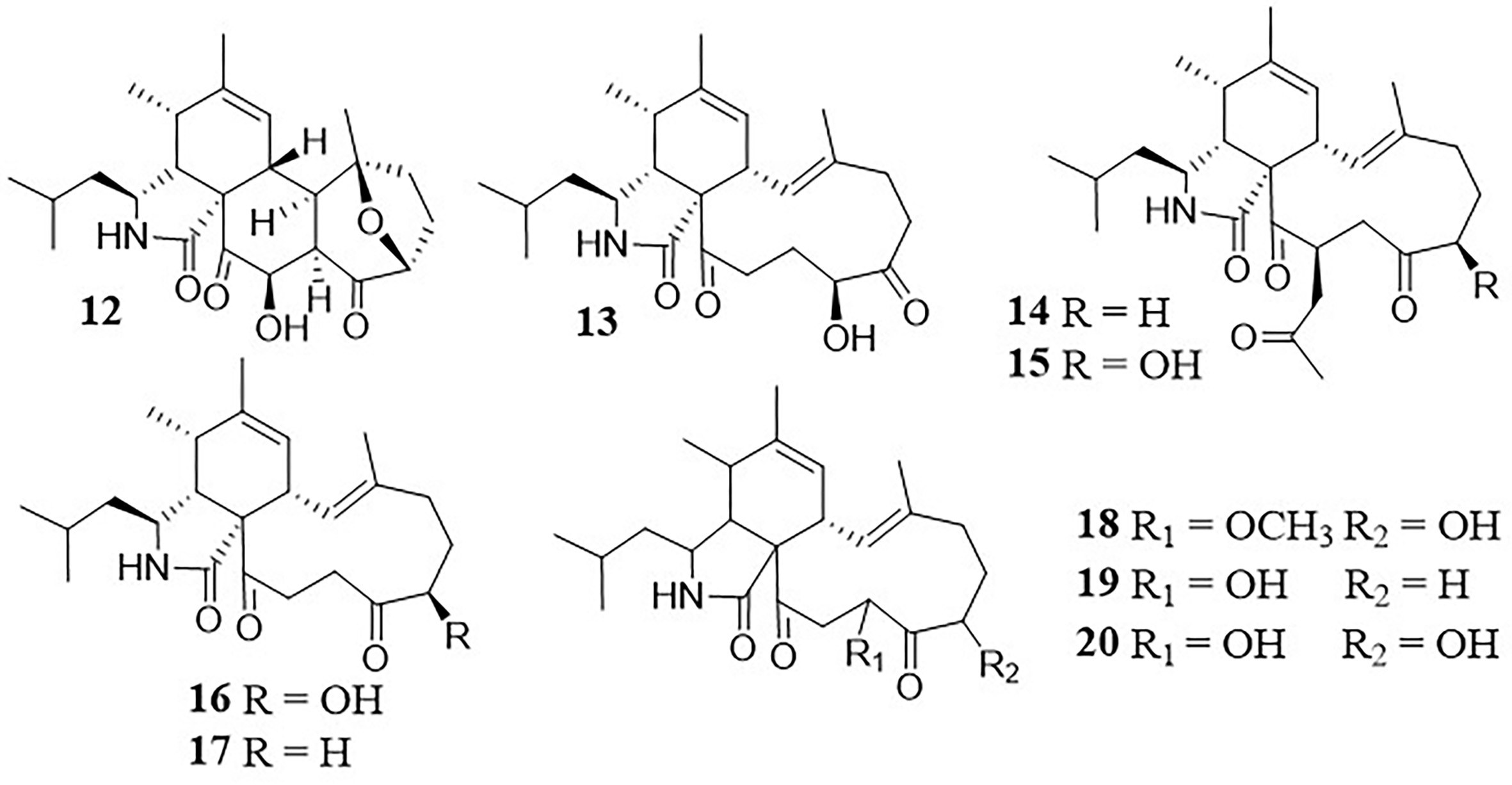
Lin et al. (2009) employed One Strain/Many Compounds strategies to study the marine-derived fungus Spicaria elegans, identifying various secondary metabolites at different fermentation times. After 8 days of fermentation, they isolated spicochalasin A (12) (Fig. 5), five new aspochalasins (M–Q) (13–17) (Fig. 5), and two known aspochalasins. Extending the fermentation period to 14 days resulted in the discovery of three new aspochalsins (R-T) (18–20) (Fig. 5). These findings were further supported in a subsequent study by Lin et al. (2010).
Altering culture media
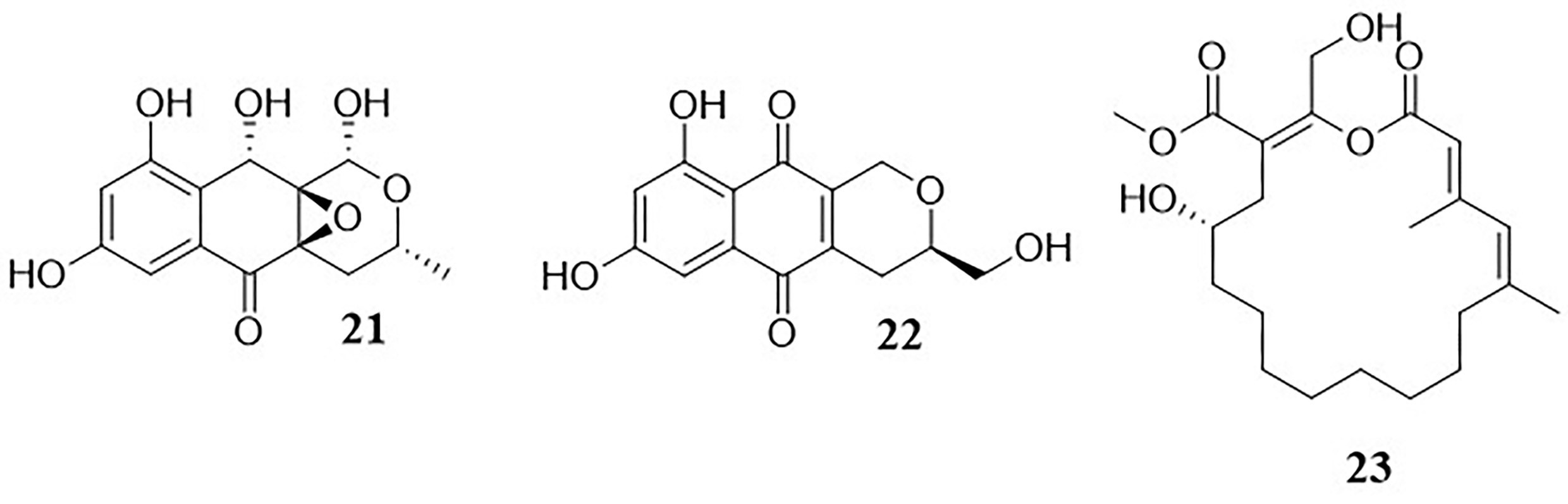
Xie and colleagues (2022) investigated the rice fermentation products of the soil-derived fungus Phialocephala sp. YUD18001 and identified its capacity to produce lactones featuring 12-, 6-, and 5-membered rings. Upon transitioning the culture medium from rice to PDB, they discovered two novel pyranonaphthoquinones, phialoyxinones A (21) and B (22), along with the new 18-membered ring lactone, phialoyxtone (23), and five known pyranonaphthoquinone derivatives, as shown in Fig. 6 (Xie et al. 2023). Compound 22 demonstrated significant in vitro cytotoxicity against five human cancer cell lines (HL-60, SMMC-7721, A549, MCF-7, and SW480), with IC50 values ranging from 11.80 to 19.32 μM. Furthermore, compounds 22 and 23 exhibited moderate acetylcholinesterase (AChE) inhibitory activity, as previously reported (Xie et al. 2023).
Adjusting oxygen concentration
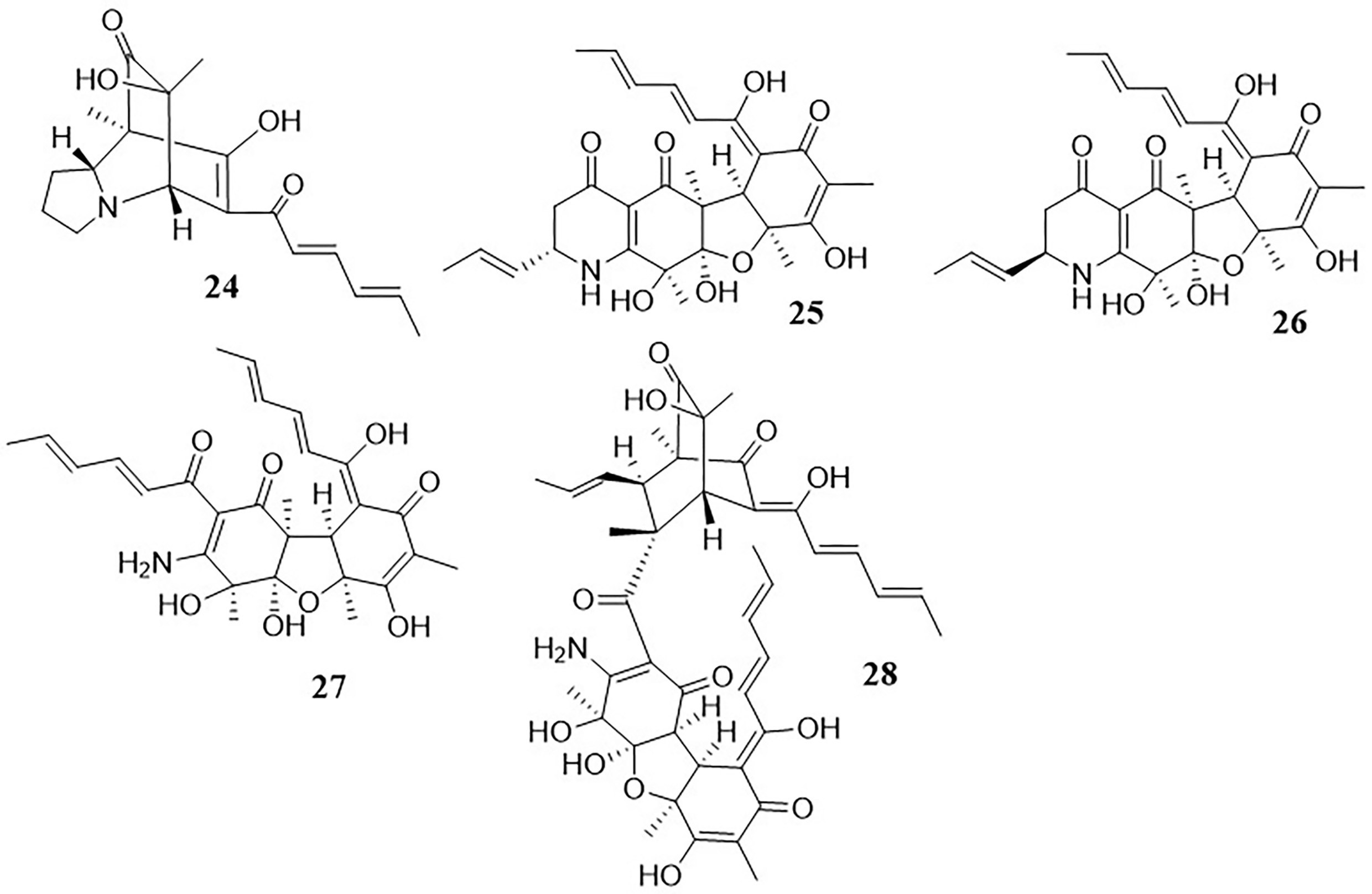
Oxygen levels significantly influence microbial respiration and metabolism. Research has shown that early-branching fungi produce a variety of secondary metabolites under anaerobic conditions (Swift et al. 2021). Guo et al. (2013) changed the fermentation method of the deep-sea-derived fungus Penicillium sp. F23−2 from static to agitated culture in YPG medium, resulting in the discovery of five new nitrogen-containing sorbicillinoids, sorbicillamines A−E (24−28), via shaker fermentation (Fig. 7).
Altering fermentation temperature
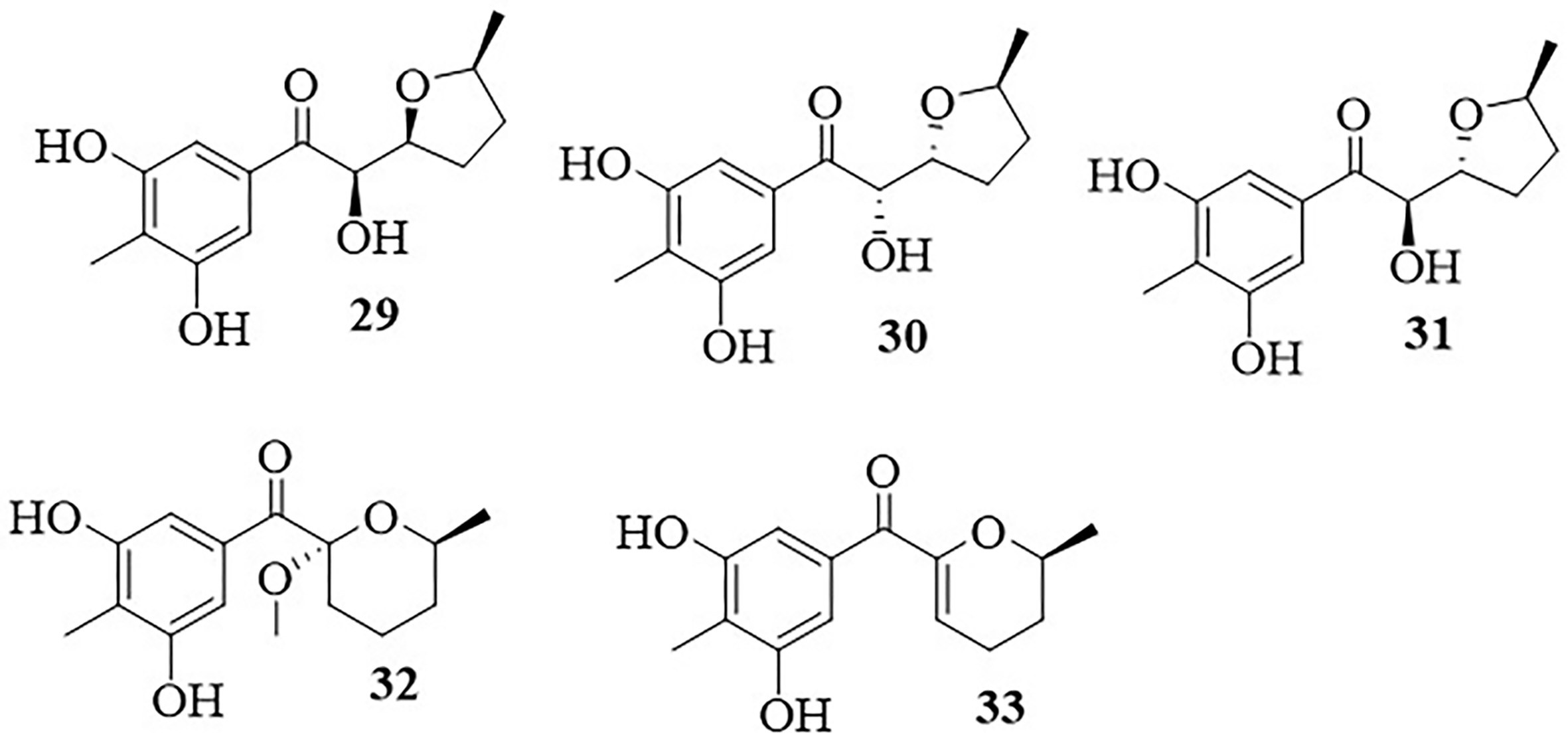
Temperature significantly influences fungal metabolism. Investigations into the antimicrobial properties of fungi isolated from Arctic and Antarctic regions revealed that their antimicrobial activity is dependent upon secondary metabolite profiles, which vary across different temperatures (Yogabaanu et al. 2017). In a study by Liu et al. (2018), the fermentation temperature of Penicillium raistrickii was reduced from 28 °C to 15 °C, resulting in the isolation of five novel polyketides (PKs), namely raistrickiones A–E. (29–33) (Fig. 8).
Adding halide ions
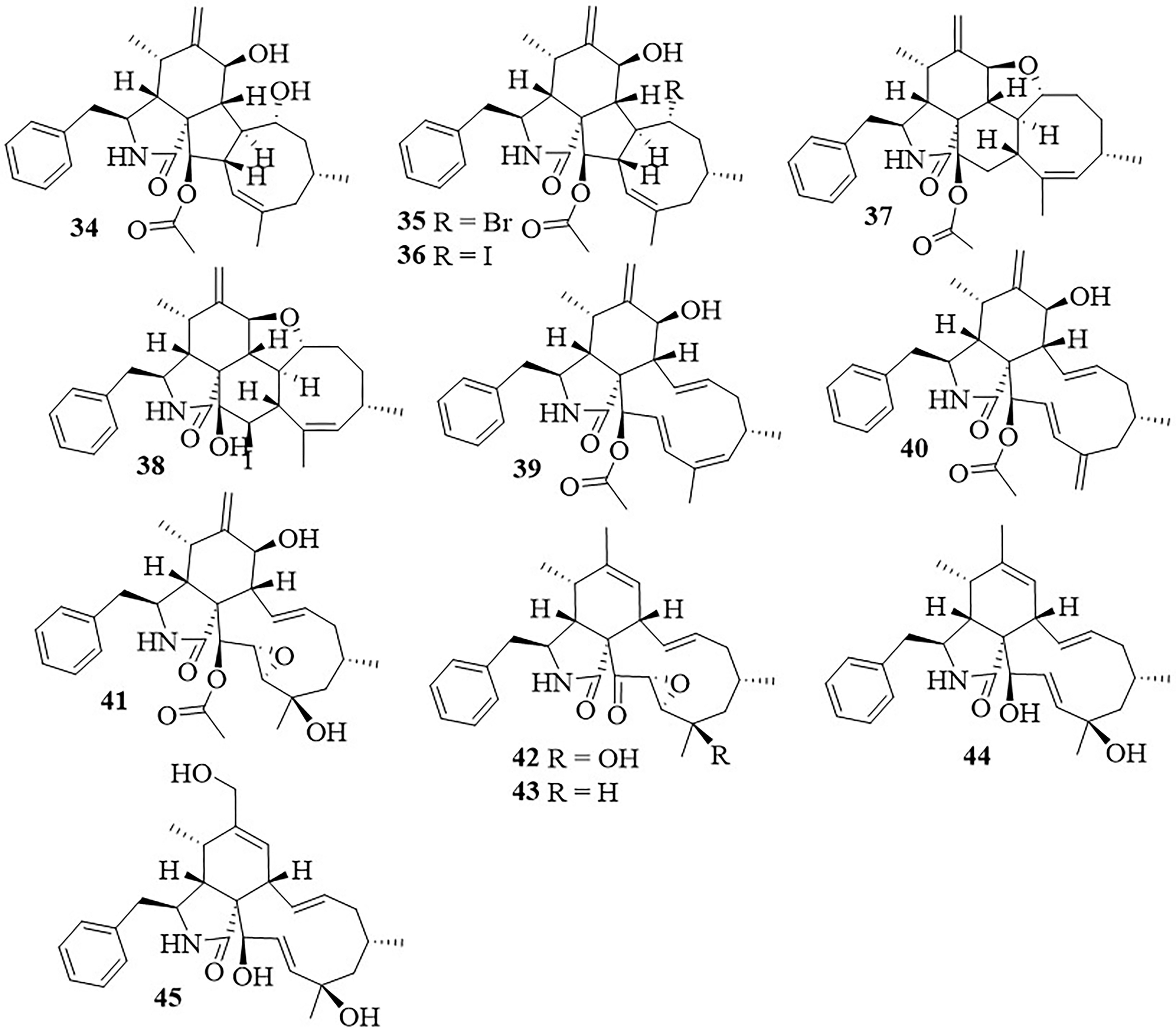
Salinity exerts a significant influence on microorganisms, particularly in aquatic environments, affecting their cellular osmotic pressure and capacity for environmental adaptation. Chen et al. (2022) investigated the effects of salinity on the mangrove-derived fungus Phomopsis sp. QYM-13 by incorporating 3% NaBr or 3% KI into its potato liquid medium. This approach facilitated the discovery of 12 novel cytochalasins, designated as phomopchalasins D−O (34−45) (Fig. 9). Notably, compounds 34 and 38 represent the first reported iodinated cytochalasins. Additionally, compound 35 demonstrated substantial cytotoxic activity against the human cancer cell line MDA-MB-435, with an IC50 value of 7.4 ± 1.5 μM.
Adding metal ions
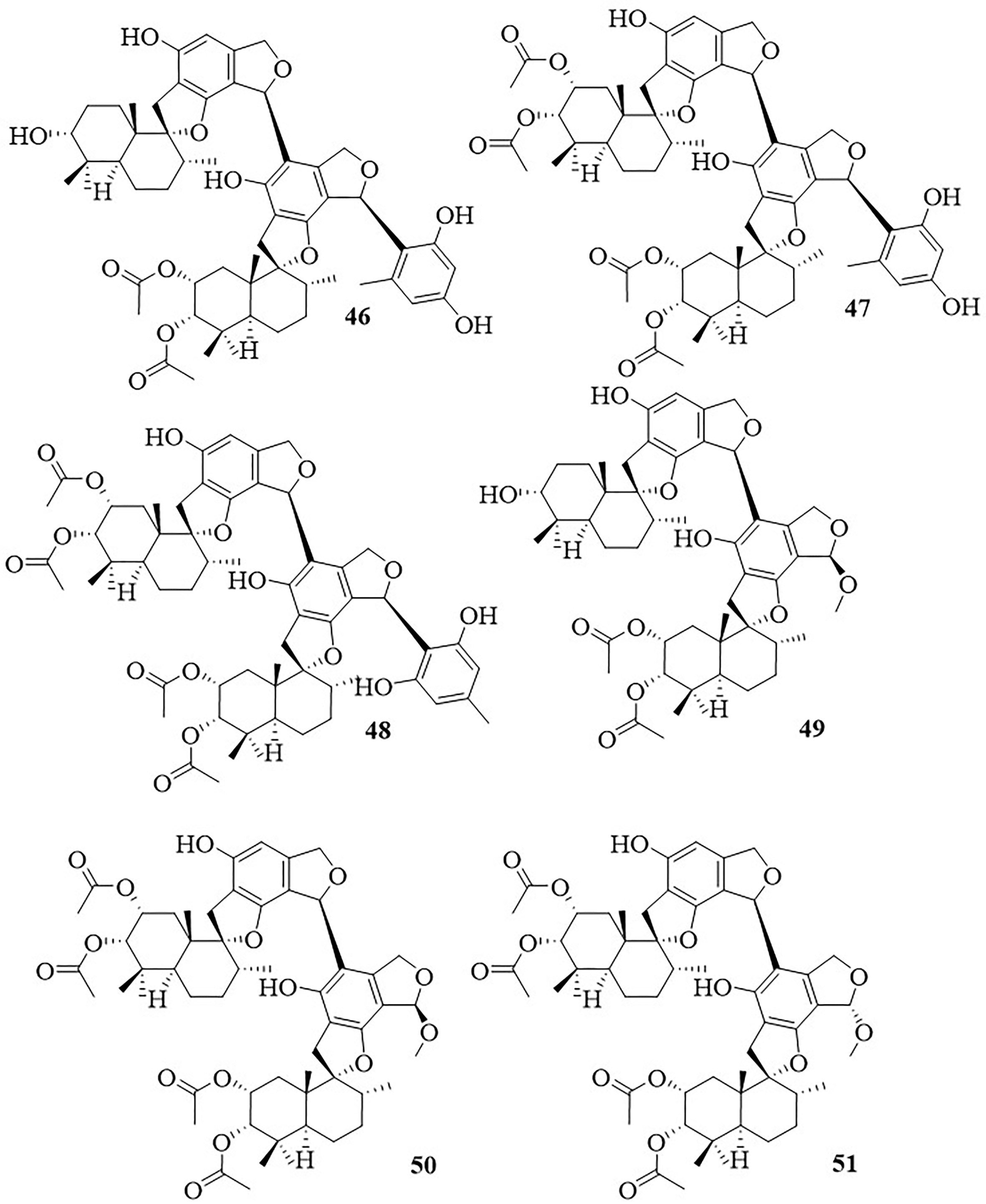
Metal ions are essential trace elements in microbial metabolism and serve as important cofactors for many enzymes involved in fungal secondary metabolite synthesis (Satyanarayana 2013). In a study by Lin et al. (2022), a rice medium supplemented with 0.1% FeSO4·7H2O and 3% sea salt was used to culture a coral-derived fungus, Stachybotrys chartarum. This led to the discovery of six novel dimeric phenylspirodrimanes, named distachydrimanes A–F (46–51) (Fig. 10). Notably, three compounds (45, 50, and 51) exhibited significant inhibitory effects on cell proliferation.
Adding organic small-molecule precursors
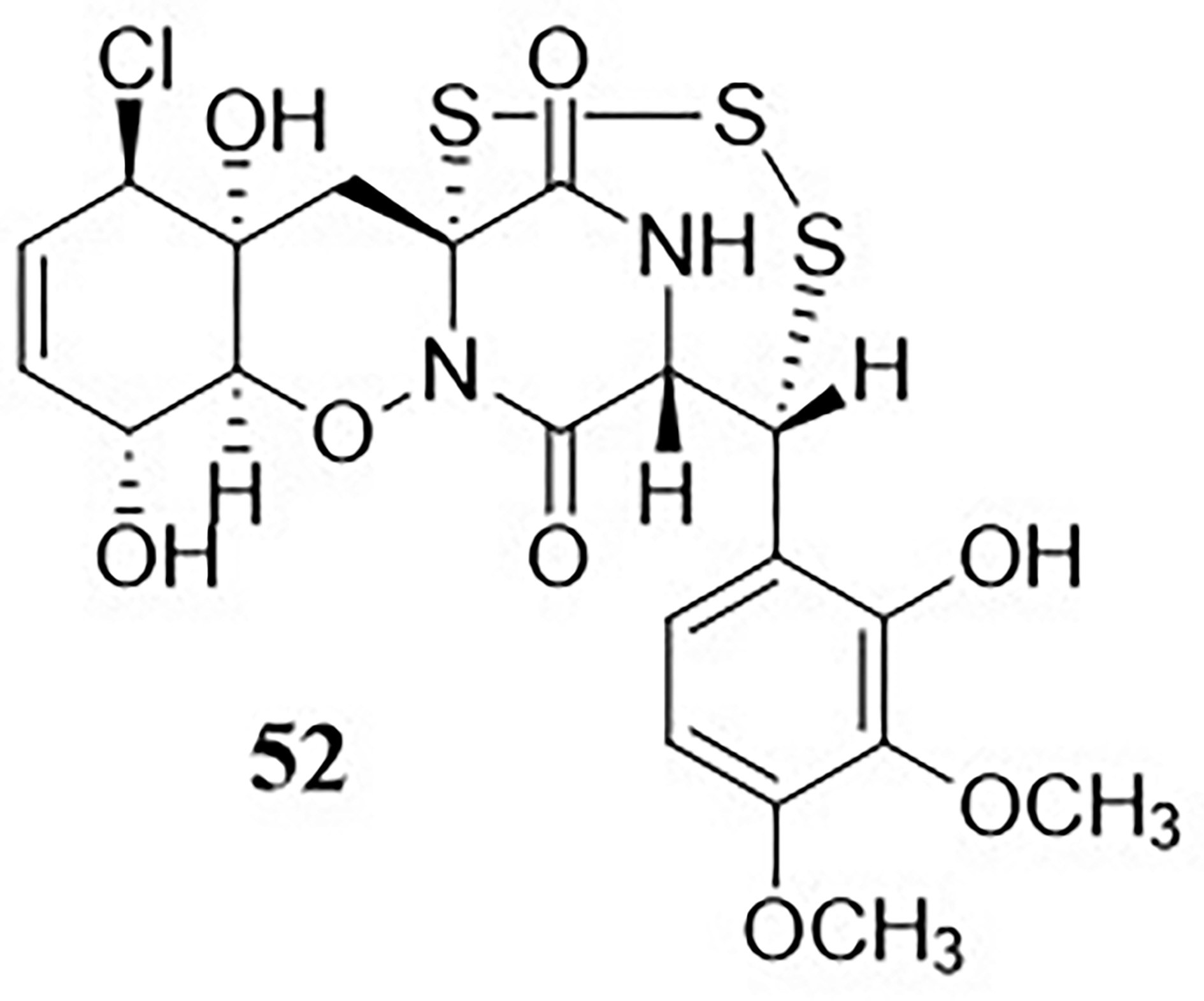
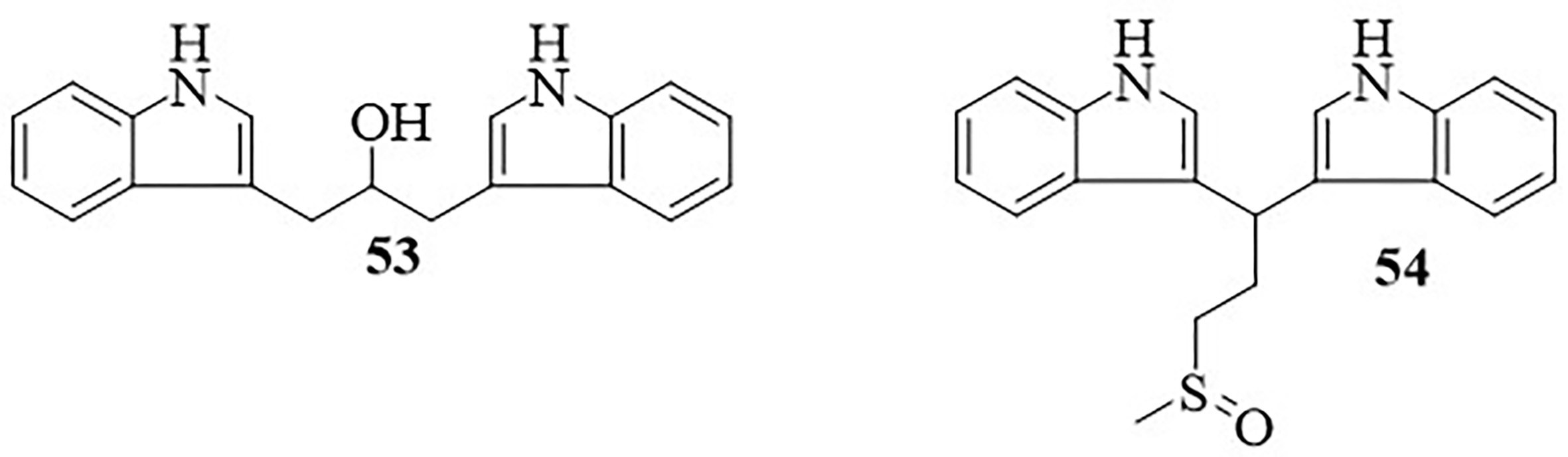
The incorporation of biosynthetic precursors, such as amino acids or solvents, can significantly influence metabolic pathways. In a study by Yamazaki et al. (2015), the natural seawater medium of the marine-derived fungus Trichoderma sp. strain TPU199 was supplemented with dimethyl sulfoxide (DMSO), leading to the production of an unprecedented trithio-derivative of epidiketopiperazine, specifically chlorotrithiobrevamide (52) (Fig. 11). Similarly, Yuan et al. (2019) supplemented the glucose–peptone–yeast (GPY) medium of the marine fungus Pseudallescheria boydii with L-tryptophan, L-phenylalanine, L-methionine, and L-threonine. This modification resulted in the isolation of two new bisindole alkaloids, pseudobindole A (53) and pseudobindole B (54), as well as 11 known indole alkaloids (Fig. 12).
Emerging techniques in OSMAC
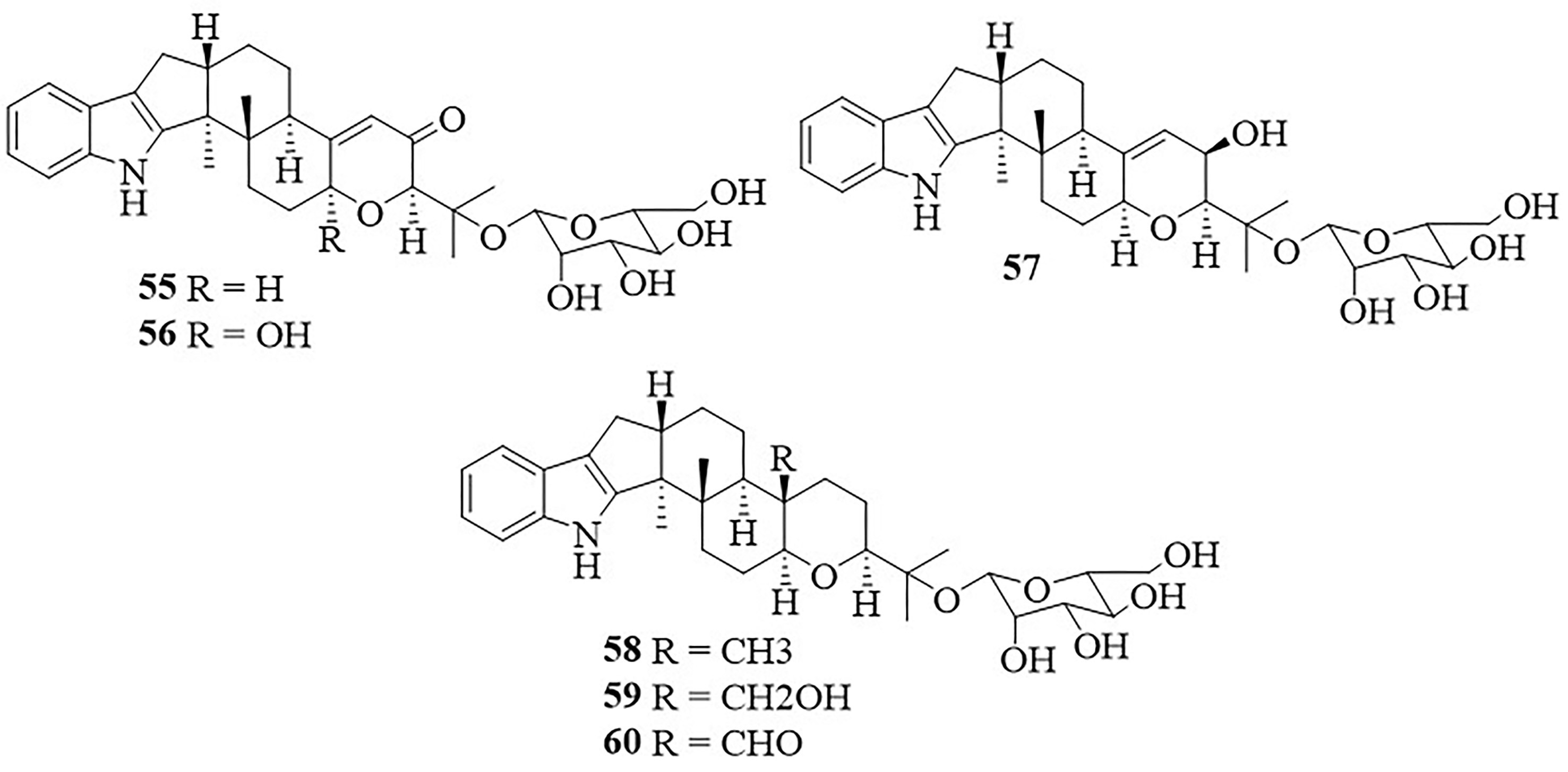
Experimental manipulation of culture conditions can stimulate microbial strains to produce diverse secondary metabolites (Bode et al. 2002; Pan et al. 2019). However, this approach requires substantial laboratory resources, including space, consumables, and personnel, particularly when applied to large-scale solid or flask-based fermentation processes. These challenges are compounded by slow-growing microbial strains (Salim et al. 2021). To address these limitations, the micro-matrix microbioreactor system has been developed. This innovative system enables the parallel execution of complex and time-intensive experiments, facilitating rapid and reproducible microbial cultivation under various media conditions in shaken, static liquid, and solid phases (Salim et al. 2021; D’Ambrosio et al. 2021). Kankanamge et al. (2023) utilized a miniaturized 24-well plate system (MATRIX) for cultivation profiling, optimizing the growth conditions for the marine-derived fungus Aspergillus noonimiae strain CMB-M0339. This approach yielded the identification and characterization of a new series of indole diterpenes, noonindoles G–L (55–60) (Fig. 13) (Kankanamge et al. 2023).
Microbial interactions (co-culture)
While fungi are often cultivated individually in laboratory settings, they naturally inhabit complex communities crucial for ecosystem functioning and stability. The long-term co-evolution of these microbial communities has fostered diverse interaction types, including symbiosis, mutualism, collaboration, competition, parasitism, and predation (Webster 2014). Secondary metabolites, though not essential for microbial growth, are pivotal signaling molecules facilitating metabolic exchange and responses to external stimuli. These metabolites act as a "Rosetta Stone" for interspecies communication (Phelan et al. 2012; Zhang et al. 2022b). Recognizing this, co-culture strategies have been developed to activate silent biosynthetic gene clusters, aiding in the discovery of novel natural products (Bertrand et al. 2014; Peng et al. 2021). Fungal co-culture systems are primarily categorized into fungal-bacterial and fungal-fungal co-cultures based on community composition and ecological relationships (Steffan et al. 2020; Knowles et al. 2022).
Fungal–bacterial co-culture
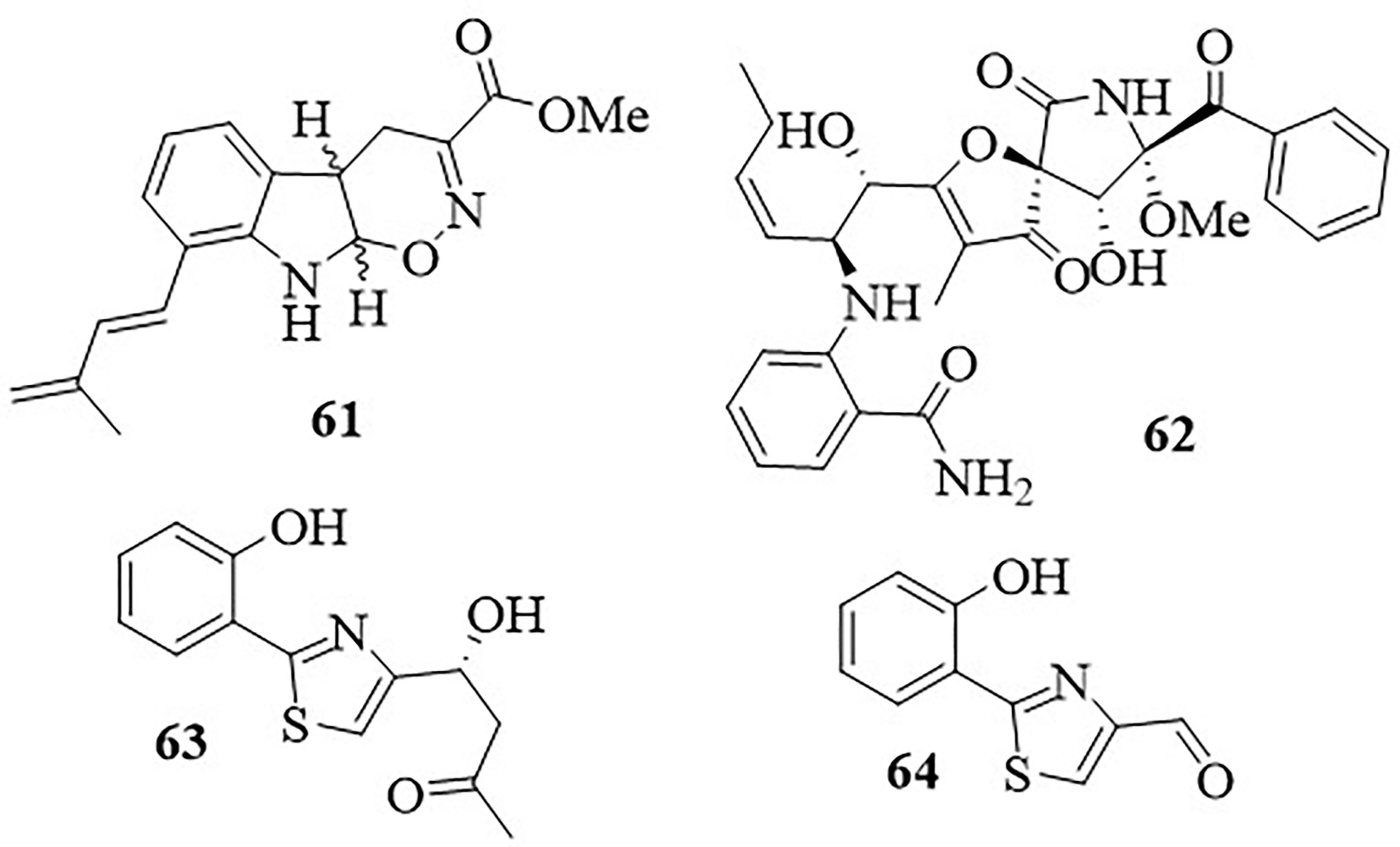
Fungi and bacteria coexist in complex natural communities that play crucial roles in ecology, agriculture, and human health (Steffan et al. 2020; Espinosa-Ortiz et al. 2022). Numerous studies have shown that co-culturing fungi with different bacteria in laboratory settings can trigger the expression of silent gene clusters, leading to the production of novel secondary metabolites (Ran & Yin 2023). The famous example is the accidental discovery of penicillin in a culture of Staphylococcus aureus contaminated by Penicillium notatum (Fleming 1929). Since then, hundreds of co-cultivation studies have been reported for the mining of natural products, especially new molecules not detected in monocultures. For instance, Wakefield et al. (2017) co-cultured the marine-derived fungus Aspergillus fumigatus strain MR2012 with the hyper-arid desert bacterium Streptomyces leeuwenhoekii strain C34, which induced the production of a new luteoride derivative, luteoride D (61), and a new pseurotin derivative, pseurotin G (62) (Fig. 14). Additionally, co-culturing the same fungus with Streptomyces leeuwenhoekii strain C58 doubled the titer of chaxapeptin compared to monocultures of the bacterium (Wakefield et al. 2017). Another example involves the co-cultivation of Pantoea aggolomerans, a bacterium associated with durum wheat roots, and Penicillium citrinum, a fungus derived from date palm leaves, which led to the isolation of two new pulicatin derivatives (63−64) (Fig. 14) (Thissera et al. 2020).
Fungal–fungal co-culture
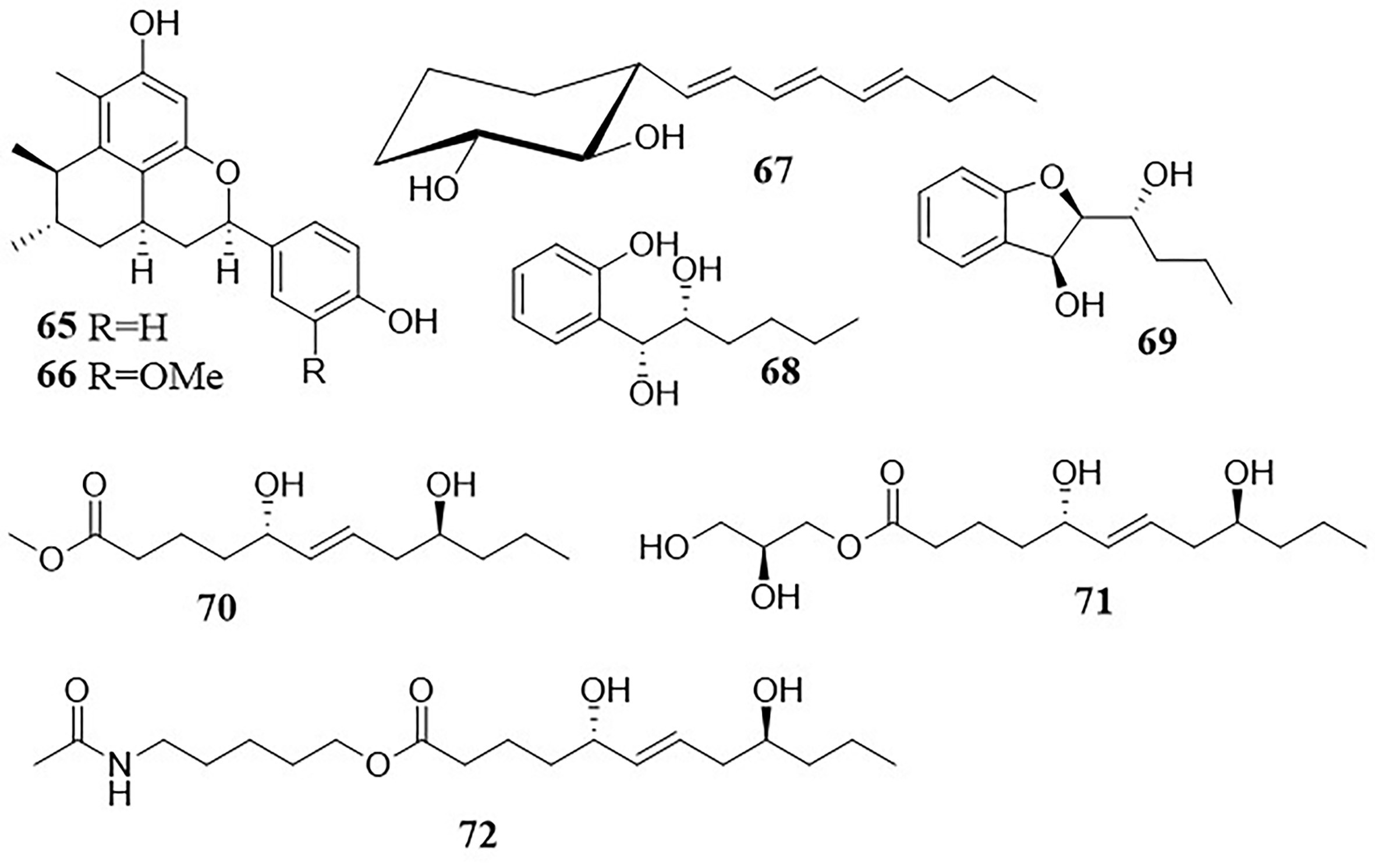
Fungi are ubiquitous in nature and naturally compete with one another in their environments. This competition frequently induces the biosynthesis of secondary metabolites for defense (Knowles et al. 2022). For example, citrifelins (65-66) (Fig. 15), which possess a unique tetracyclic framework, were characterized from the co-culture of Penicillium citrinum with Beauveria felina (Meng et al. 2015). A co-culture of two marine fungi demonstrated the activation of a rare class of 2-alkenyl-tetrahydropyran, chaunopyran A (67) (Fig. 15), and the deactivation of the antifungal metabolite pyridoxatin, leading to the formation of methyl-pyridoxatin. This observation highlights a complex offensive and defensive interaction between fungi (Shang et al. 2017). When co-cultured, the endophytic fungus Phoma sp. strain YUD17001 (isolated from Gastrodia elata) with Armillaria sp. in a liquid nutrient medium produced five novel secondary metabolites including two phenolic compounds, hexanediol A and B (68 and 69) (Fig. 15), and three aliphatic ester derivatives, phomesters A–C (70–72) (Fig. 15). The co-cultivation of the endophytic fungus Epicoccum dendrobii with the model fungus Aspergillus nidulans and other filamentous fungi resulted in significant changes in secondary metabolites (Wang et al. 2022), offering new insights into the exploration of fungal secondary metabolites during fungal-fungal interactions.
Advances in co-culture techniques
While co-culture strategies effectively activate silent gene clusters, they are labor-intensive and require extensive preliminary screening. Recently, the development of modular co-culture engineering and microfluidic platforms has successfully overcome the technical barriers of traditional co-culture methods, leading to significant breakthroughs, particularly in high-throughput screening and quantitative biology (Park et al. 2011; Bai et al. 2018; Tan et al. 2020; Wang et al. 2020b).
Modular co-culture engineering. Moular co-culture engineering represents a novel and promising approach for the advanced engineering of biosynthetic pathways (Zhang & Wang 2016). This strategy has facilitated the development of sophisticated artificial microbial co-cultures. Compared to monoculture systems, modular co-culture engineering reduces the metabolic burden on individual strains, thereby enhancing overall bioproduction and bioconversion performance. The diverse cellular environments provided by multiple strains enable the functional expression of different pathway genes. For instance, the biosynthesis of taxol precursors was significantly improved using co-cultures of Escherichia coli and Saccharomyces cerevisiae (Zhou et al. 2015). This approach also minimizes unwanted interactions between pathway modules and offers flexibility in balancing biosynthetic activities among them. Researchers have successfully implemented modular co-culture engineering by designing, regulating, and optimizing metabolic pathways in model strains of E. coli and S. cerevisiae, leading to the production of various natural products (Wang et al. 2020b). Although modular co-culture engineering presents significant advantages, challenges such as maintaining the co-existence of constituent strains and stabilizing their population ratios remain obstacles to large-scale industrial applications.
Microfluidics co-culture platform. Current microfluidic platforms are primarily categorized into droplet-based microfluidics and channel-based microfluidics (Bai et al. 2018). The droplet-based microfluidic co-culture platform uses microfluidic droplets as nanoscale bioreactors to culture microorganisms, enabling the creation of artificial microbial communities, including those involving previously "uncultivable" microorganisms (Park et al. 2011; Jackman et al. 2019; Tan et al. 2020). This platform supports high-throughput studies of interspecies interactions. In contrast, the channel-based microfluidic co-culture platform enables precise manipulation of microscale continuous flow within microchannels and chambers, allowing for accurate control of biological samples (Bai et al. 2018; Burmeister & Grünberger 2020). It facilitates both qualitative and quantitative studies of microbial interactions, thereby expanding the capabilities of quantitative biology. Xu et al. (2024) developed a customized microfluidic chip and integrated it with a mathematical model to precisely regulate the biosynthesis of secondary metabolites in the model fungus Aspergillus nidulans, enabling the quantitative synthesis of dendrobiums. Furthermore, the specialized microfluidic chip designed for filamentous fungi can accommodate up to eight strains simultaneously.
Challenges in co-culture strategies. Despite their promise, co-culture strategies face several challenges. First, selecting and combining interacting strains in microbial co-culture systems is largely random, requiring extensive preliminary screening, which introduces uncertainty in the activation of silent gene clusters. Second, microbial interactions are complex and dynamic, often influenced by culture conditions, leading to instability in metabolite production. Finally, the bioactive molecules secreted during these interactions are often present in trace amounts, making detection and identification difficult.
Epigenetic regulation strategy
The concept of epigenetics was first proposed by Waddington (2012). It involves the regulation of gene expression at the chromatin level, affecting cellular and organismal characteristics without altering the DNA sequence (Marø 2020). Key epigenetic mechanisms include DNA methylation, histone modifications, and non-coding RNAs (Li et al. 2020). These processes enable cells to adapt to environmental changes and life experiences by adjusting gene expression without modifying the genome. Since epigenetics influences all stages of growth and development, interventions targeting fungal epigenetics can significantly impact the biosynthesis of their secondary metabolites. Studies on the epigenetic regulation of fungal secondary metabolites have shown that adding small-molecule epigenetic enzyme inhibitors to culture media or employing molecular epigenetic modification techniques can stimulate fungi to produce novel secondary metabolites (Bind et al. 2022; Xue et al. 2023). Molecular epigenetic modification strategies involve genetically transforming strains by knocking out or overexpressing genes encoding epigenetic-related enzymes. These transformed strains are then cultured to produce new secondary metabolites or enhance the yields of specific target products (Xue et al. 2023). A detailed discussion of this topic is provided in Chapter 3.
Chemical epigenetic modification
Chemical epigenetic modification involves using enzyme inhibitors to influence fungal gene expression. These inhibitors primarily fall into two categories: DNA methyltransferase inhibitors (DNMTs) and histone deacetylase inhibitors (HDACs) (Prakash et al. 2024).
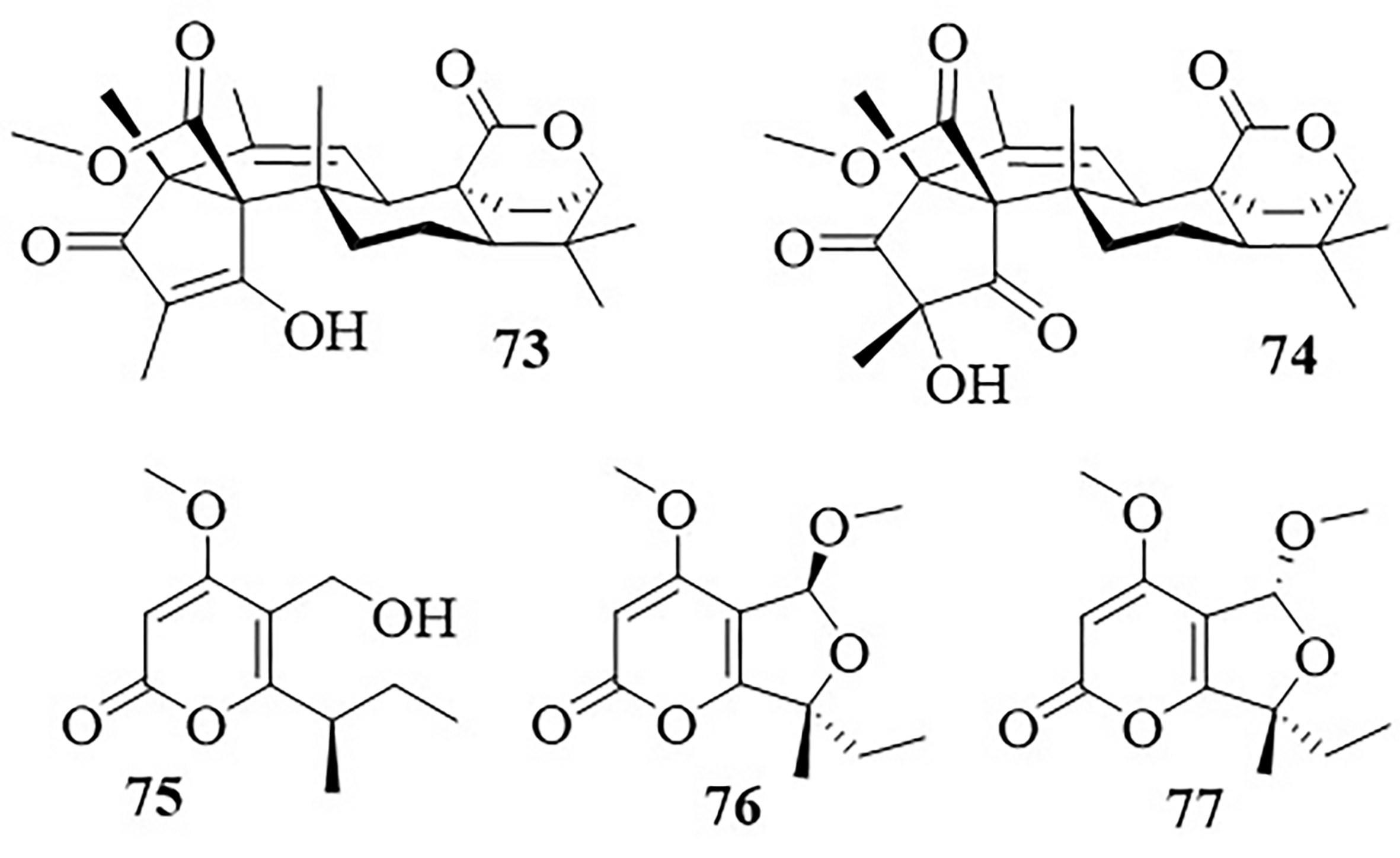
DNA methyltransferase (DNMT) inhibitors. DNA methylation is a chemical modification where a methyl group (-CH3) attaches to cytosine in DNA, forming 5-methylcytosine. This process, catalyzed by DNA methyltransferases (DNMTs), plays a critical role in regulating gene expression and influencing cellular differentiation, development, and function (Prakash et al. 2024). DNMT inhibitors suppress DNA methylation, thereby disrupting fungal epigenetic inheritance and reactivating silenced genes. Notable inhibitors include 5-azacytidine, 5-aza-2'-deoxycytidine, and N-phthalyl-L-tryptophan (RG108). For additional applications, consult Xue et al. (2023) and Prakash et al. (2024). Wang et al. (2010) investigated the effects of 5-azacytidine (5-Aza) on Penicillium citreonigrum by comparing fermentation products from cultures treated with and without the compound. Their study identified two novel meroterpenes (73 and 74) (Fig. 16) and seven known compounds in the 5-Aza-treated medium, except pencolide (see Fig. 16). Similarly, Guo et al. (2020) demonstrated that the addition of 5-Aza-2'-deoxycytidine (10 mg/L; RG108) to the culture medium of Penicillium herquei induced the production of three new α-pyrone derivatives (75–77) (Fig. 16).
Histone deacetylase (HDAC) inhibitors. Histone acetylation and deacetylation regulate histone-DNA interactions, significantly impacting gene expression in fungi (Zhu & Zhang 2024). HDAC inhibitors, such as suberoylanilide hydroxamic acid (SAHA) and suberohydroxamic acid (SBHA), influence histone acetylation levels, thereby modulating gene expression and cellular functions. For additional examples of their applications, refer to studies by Xue et al. (2023) and Prakash et al. (2024). Chung et al. (2013) demonstrated that the addition of SAHA (0.5 mM) to the growth medium of Beauveria felina induced the production of three novel cyclodepsipeptides (78–80) (Fig. 17) and five known compounds (Fig. 17). Among these, compound 80 featured a cyclodepsipeptide ring containing N-methylbutyric acid, while compounds 78 and 79 exhibited anti-inflammatory activity. Similarly, Asai et al. (2013b) utilized SBHA (500 µM) to activate silent polyketone biosynthesis gene clusters (pksCH-1 and pksCH-2) in Chaetomium indicum, resulting in the production of six novel prenylated aromatic polyketides, chaetophenols A–F (81–86) (Fig. 17), with compounds 83, 84, and 85 exhibiting unprecedented polycyclic skeletons (Asai et al. 2013b). In another study, Asai et al. (2013a) exploited nicotinamide-treated fermentation media to induce the production of six novel benzophenones, cephalanones A–F (87–92), and one known compound from Graphiopsis chlorocephala (Fig. 17). Additionally, Zhen et al. (2018) treated Penicillium chrysogenum HLS111 with sodium valproate (SVP, 10 µM), leading to the isolation of three novel heterodimeric tetrahydroxanthone-chromanone lactones, chrysoxanthones A–C (93–95) (Fig. 17), along with 17 known compounds. Chrysoxanthones A–C demonstrated moderate antibacterial activity against Bacillus subtilis. Similarly, Feng et al. (2022) tested several epigenetic modifiers on Phomopsis asparagi DHS-48 and obtained two novel compounds (96–97) (Fig. 17) and nine known compounds from cultures treated with sodium butyrate. Notably, compound 94 exhibited potent cytotoxicity against human cancer cell lines HeLa and HepG2.
Other chemical epigenetic modifiers. Additional chemical epigenetic modifiers used in fungal secondary metabolism studies include proteasome inhibitors (e.g., bortezomib) (VanderMolen et al. 2014), histone acetyltransferase inhibitors (e.g., anacardic acid) (Mafezoli et al. 2018), and histone methyltransferase inhibitors (e.g., BRD4770) (Nishad et al. 2021).
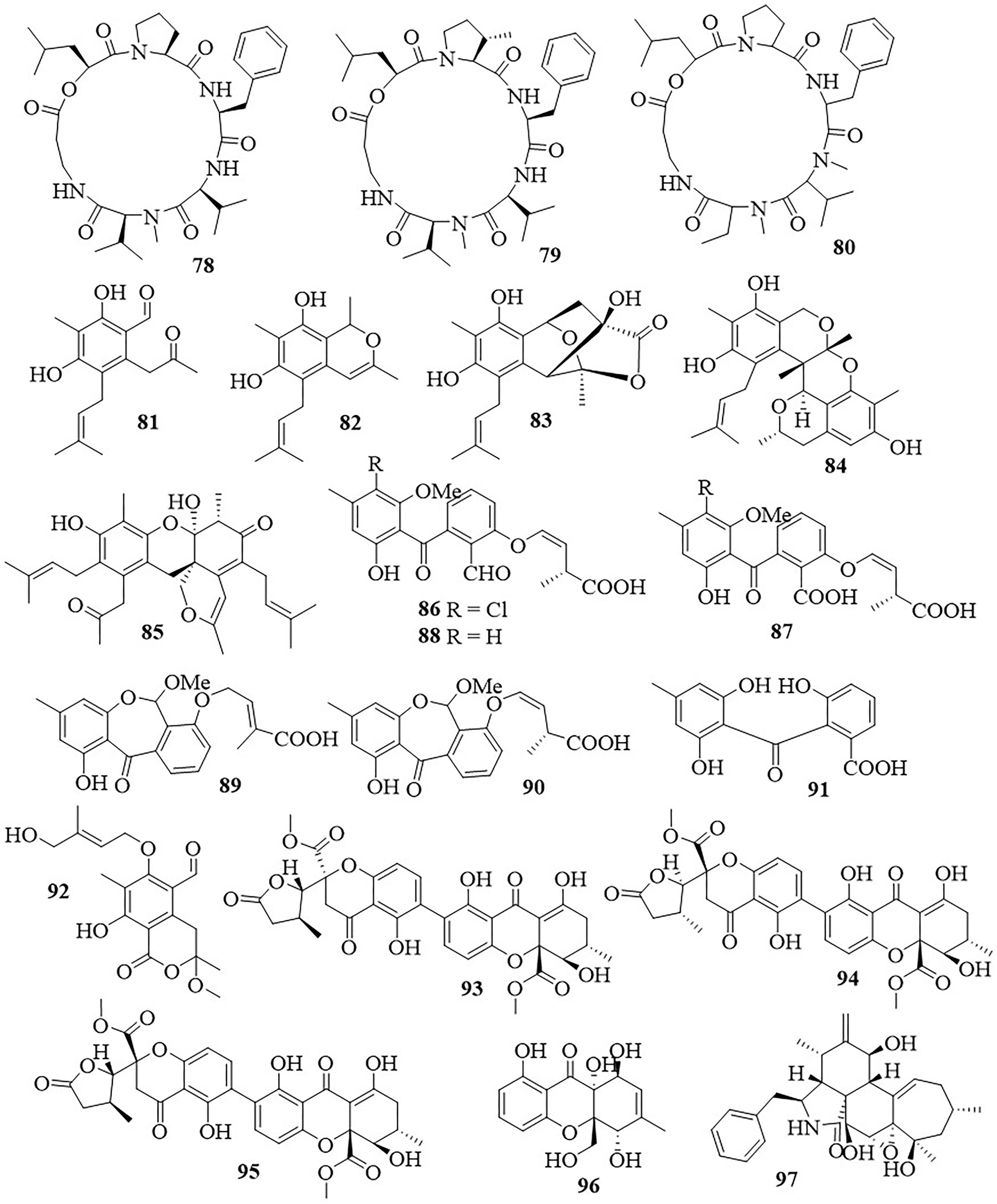
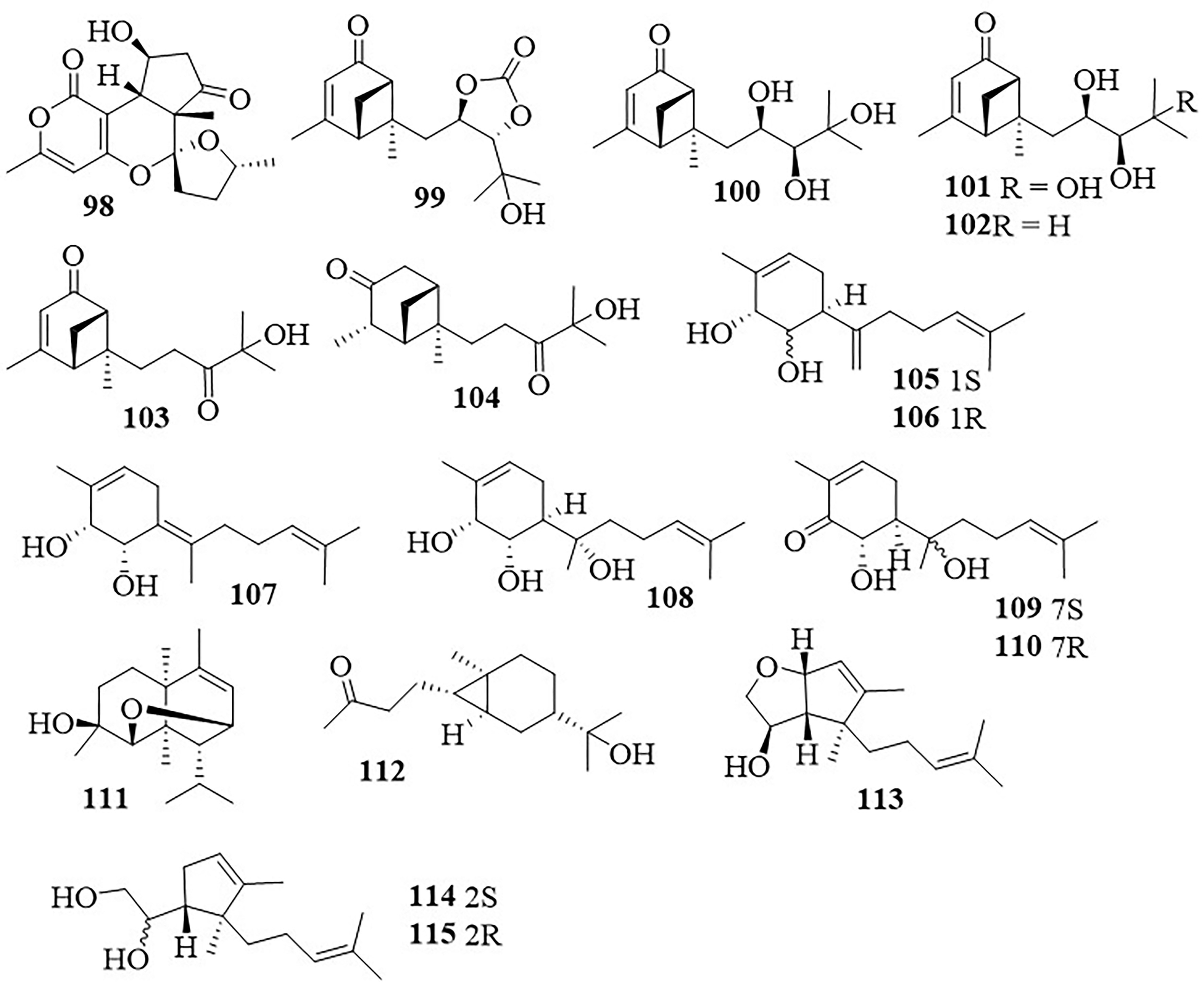
Combining multiple epigenetic modifiers. When a single chemical epigenetic modifier fails to sufficiently activate silent gene clusters, combining multiple modifiers with different mechanisms can yield better results. Asai et al. (2012) combined SBHA and RG-108 to induce the entomopathogenic fungus Isaria tenuipes to produce tenuipyrone (98) (Fig. 18), featuring a unique tetracyclic spiroketal structure. Niu et al. (2021) co-treated a deep-sea-derived fungus, Eutypella sp., with SBHA and 5-Aza, activating a sesquiterpene biosynthetic gene cluster and producing 17 novel compounds, eutypeterpenes A–Q (99–115) (Fig. 18), along with four known compounds.
Discussion
Strategies for activating fungal silent gene clusters by modifying culture conditions are relatively simple and often yield unexpected results. However, these approaches are inherently uncertain and have limitations. (i) Limited genomic knowledge: Less than 1% of fungal genomes have been characterized, leaving significant untapped potential and opportunities for discovery (Lei & Zhao 2019). (ii) Suitability for complex fungi: This strategy is particularly effective for studying secondary metabolites in fungi that are difficult to genetically manipulate, such as multinucleate, heterokaryotic, or basidiomycetes that do not readily produce spores (Lei & Zhao 2019).
Strategies for activating fungal silencing biosynthesis gene clusters based on genome mining
Obtaining new natural products traditionally involves extensive, labor-intensive isolation and analysis efforts. However, relying solely on these conventional methods fails to meet the needs of modern drug development. Recent advancements in sequencing technologies and bioinformatics have significantly enhanced our ability to identify fungal secondary metabolite (SM)-encoding genes, which are frequently arranged in clusters on chromosomes, a configuration known as biosynthetic gene clusters (BGCs) (Medema et al. 2015; Rokas et al. 2020). Under standard culture conditions, most fungal SM gene clusters primarily remain silent, masking a wealth of potentially bioactive compounds with novel structures that have yet to be discovered (Lyu et al. 2020). Therefore, activating these silent BGCs to enhance their expression has emerged as a promising strategy for exploring new secondary metabolites. This chapter provides a comprehensive review of recent approaches for activating silent gene clusters in fungi through genome mining efforts.
Bioinformatics Analysis of Silent BGCs. The surge in full microbial genome sequences and related resources has driven the development of BGC prediction algorithms, albeit with varying precision and capacity to identify novel BGCs (Hannigan et al. 2019; Wang et al. 2025). Fungal genome analyses typically depend on homology comparisons with annotated fungal genomes. Researchers can access several widely used BGC databases, such as NCBI (Sharma et al. 2018), SMURF (Khaldi et al. 2010), and antiSMASH (Blin et al. 2023). In addition, numerous algorithms have been developed to investigate more elusive BGCs (Hannigan et al. 2019; Li et al. 2024; Li et al. 2024). Deep learning has emerged as a powerful tool in the discovery of SMs, leveraging its capabilities in data processing and pattern recognition. It enables the identification of BGCs associated with SM biosynthesis, prediction of compound structures, screening of compound activities, and exploration of SM biosynthetic pathways. For instance, DeepRiPP integrates the NLPP recursor, BARLEY, and CLAMS modules to analyze microbial genome and metabolomics data, facilitating the efficient screening and discovery of novel ribosomally synthesized and post-translationally modified peptides (RiPPs) (Merwin et al. 2020). Similarly, TOUCAN employs classifiers, such as support vector machines (SVM), multilayer perceptron, logistic regression (LR), and random forests (RF), to identify BGCs in fungi (Almeida et al. 2020). BioNavi-NP, the first deep learning-based retrosynthetic inference tool, predicts biosynthetic pathways for SMs (Zheng et al. 2022). In the post-genomic era, AI-driven bioinformatics tools offer transformative potential for SM discovery, significantly enhancing genome quality and mining efficiency of BGCs.
Activation strategies based on molecular epigenetic modification
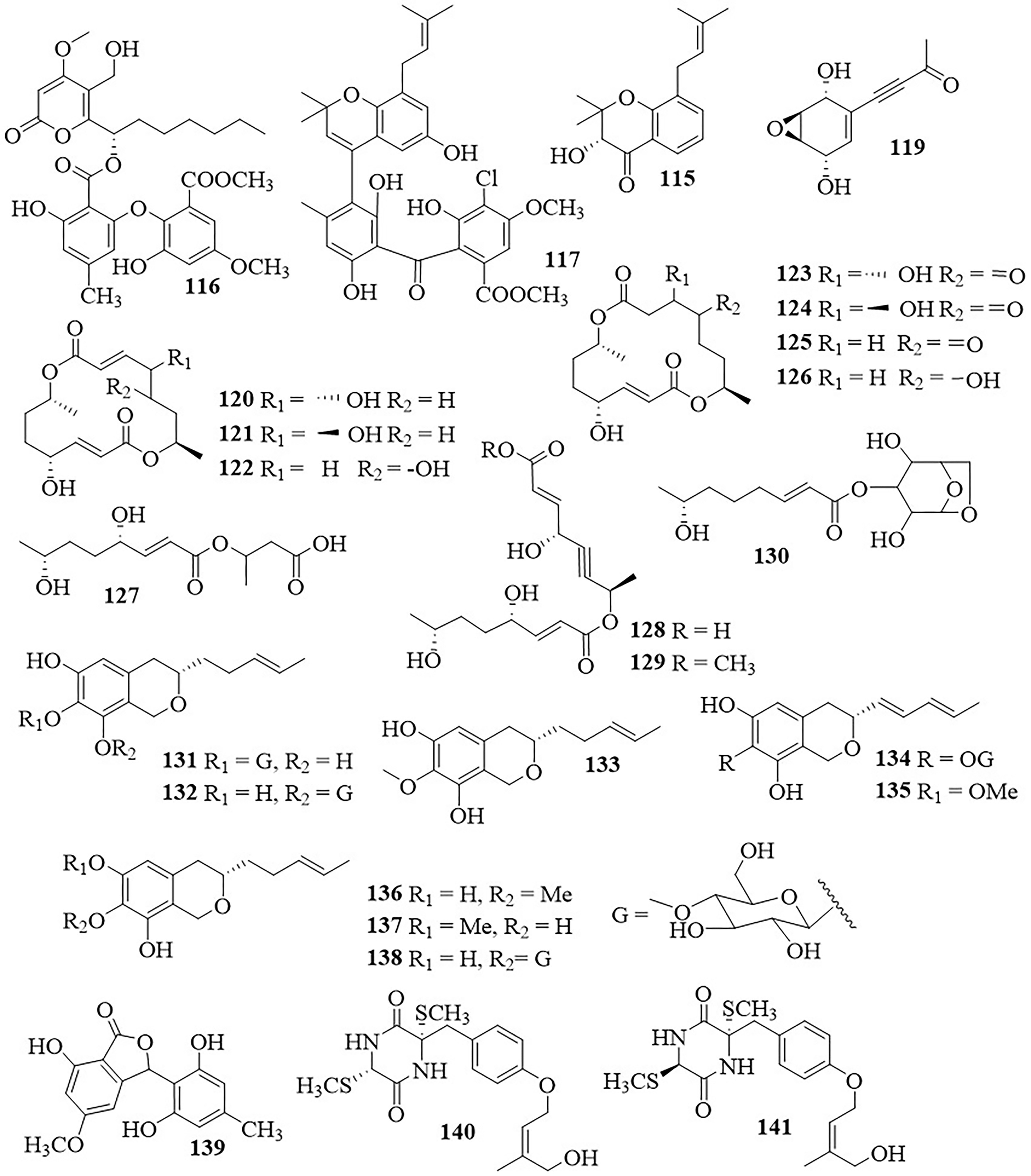
As mentioned above, in fungi, many metabolic elicitors promote epigenetic modification. Histone deacetylase inhibitors and DNA methylation inhibitors are particularly potent activators of otherwise repressed BGCs (Gacek & Strauss 2012). Small-molecule inhibitors represent a straightforward and convenient approach for targeting epigenetic regulation; however, their limited specificity often leads to off-target effects, potentially disrupting fungal growth and metabolism (Pfannenstiel et al. 2019; Lyu et al. 2020). Therefore, gene-editing techniques that selectively knock out or overexpress genes encoding epigenetic modification enzymes in fungi offer a more precise regulatory strategy (Lyu et al. 2020; 2022). The efficacy of this approach lies in the ability to disrupt or overexpress genes involved in DNA methylation or histone modifications, thereby inducing chromatin remodeling. This remodeling activates biosynthetic gene clusters (BGCs) located in heterochromatin regions (Lyu et al. 2020; 2022). For instance, Wu et al. (2016) utilized gene knockout techniques to target two epigenetically relevant genes, PfCclA and PfHdaA, in the endophytic fungus Pestalotiopsis fici. This intervention yielded 15 novel polyketides, including pestaloficiols T–W (116–119), and 11 macrodiolide ficiolides A–K (120–130) (Fig. 19). Similarly, Fan et al. (2017) disrupted the histone acetyltransferase (HAT) gene Hat1 in the entomopathogenic fungus Metarhizium robertsii, leading to the discovery of nine new polyketides (meromusides A–I, 131–139) and two novel peptides (meromutides A and B, 140 and 141) (Fig. 19).
Activation strategies based on pathway-specific regulation factors
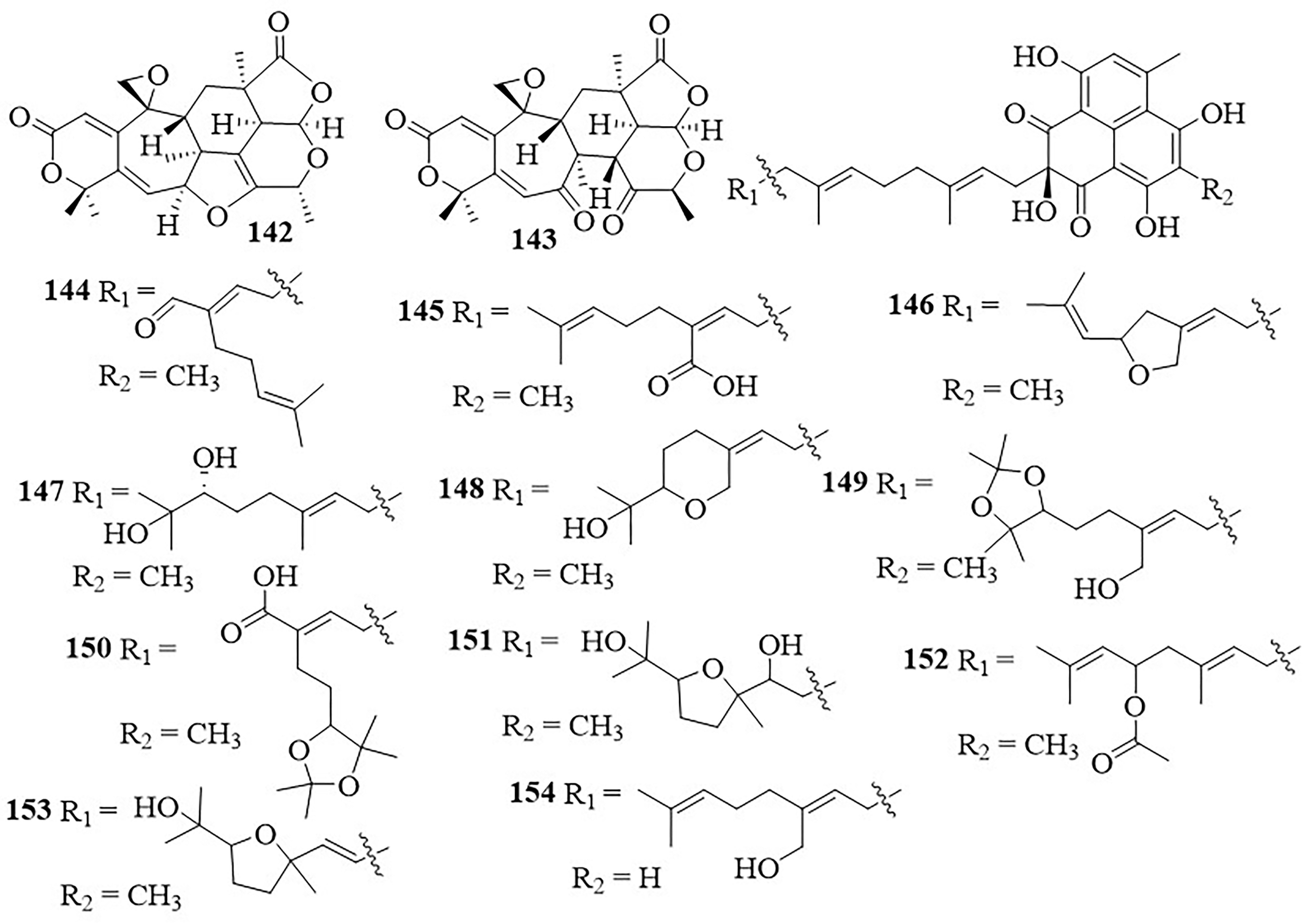
Transcriptional regulatory factors are abundant in the genome and play a crucial role in controlling the transcription and expression of functional genes. By regulating specific transcription factors, silent BGCs can be activated and novel secondary metabolites can be discovered. The expression of many specialized metabolite BGCs is controlled by pathway-specific transcriptional activators or repressors (Rutledge & Challis 2015). The genes encoding such regulators are often located within the BGC that they regulate. Activating pathway-specific activating genes or knocking out pathway-specific inhibiting genes are effective ways to activate silent BGCs. For instance, Zhang et al. (2018) revealed an unconventional paraherquonin-like meroterpenoid BGC in the chromosome of Neosartorya glabra through genome mining. By constitutively expressing the pathway-specific regulator gene berA, two new berkeleyacetal derivatives, Berkeleyacetal D (142) and 11-epi-Berkeleyacetal C (143), were isolated (Fig. 20) (Zhang et al. 2018). Similarly, overexpression of the transcriptional regulator aspE in Aspergillus sp. strain CPCC400735 led to the discovery of 11 new asperphenalenone derivatives (144–154) with significant anti-influenza A virus activity (Fig. 20) (Zhang et al. 2022a).
Activation strategies based on global regulatory factors
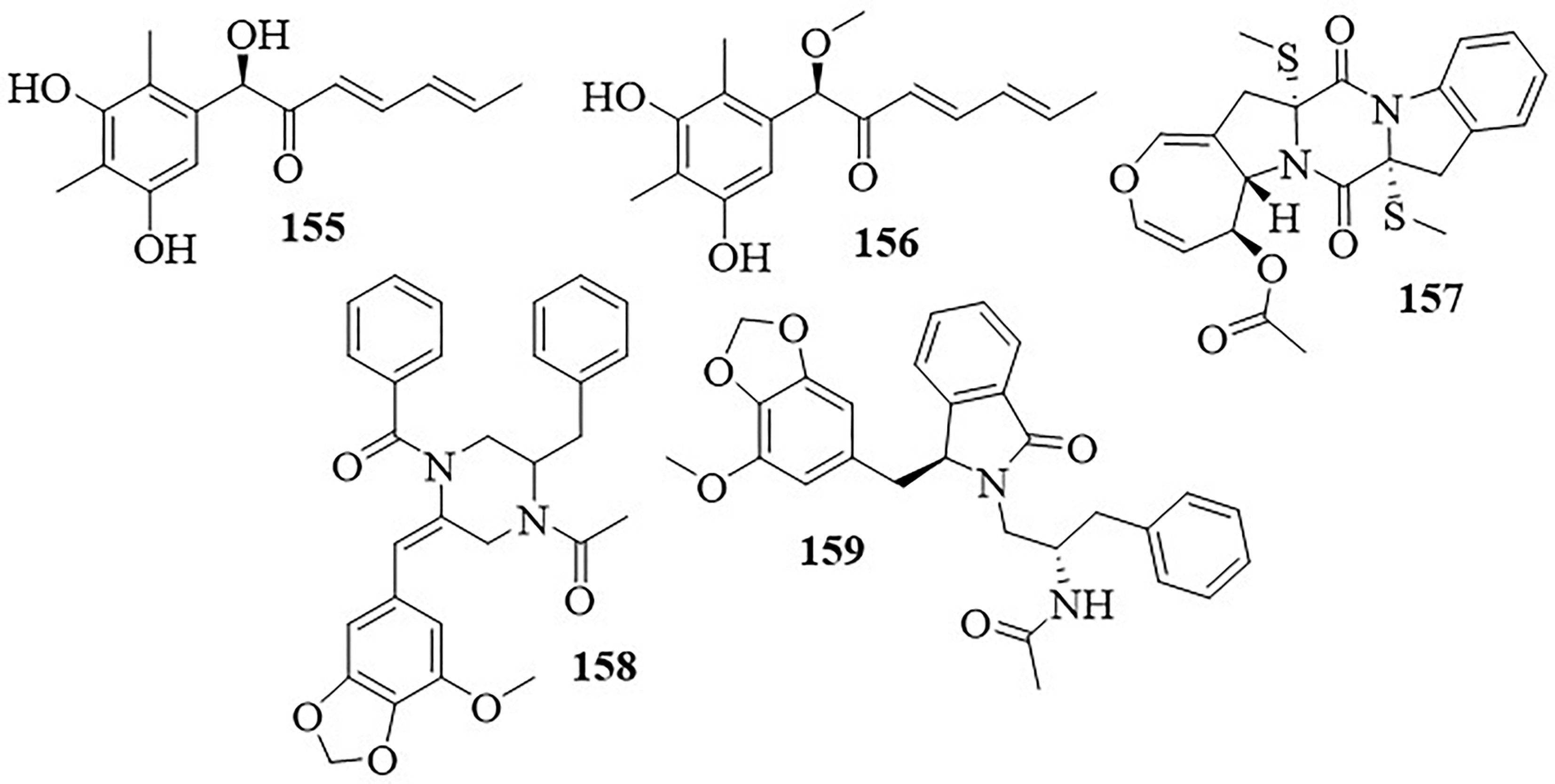
Unlike pathway-specific regulators, global regulators influence the expression of multiple gene clusters simultaneously, impacting the biosynthesis of numerous fungal secondary metabolites. One of the most studied global regulators, LaeA, achieves transcriptional regulation by modulating chromatin modification (Lyu et al. 2020). Overexpression of LaeA-like genes have facilitated the discovery of novel isocoumarin analogs (compounds 155−156, Fig. 21) from Trichoderma afroharzianum (Ding et al. 2020) and cytotoxic acetaminobutyric acid derivatives (versicolor A, compound 157, Fig. 21) from Aspergillus versicolor (Zhang et al. 2020a). Knockout studies of LaeA homologs from Aspergillus flavipes have also led to the identification of unique metabolites, including piperazine derivatives flavipamides A and B (158 and 159) (Fig. 21) (Liu et al. 2024b).
In addition to LaeA and its homologous genes, researchers have also discovered other global regulators affecting fungal secondary metabolite biosynthesis, such as MetR (Yu et al. 2021), FnVeA (Qin et al. 2022b), histone deacetylase UvHST2 (Liu et al. 2023), VeA (Moon et al. 2023), etc. Still, they have not been further developed to obtain new natural products.
Activation strategies based on metabolic shunting
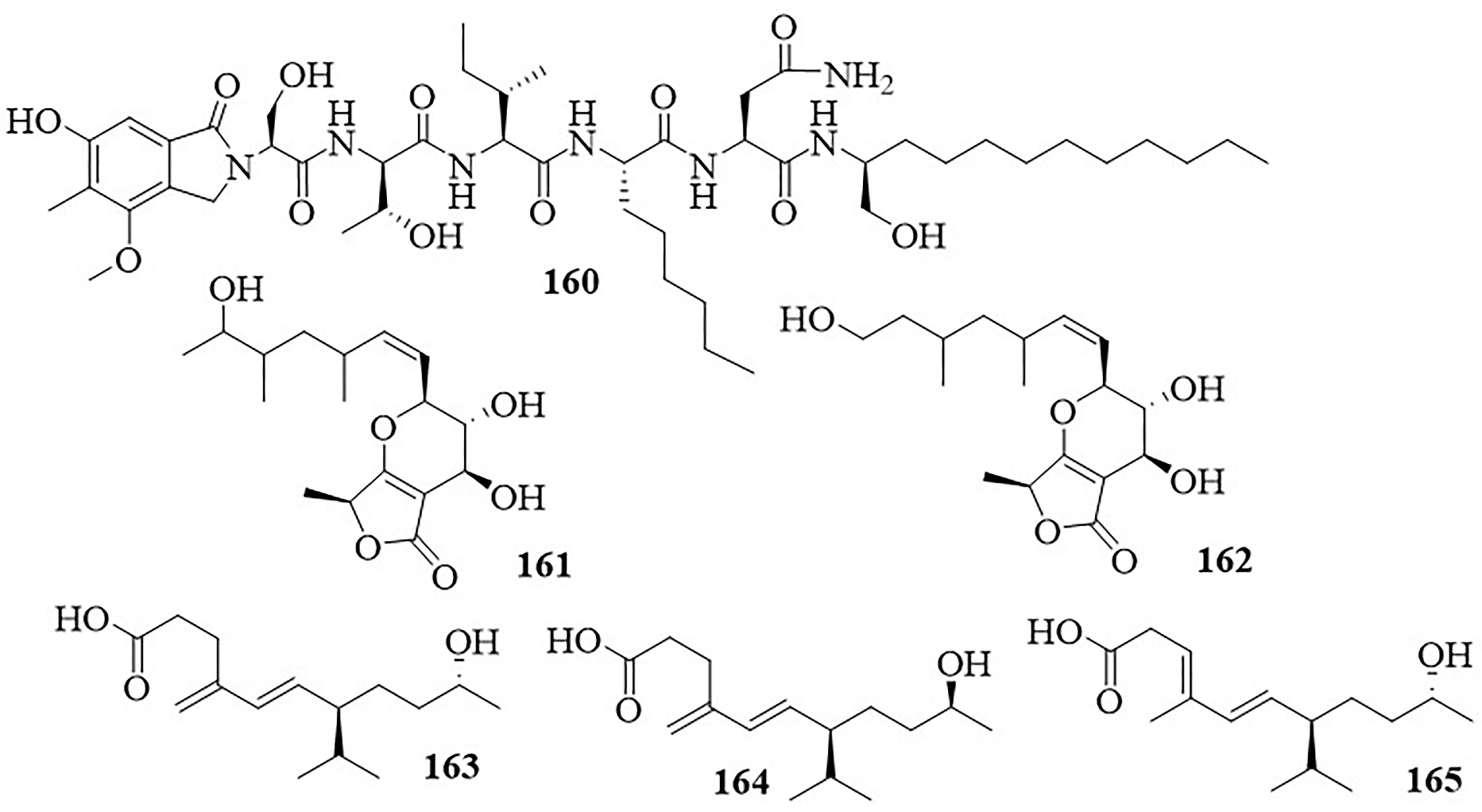
Metabolic shunting refers to a strategy that indirectly activates the remaining BGCs by knocking out the key genes of biosynthesis of major metabolites in strains, allowing more biosynthetic precursors to flow to other biosynthetic pathways (Chiang et al. 2016; Chen et al. 2019; Lyu et al. 2022). This approach, also called “genetic dereplication”, helps avoid rediscovery of known compounds. For example, Chiang et al. (2016) deleted eight of the most highly expressed SMs BGCs from Aspergillus nidulans to create a “genetic dereplication” strain, obtained a new compound, aspercryptin (160) (Fig. 22). Similarly, knockout of thtri5, a key gene for high triterpene production in Trichoderma hypoxylon, led in the discovery of rare polycyclic lactones and sesquiterpenes, such as tricholactones A and B (161−162) (Fig. 22) and tricinoloniol acids (TRAs) A–C (163–165) (Fig. 22) (Chen et al. 2019; Liu et al. 2020)
Activation strategies based on promoter replacement
Natural promoters are typically classified into constitutive and inducible types. Constitutive promoters enable continuous and stable gene expression, making them ideal for the production of enzymes, antibodies, and other proteins (Yu et al. 2021). In contrast, inducible promoters are regulated by various factors and are activated only under specific conditions, which makes them particularly suitable for the production of natural products (Xu et al. 2019). Promoter replacement refers to the process of substituting the native promoter of a gene with a different one, thereby modulating the promoter’s activity and enabling precise control over the expression level, timing, and method of target gene expression (Jin et al. 2019). In synthetic biology, promoter replacement can be leveraged to optimize metabolic pathways, activate silent gene clusters, and enhance the ability of microorganisms to produce specific SMs (Lin et al. 2019; Viggiano 2020; Yu et al. 2021).
Biosynthetic gene promoter replacement
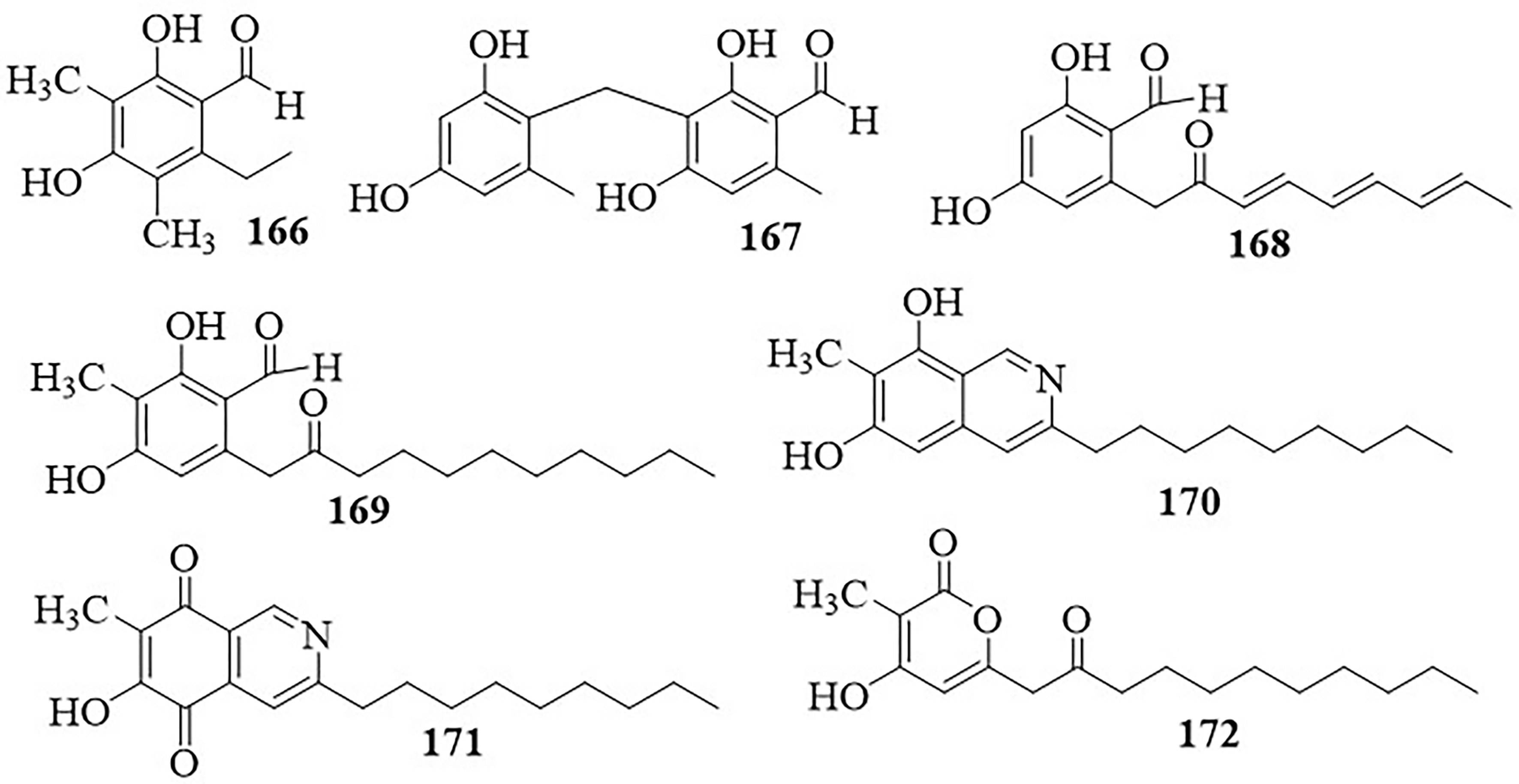
Since each gene in fungi usually requires a promoter to drive expression (Blumenthal 2004), when using the promoter replacement strategy to activate silent SMs BGCs, it is necessary to replace the promoters of all biosynthetic genes in the gene cluster. Manmeet Ahuja et al. (2012) systematically replaced all promoters of non-reducing polyketide synthase (NR-PKS) genes in Aspergillus nidulans with a regulatable alcA promoter. This approach led to the activation of silent gene clusters and the production of seven novel polyketides (166–172) (Fig. 23).
Transcriptional regulatory gene promoter replacement
When a silent gene cluster contains a transcriptional regulatory gene, the cluster can be activated by replacing only the promoter of the regulatory gene, without the need to alter the promoters of all the biosynthetic genes within the cluster (Lyu et al. 2020). Since bacterial genetic manipulation is relatively simple, replacing the promoter of the transcriptional regulatory gene is comparatively easy to achieve.
Heterologous expression strategies
Heterologous expression involves the introduction of target genes, gene cassettes, or even entire biosynthetic gene clusters into genetically tractable heterologous hosts (such as Saccharomyces cerevisiae, Aspergillus sp., etc.) for expression, effectively accelerating the production of natural products (Zhang et al. 2019; Oikawa 2020). Through heterologous expression, it is possible to break through the limitations of natural production conditions and achieve efficient, controllable, and large-scale production of target metabolites and the discovery of new metabolites.
Prokaryotic systems
Prokaryotic expression systems are widely regarded as ideal hosts for heterologous expression due to their simple culture requirements, short growth cycles, and well-characterized genetic backgrounds. Common systems include E. coli (Wang et al. 2020b), Streptomyces coelicolor (Qian et al. 2020) and Bacillus subtilis (Zhao et al. 2024). These systems are predominantly used for the production of recombinant proteins (Souza et al. 2021) and the expression of SMs BGCs derived from bacteria (Liu et al. 2024a). However, certain transmembrane proteins from fungi and plants tend to misfold in E. coli, limiting their effectiveness for such applications (Ma et al. 2021).
Eukaryotic (yeast) systems
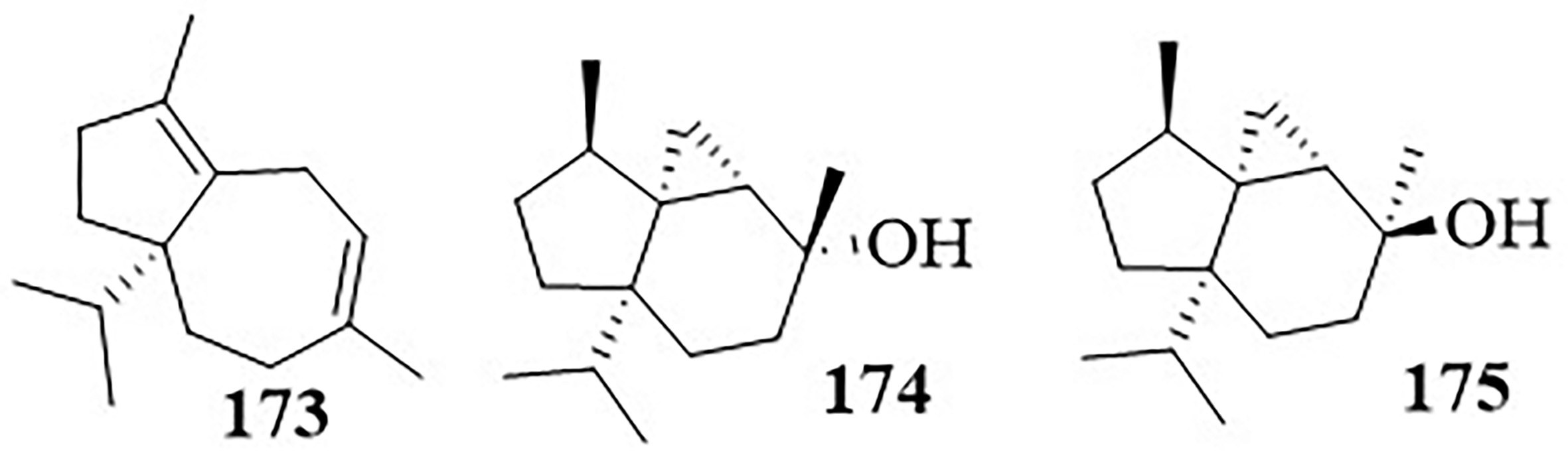
Saccharomyces cerevisiae is a widely used eukaryotic model organism in molecular and cellular biology. Its well-characterized nature and clear genetic background make it an excellent tool for studying fungal natural product biosynthetic pathways and developing novel natural products (Wang et al. 2021). Beyond S. cerevisiae, non-traditional yeast species, such as Komagataella phaffii, Yarrowia lipolytica, and Schizosaccharomyces pombe, have also demonstrated potential as hosts for producing proteins and natural products (Khlebodarova et al. 2024). The sesquiterpene synthase FgJ03939 from Fusarium graminearum was utilized in S. cerevisiae engineered to overexpress farnesyl diphosphate. This strategy resulted in the biosynthesis of novel sesquiterpenes, including fusariumdiene (173), epi-fusagramineol (174), and fusagramineol (175) with 5/7 bicyclic and 5/6/3 tricyclic ring systems (Fig. 24) (Bian et al. 2018).
Filamentous fungal systems
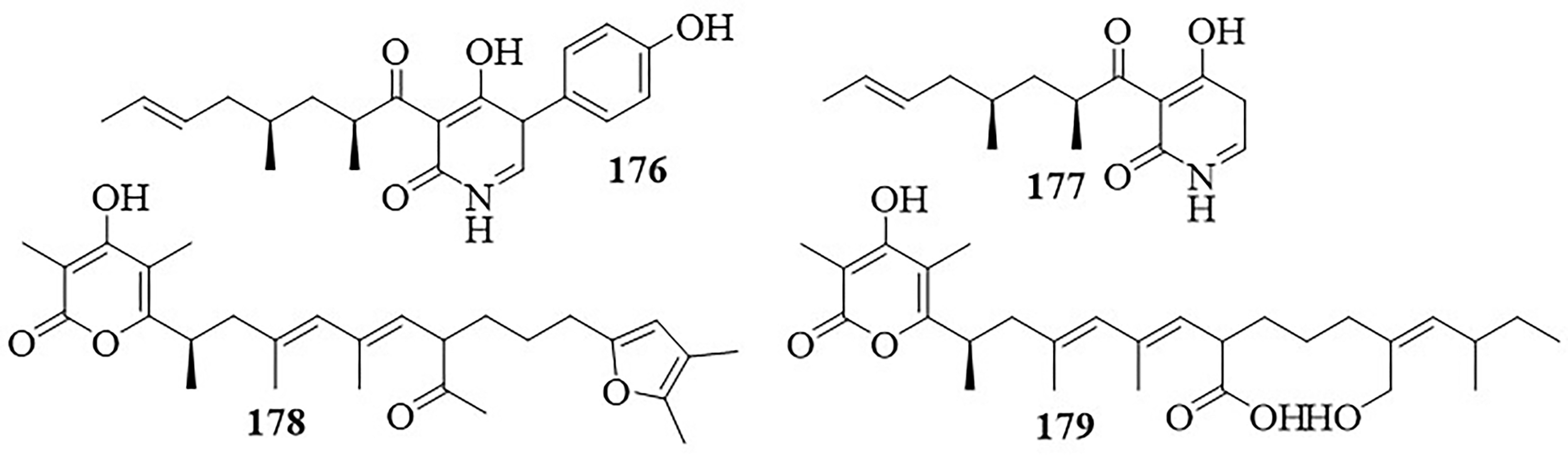
Advancements in molecular biology have enabled the development of filamentous fungi as hosts for heterologous expression of proteins and small-molecule compounds. Compared to E. coli and yeast hosts, filamentous fungi offer a distinct advantage: they can express entire biosynthetic gene clusters for fungal natural products without requiring intron removal during cloning (He et al. 2018). Through genome mining, Zhang et al. (2020b) identified a potential 4-hydroxy pyridone biosynthetic gene cluster in the endophytic fungus Tolypocladium sp. strain 49Y. The cluster was introduced into Aspergillus oryzae NSAR1, leading to the production of two rare 4-hydroxy pyridones, tolypyridone C (176) and tolypyridone D (177) (Fig. 25). Similarly, Hu et al. (2024) discovered a BGC alt for alternapyrone in the sponge-derived fungus Arthrinium arundinis strain ZSDS-F3. Heterologous expression of alt in Aspergillus nidulans A1145 ΔSTΔEM resulted in the isolation of a series of anti-inflammatory linear polyketides, including two new compounds (178–179) and four known ones (Fig. 25).
Activation strategies based on combinatorial biosynthesis (CBT)
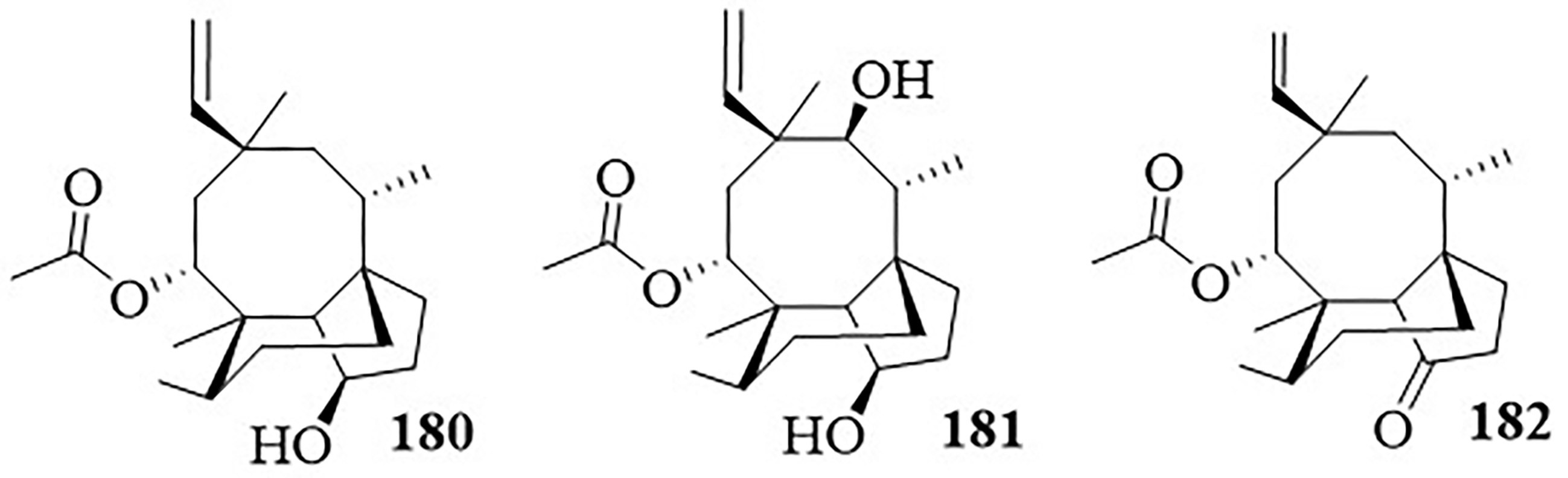
The concept of combinatorial biosynthesis (CBT) was first proposed by Floss (2006). This strategy involves using genetic engineering to modify biosynthetic pathways or assemble new ones to produce novel compounds. By reengineering and combining specific enzymes involved in secondary metabolite biosynthesis, new natural products can be generated through customized pathways (Skellam et al. 2024). For instance, Omphalina mutila demonstrates significant potential for producing new pleuromutilin analogs. To enhance chemical diversity, Guo et al. (2022) reconstituted diterpene cyclases and modification enzymes involved in pleuromutilin biosynthesis and expressed them heterologously in yeast. This effort resulted in the production of three novel pleuromutilin analogs (180–182) (Fig. 26) (Guo et al. 2022).
Discussion
The activation of silent gene clusters in fungi through genome mining has revolutionized the discovery of fungal natural products, leading to the identification of numerous compounds with novel structures and remarkable bioactivities. However, a fundamental prerequisite for implementing this strategy is the establishment of a genetic manipulation system for the target strain.
This paper presents seven strategies for uncovering new fungal secondary metabolites via genome mining, each with distinct advantages and limitations. No single strategy is sufficient to fully activate all silent gene clusters. For instance, molecular epigenetic modification, global regulator activation, and metabolic shunting are relatively straightforward in terms of genetic manipulation but often yield unpredictable results. Metabolic shunting, in particular, is effective only in strains with a high abundance of main metabolites.
Conversely, pathway-specific transcription factor activation, heterologous expression, promoter replacement, and combinatorial biosynthesis strategies provide more predictable outcomes but require precise and complex genetic engineering. However, these methods face technical challenges. For example, the pathway-specific transcription factor activation strategy is limited to specific gene clusters; the effectiveness of heterologous expression and promoter replacement strategies depends heavily on the genetic tractability of the target strain; and combinatorial biosynthesis requires detailed knowledge of biosynthetic pathways (Ran & Yin 2023). Despite these challenges, the complementary nature of these approaches offers great potential for advancing fungal secondary metabolite research and expanding the chemical diversity of bioactive compounds.
Natural products dereplication strategies
The study of natural products (NPs) has captivated researchers for decades. A persistent challenge in the discovery of new bioactive compounds from complex natural mixtures is avoiding the re-isolation of known compounds (El-Elimat et al. 2013). To address this, the researchers tried various methods, first by comparing ultraviolet-visible spectra (UV-Vis spectra) and mass spectra (MS), and later by activity-directed separation (Lopez-Perez et al. 2007; El-Elimat et al. 2013; Gaudêncio & Pereira 2015). While these methods demonstrated some efficacy, they fell short of meeting the rapidly evolving demands of the pharmaceutical industry and the urgent need for novel therapeutics. Among these strategies, MS remains a cornerstone of dereplication (El-Elimat et al. 2013). However, its application is often restricted by data-sharing limitations, as results are typically confined to publications or individual research teams, leaving other investigators to confront redundant efforts.
Recent advancements in modern analytical technologies, metabolomics, bioinformatics, artificial intelligence, and the interdisciplinary convergence of various fields have led to the emergence of several innovative strategies and methods for discovering and studying new natural products (Reher et al. 2020; Zhang et al. 2023). Techniques such as molecular networking (MN) using liquid chromatography-tandem mass spectrometry (LC-MS/MS) and Small Molecule Accurate Recognition Technology (SMART) based on nuclear magnetic resonance (NMR) are redefining the field. These methods enable the targeted identification of structurally unique natural products and have been successfully applied in diverse areas, including plants (Bai et al. 2020), microorganisms (Hou et al. 2019a), and marine organisms (Freire et al. 2022). Consequently, these innovations have reinvigorated natural product research. This chapter reviews prominent strategies for discovering new natural products derived from fungi (Table 1).
Efficient discovery strategies for new natural products based on LC-MS/MS
The LC-MS/MS technology provides unparalleled sensitivity, selectivity, and versatility in chemical analysis, making it an indispensable tool across diverse scientific fields. The development of various software tools, algorithms, and databases for dereplication based on mass spectrometry has significantly advanced the field of natural product discovery.
| Types of data | Tool | Features | Ref. |
| LC-MS/MS | GNPS | Sharing, analysis, processing, annotation, and visualization of global natural product mass spectrometry data | Wang et al. 2016;Qin et al. 2022 |
| GNP | A genome-guided natural products discovery tool | Johnston et al. 2015 | |
| DEREPLICATOR | An algorithm for identifying peptidic natural products using GNPS | Mohimani et al. 2017 | |
| DEREPLICATOR+ | An algorithm for identifying polyketides, terpenes, benzenoids, alkaloids, flavonoids, and other classes of natural products using GNPS | Mohimani et al. 2018 | |
| METLIN | A technology platform for the identification of known and unknown metabolites and other chemical entities | Guijas et al. 2018 | |
| SIRIUS 4 | A powerful chemical computational tool for predicting the structure of the compound | Dührkop et al. 2019 | |
| ZODIAC | A new network-based algorithm for the de novo annotation of molecular formulas | Ludwig et al. 2020 | |
| MolDiscovery | A mass spectral database search method based on a probabilistic model | Cao et al. 2021 | |
| CANOPUS | A chemical classification prediction tool based on a deep neural network | Dührkop et al. 2021 | |
| SNAP-MS | A structural similarity Network Annotation Platform for Mass Spectrometry | Morehouse et al. 2023 | |
| LUMIOS | A software by preprocessing molecular information from mass spectra and dereplicates molecules through comparison with a collection of chemical databases | Vieira et al. 2024 | |
| 1H-NMR & 13C-NMR | Spektraris-NMR | A database that can match multiple spectra data queries with database entries | Fischedick et al. 2015 |
| 1H-NMR | 1D-TOCSY | A one-dimensional TOCSY-based dereplication method | Diaz-Allen et al. 2021; Diaz-Allen 2022 |
| Using PCA to analyze 1H-NMR data | An algorithm that uses the principal component analysis (PCA) loadings values to analyze 1H-NMR data of mixtures | Selegato et al. 2016 | |
| 13C-NMR | NAPROC-13 | A database containing 13C spectral information allows for fast identification of known compounds present in the crude extracts and provides insight into the structural elucidation of unknown compounds. | Lopez-Perez et al. 2007 |
| Pattern Recognition Strategy | A dereplication strategy for pattern recognition of 13C NMR data using hierarchical cluster analysis (HCA) | Hubert et al. 2014 | |
| Computer-Aided 13C NMR Profiling of Crude Natural Extracts | An algorithm evaluates the quality of the matching between experimental 13C NMR data and predicted 13C NMR data by calculating a score function. | Bakiri et al. 2017 | |
| MixONat | A software based on a freely distributed algorithm that can be used to decipher complex mixtures using 13C-NMR | Bruguière et al. 2020; Bruguière et al. 2021 | |
| Prediction of compound structure with 13C-NMR data | A database retrieves and analyzes compound structures recorded in acd_lotusv7 using 13C-NMR data | Bruguière et al. 2018; Nuzillard 2021, 2022; Kuhn and Nuzillard 2023 | |
| 2D-NMR | SMART | A tool for the efficient discovery of natural products based on Non-Uniform Sampling (NUS) HSQC techniques and deep Convolutional Neural Networks (CNNs) | Zhang et al. 2017;Reher et al. 2020 |
| MADByTE | A new platform to identify common structural features between samples in complex extract libraries using two-dimensional NMR spectra | Egan et al. 2021 | |
| Tomic Novelty Scoring Technology | A method based on sorting atomic novelty to identify new features of secondary metabolites | Duggan et al. 2020 | |
| DOSY | A tool to predict MW by NMR | Kleks et al. 2021 | |
| MS and NMR | DEREP-NP | A database to match structure by counting the number of times one or more of these structural features occur in an unknown compound | Zani and Carroll 2017 |
| ELIAN | a 1H NMR-MS workflow based on the HetCA of 1H NMR spectra | Grienke et al. 2019 |
Molecular networking (MN) technology
In 2012, Prof. Pieter Dorrestein's group at the University of California, San Diego, introduced molecular networking (MN), a groundbreaking technique leveraging tandem mass spectrometry (MS/MS) for the discovery and analysis of microbial natural bioactive molecules (Watrous et al. 2012). MN-based dereplication enables the identification of both identical and structurally related molecules. It is compatible with various types of MS/MS data, and can be seamlessly integrated into the standard NPs discovery workflow (Yang et al. 2013).
By 2016, with the joint support of the University of California, San Diego and multiple other teams, Global Natural Products Social Molecular Networking (GNPS) had been created, enabling the sharing, analysis, processing, annotation, and visualization of global natural product mass spectrometry data (Wang et al. 2016). GNPS serves as an open-source and open-access knowledge base for community-wide organization and sharing of raw, processed, or identified tandem mass (MS/MS) spectrometry data (Wang et al. 2016). Since the emergence of Global Natural Product Social Molecular Networking (GNPS), the efficiency of natural product deduplication has been greatly improved, greatly saving research time, energy, and cost.
With the further development of metabolomics, computer science and bioinformatics, molecular networking has since evolved from its classical molecular networks (CLMN) to incorporate advanced approaches such as substructure-based MN (MS2LDA) (van Der Hooft et al. 2016), bioactive MN (BMN) (Nothias et al. 2018; Baskiyar et al. 2022), the feature-based MN (FBMN) (Nothias et al. 2020), ion-identifying MN (IIMN) (Schmid et al. 2021), building blocks-based molecular network (BBMN) (He et al. 2021), Integrated Molecular Networking Workflow for NP Dereplication (IMN4NPD) (Sheng et al. 2024), see Table 2 for details. These advancements have led to the discovery of numerous novel compounds, demonstrating the utility and adaptability of GNPS-based strategies (Table 2).
| No | MN type | Advantage | Website | References |
| 1 | CLMN | It is crucial for the meta-analysis of large-scale datasets. | http://gnps.ucsd.edu | Watrous et al. 2012 |
| 2 | MS2LDA | It can analyze and annotate molecules without reference spectra by analyzing their substructures. | https://ms2lda.org/ | van Der Hooft et al. 2016 |
| 3 | BMN | It can quickly identify bioactive compounds from complex natural product extracts. | https://github.com/DorresteinLaboratory/Bioactive_Molecular_Networks | Nothias et al. 2018 |
| 4 | Molecular Networks Based on the t‑SNE Algorithm | It can reduce the dimensions of complex, high-dimensional data and simplify it, making it easier for users to understand the relationships between compounds. | https://metgem.github.io | Olivon et al. 2018 |
| 5 | FBMN | By distinguishing different retention times of similar MS2 spectra, FBMN enables the efficient visualization and annotation of isomers in LC–MS2 datasets. | https://ccms-ucsd.github.io/GNPSDocumentation/featurebased-molecularnetworking/ | Nothias et al. 2020 |
| 6 | IIMN | It effectively reduces the redundancy of detecting multiple ion species per compound and can be used to reveal unknown ion-ligand complexes, enhancing annotation. | https://ccms-ucsd.github.io/GNPSDocumentation/fbmn-iin/ | Schmid et al. 2021 |
| 7 | BBMN | It is more selective and faster, helping to discover natural products with new skeletons. | / | He et al. 2021 |
| 8 | IMN4NPD | It can integrate multi-source compound data, expedite the dereplication of large clusters, and effectively mitigate the occurrence of false negatives. | / | Sheng et al. 2024 |
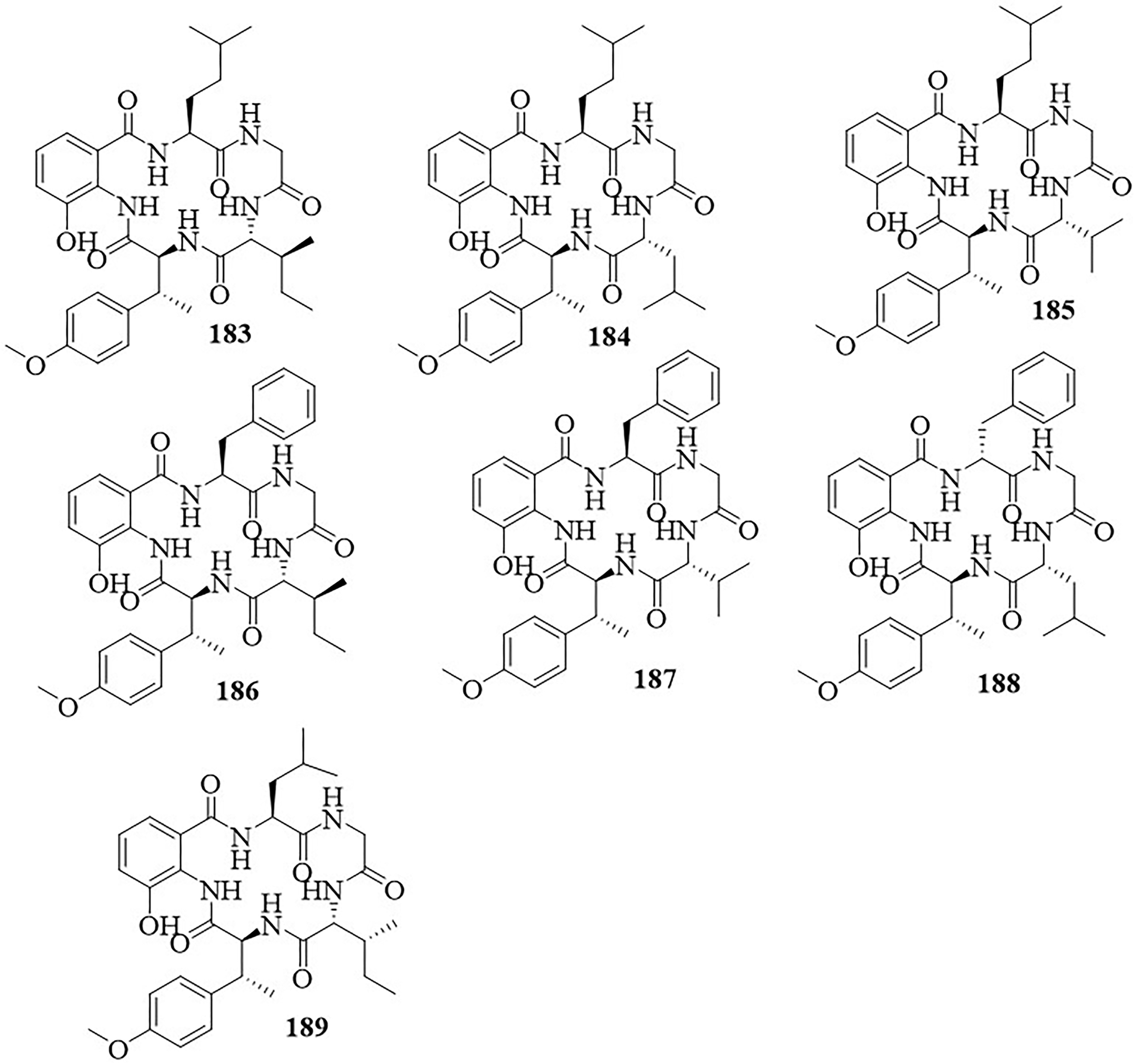
Classical molecular networking (CLMN). Molecular network technology is a secondary mass spectrometry data visualization strategy that integrates modern mass spectrometry, bioinformatics, computational tools, and other technologies. The principle behind this approach is that molecules with similar structures tend to exhibit similar MS/MS (secondary mass spectrometry) fragmentation patterns. The GNPS molecular network clusters and visualizes similar molecules by calculating the similarity of their MS/MS fragments. In this process, the secondary mass spectra in the LC-MS/MS data are compared using a specific algorithm, with the cosine similarity value (ranging from 0 to 1) representing the degree of similarity between each spectrum. A higher cosine value indicates greater similarity between the spectra. Based on the calculated cosine values, spectra with higher similarity are grouped, and the results are presented as a visualized molecular network diagram. In the diagram, each node represents a compound, and its associated secondary mass spectrometry information can be depicted by various attributes such as the node’s name, color, size, and shape. The edges connecting the nodes represent the structural correlations between the compounds, with the edge thickness indicating the strength of this correlation (Watrous et al. 2012). By constructing a molecular network diagram, complex secondary mass spectrometry data can be intuitively represented, revealing all compounds present in the sample as well as the relationships between their chemical structures. If the chemical structure of a node in the molecular cluster is identified, the structures of other nodes can be predicted by analyzing mass differences and characteristic ion fragments, enabling the efficient discovery and targeted isolation of new compounds. Aspergillus pseudoviridinutans strain TW58-5 was isolated from hydrothermal vent sediment collected in Kueishantao, Taiwan (Ding et al. 2023). CLMN-guided isolation led to the discovery of seven new cyclopentapeptides with anti-inflammatory potential, namely, pseudoviridinutans A−F (183−189) from the fungus (Fig. 27) (Ding et al. 2023).
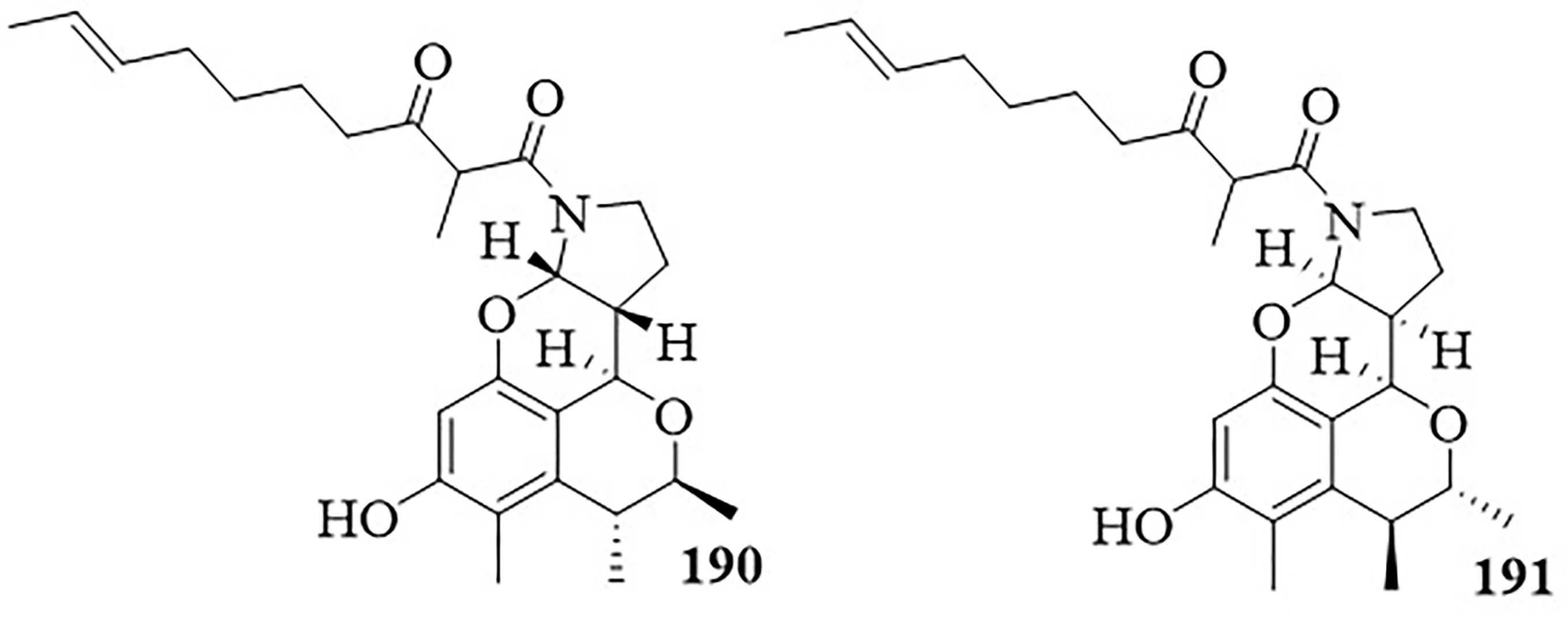
Substructure-based molecular networking (MS2LDA). van der Hooft et al. (2016) introduced MS2LDA, a method that utilizes the Latent Dirichlet Allocation (LDA) model to extract recurring fragmentation and neutral loss patterns from MS/MS spectra, revealing biochemical relationships without requiring reference spectra. This method aids in identifying bioactive natural products and secondary metabolites, uncovering co-occurring metabolic patterns, and predicting unknown metabolite structures. Using MS2LDA, Liu et al. (2022) identified two rare tetracyclic alkaloids, perinadines B and C (190 and 191) (Fig. 28), from Aspergillus sp. (LS116), a marine sponge-derived fungus. Both compounds exhibited moderate antibacterial activity against Bacillus subtilis.
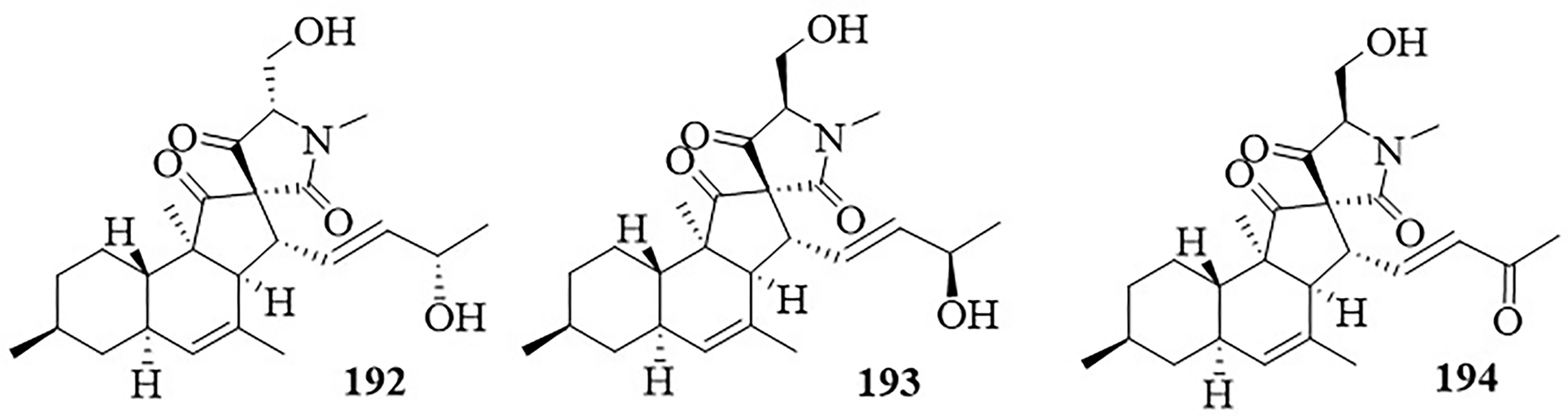
Bioactivity-based molecular networking (BMN). During the separation of natural products using activity-oriented tracking and separation strategies, a phenomenon known as "activity disappearance" can occur. This means that while both the crude extract and its subfractions exhibit activity, the final isolated monomeric compound is inactive, or a known compound is repeatedly isolated (Nothias et al. 2018). To address this issue, in 2018, Pieter Dorrestein's group developed molecular network-based bioactivity (BMN) (Nothias et al. 2018). The BMN workflow involves three steps. First, tandem mass spectrometry data are collected from the sample after simple separation, followed by replication using CLMN. Next, the relative abundance and biological activity of molecules in each fraction are measured separately, and a bioactivity score is predicted. Finally, the bioactivity score prediction is integrated into the GNPS platform to generate the BMN. This strategy enables the rapid identification of bioactive compounds from complex natural product extracts, avoiding repeated separation and activity testing, while demonstrating strong targeting capabilities. Using BMN, three new decacarbonylspirotetraic acid derivatives, pyrenosetins A–C (192–194) (Fig. 29), were rapidly isolated from Pyrenochaetopsis sp. FVE-001 (Fan et al. 2020; Fan et al. 2022). Compounds 192 and 193 demonstrated strong anticancer activity against the malignant melanoma cell line A-375, which was consistent with the biological activity predicted by BMN.
Molecular networks based on the t-SNE algorithm. In a large amount of compound data, there are often some hidden patterns and structures, such as common substructures, similar mass spectra, etc. Using the t-SNE algorithm, such similar compounds can be clustered together to form clusters (Arora et al. 2018), helping researchers to better understand and analyze the relationship between compounds. Olivon et al. (2018) developed MetGem, which can perform parallel analysis of GNPs-style MNs and MNs of the t-SNE algorithm, simplifying complex high-dimensional chemical and biological data into a visual space, and accelerating the discovery process of new drugs or bioactive molecules. For instance, t-SNE MN analysis of Penicillium Sclerotiorum SNB-CN111, isolated from a termite nest in French Guiana, led to the identification of three novel azaphilones, chlorogeumasnol (195), peniazaphilone E (196), and 7-deacetylisochromophilone VI (197) (Fig. 30) (Hebra et al. 2021).
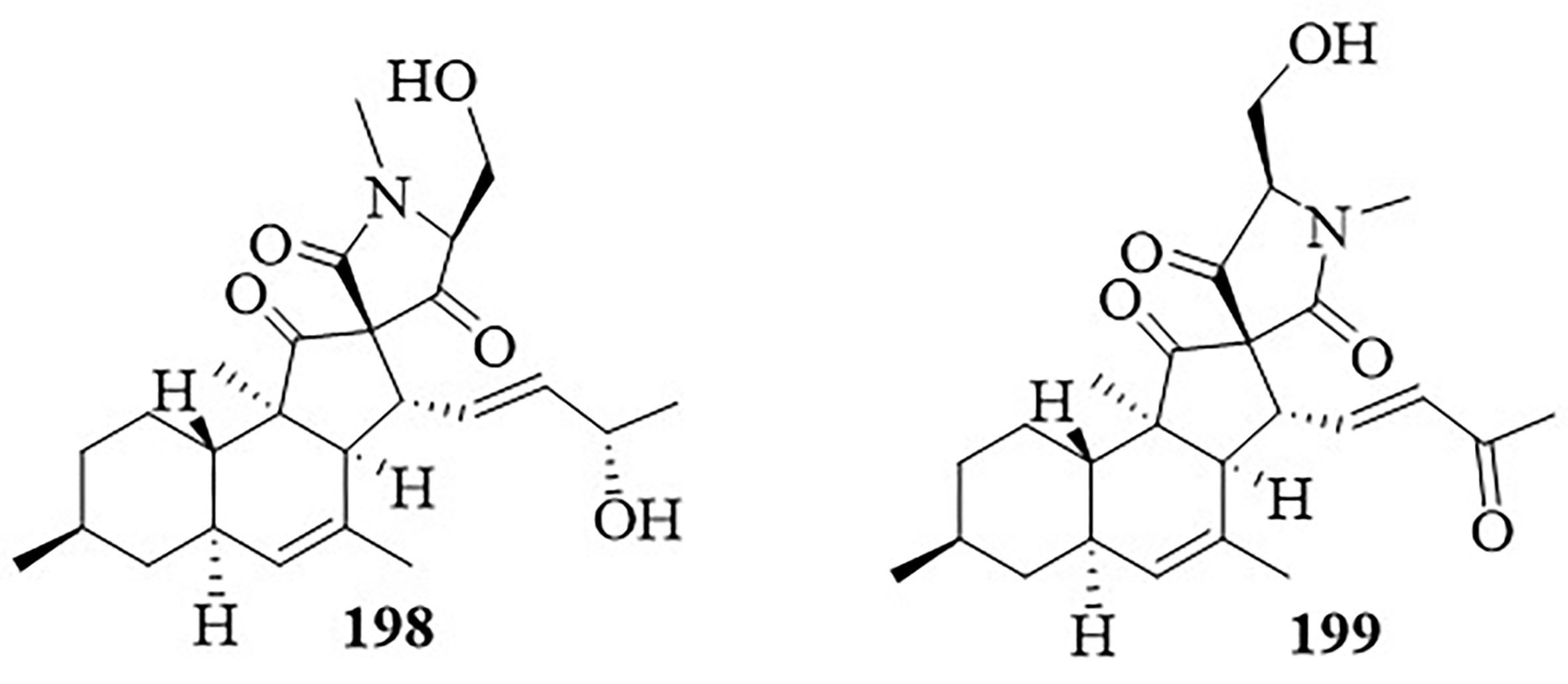
Feature-based molecular networking (FBMN). Building upon CLMN, Pieter Dorrestein's team introduced feature-based molecular networking (FBMN) to address key limitations of CLMN, such as its inability to differentiate isomers with similar MS2 spectra and its lack of accurate relative quantification (Nothias et al. 2020). FBMN leverages retention time differences to distinguish similar MS2 spectra, enabling efficient visualization and annotation of isomers in LC–MS2 datasets. Additionally, FBMN provides an accurate estimation of relative ion intensities, facilitating robust downstream statistical analyses in metabolomics. While FBMN excels in smaller-scale studies or single-sample analyses, CLMN remains indispensable for meta-analysis of large-scale datasets. The application of FBMN in comparative metabolomics and targeted isolation led to the discovery of two new stereoisomers of pyrenosetins E (198) and F (199) (Fig. 31), from Pyrenochaetopsis sp. FVE-001, which was isolated from Fucus vesiculosus (Fan et al. 2020; Fan et al. 2022). Notably, compound 198 exhibited significant anticancer activity against the malignant melanoma cell line A-375, with an IC50 value of 40.9 µM, consistent with bioactivity predictions (Fan et al. 2022). Recently, integrating Mass Spec Query Language (MassQL) with FBMN has resolved issues in clustering and annotation caused by multiple fragmentation events during MS analysis, further enhancing the precision of FBMN workflows (Selegato et al. 2023).

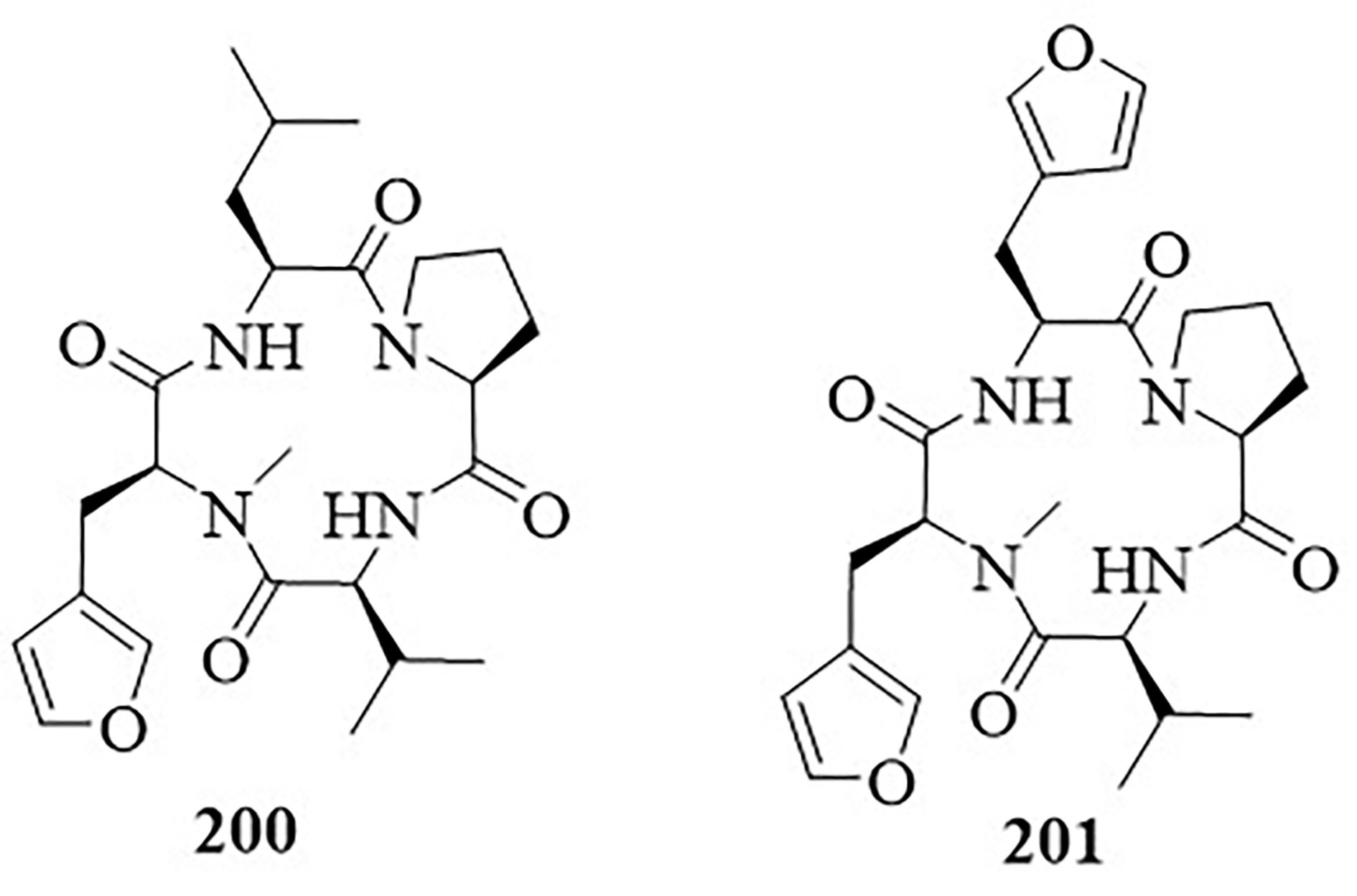
Ion identity molecular networking (IIMN). Ionization often generates multiple ion forms of the same molecule, each displaying distinct fragmentation behaviors, which can fragment the tandem mass spectrometry molecular network of a single parent ion into separate clusters. To overcome this issue, Dorrestein’s group developed Ion Identity Molecular Networking (IIMN), which integrates MS1 chromatographic peak shapes with MS2 spectral similarity (Schmid et al. 2021). This strategy reduces redundancy by consolidating data for multiple ion species of the same compound and enhances molecular network annotations. IIMN has proven effective in identifying unknown ion-ligand complexes and expanding spectral reference libraries. For example, the marine sponge-derived fungus Stachylidium bicolor strain 293 K04 produces cyclic tetrapeptides, known as endolides, which contain the rare amino acid N-methyl-3-(3-furyl)-alanine (Berger et al. 2024). Exploiting this unique structural feature, Berger et al. (2024) developed an endolide-specific molecular network annotated using MassQL, incorporating CLMN, FBMN, and IIMN workflows. This multimodal approach facilitated the discovery of two new proline-containing endolides, E (200) and F (201) (Fig. 32). Endolide F was identified as a moderate antagonist of the arginine vasopressin V1A receptor (Berger et al. 2024).
Building blocks-based molecular networking (BBMN). Natural products with similar structures typically follow analogous biosynthetic pathways. Biosynthetic building blocks serve as the foundational starting points for biogenic synthesis pathways and are essential for the synthesis of complex molecules. Organisms generate these building blocks through various biosynthetic routes and subsequently assemble them into target molecules (Walsh & Tang 2017). He et al. (2021) introduced a molecular network based on biosynthetic building blocks (BBMN) by integrating building block identification strategies with molecular network construction. Compared to CLMN and FBMN, the BBMN strategy offers higher selectivity and faster identification. This approach can recognize characteristic fragments derived from specific biogenetic building blocks by scanning for neutral loss/production events, enabling the selective identification of biogenetically relevant compounds. Additionally, the BBMN strategy has been employed to analyze metabolic pathways, identify known and novel biosynthetic gene clusters, and guide the isolation of new carbon skeleton compounds (He et al. 2021; Qin et al. 2022a). Li et al. (2024) applied BBMN to discover three unusual ajmaline-macroline type bisindole alkaloids from Alstonia macrophylla.
Integrated molecular networking workflow for NP dereplication (IMN4NPD). To integrate multi-source compound data, Jiang's group developed the integrated molecular networking workflow for natural product dereplication (IMN4NPD) (Sheng et al. 2024). Compared with previous molecular network strategies, IMN4NPD offers distinct advantages. By combining results from multiple computational tools, the workflow not only accelerates the dereplication of large clusters within the molecular network but also highlights features often overlooked by existing methods, such as self-looping or paired nodes. Furthermore, the integration of various spectral similarity measures enhances the comprehensiveness of the resulting t-SNE plot, effectively reducing false negatives.
An automated genomes-to-natural products platform (GNP)
The synthesis of secondary metabolites in fungi is typically governed by biosynthetic gene clusters. Johnston et al. (2015) introduced an accessible and automated tool named the Genomes-to-Natural Products platform (GNP, designed to predict natural products from genetic data and directly identify desired small molecules from liquid chromatography–MS/MS (LC-MS/MS) datasets (Johnston et al. 2015). Using the GNP platform, the researchers successfully identified and isolated six genetically predicted polyketides and nonribosomal peptides from bacterial sources.
DEREPLICATOR and DEREPLICATOR+
DEREPLICATOR+ (Mohimani et al. 2018) is an advanced algorithm that builds upon its predecessor, DEREPLICATOR (Mohimani et al. 2017), enhancing its ability to identify peptidic natural products. In addition, it expands the scope of natural product identification to include polyketides, terpenes, benzenoids, alkaloids, and flavonoids (Mohimani et al. 2018). DEREPLICATOR+ is notable for being the first database search tool for natural products capable of: (i) leveraging the entire GNPS molecular networking infrastructure to query large chemical structure databases and (ii) detecting variants of known metabolites through molecular networking (Mohimani et al. 2018).
METLIN
METLIN (METLIN) is a comprehensive technology platform designed for the identification of known and novel metabolites, originally developed as a database for identifying known metabolites (Guijas et al. 2018). By integrating reference standards, labeled stable isotope analogues, and fragment similarity search, METLIN facilitates both the characterization of unknown metabolites and the identification of known ones (Guijas et al. 2018).
SIRIUS 4
SIRIUS 4 (SIRIUS) is a sophisticated computational tool for analyzing complex mass spectrometry data to extract compound information and predict chemical structures (Dührkop et al. 2019). Its workflow involves steps such as mass spectrum analysis, rule-based fragment assembly, candidate structure generation, spectrum matching and ranking, and network analysis (Ludwig et al. 2020a). While highly effective for structural prediction and dereplication, SIRIUS 4 faces challenges in accurately identifying molecular formulas for compounds with molecular weights exceeding 500 Da or entirely novel formulas.
Organic compound determination by integral assignment of elemental compositions (ZODIAC)
Building on SIRIUS 4, Ludwig et al. (2020a) developed Organic compound Determination by Integral Assignment of elemental Compositions (ZODIAC), a network-based algorithm for molecular formula annotation. By combining split-tree calculations, Gibbs sampling, and Bayesian statistics, ZODIAC improves the accuracy of SIRIUS candidate formula ranking by a factor of 16 and is capable of annotating novel molecular formulas, such as C24H47BrNO8P (Ludwig et al. 2020a; 2020b). ZODIAC is particularly valuable for studying compounds with molecular weights above 500 Da.
MolDiscovery
Cao et al. (2021) introduced MolDiscovery, a mass spectral database search method that enhances the efficiency and accuracy of small molecule identification by employing a probabilistic model to match molecules with their mass spectra. Despite its advancements, MolDiscovery shares a common limitation with tools like DEREPLICATOR+ and SIRIUS 4, as it exhibits reduced accuracy for molecules with masses below 600 Da.
Class assignment and ontology prediction using mass spectrometry (CANOPUS)
Class assignment and ontology prediction using mass spectrometry (CANOPUS) is a deep-learning-based tool for chemical classification that can predict 2,497 compound classes from fragmentation spectra, including all biologically relevant categories (Dührkop et al. 2021). It integrates seamlessly with tools such as SIRIUS 4 and GNPS, enabling comprehensive workflows from feature detection to compound classification (Dührkop et al. 2021).
Structural similarity network annotation platform for mass spectrometry (SNAP-MS)
SNAP-MS (Structural Similarity Network Annotation Platform for Mass Spectrometry, SNAP-MS) is an advanced prediction tool developed by Linington's team (Morehouse et al. 2023) that follows CANOPUS (Dührkop et al. 2021) in chemical similarity grouping. Unlike CANOPUS, SNAP-MS does not rely on experimental or calculated reference spectra, making it a complementary tool for fine-scale compound family annotation. This approach assigns compound families to molecular networking subnetworks. Subnetworks containing known families are then identified for dereplication, enabling efficient compound characterization. Compared to CANOPUS, SNAP-MS offers a more detailed level of annotation, enhancing the accuracy of natural product identification and enabling more precise dereplication.
Label using a machine in organic samples (LUMIOS)
LUMIOS (Label Using Machine in Organic Samples) is a versatile Python-based software designed to assist both professionals and students in the computational exploration of NPs (Vieira et al. 2024). It preprocesses mass spectrometry data and performs dereplication by comparing molecules to a collection of chemical databases, enabling efficient identification of natural product candidates (Vieira et al. 2024).
Efficient discovery strategies for new natural products based on NMR
NMR technology is one of the most widely used and reliable methods for the structural characterization of natural products, offering atomic-level molecular information and playing an irreplaceable role in identifying unknown compounds (Edison et al. 2020). It is particularly valued for its ability to perform non-destructive analysis of complex samples, analyze samples that are difficult to ionize, and provide reproducible data and extensive structural insights. However, compared to mass spectrometry, NMR’s lower sensitivity and longer analysis time are notable drawbacks (Pretsch et al. 2020; Yuan et al. 2021). Recent advancements, including higher magnetic field strengths in commercial NMR instruments and the use of ultra-low temperature probes, have significantly enhanced resolution and sensitivity. These improvements enable microgram-level sample testing while reducing analysis time. Additionally, two-dimensional NMR (2D NMR) addresses spectral overlap issues in 1D NMR, making it better suited for analyzing complex natural product structures (Ernst et al. 1990). Innovative spectrogram alignment algorithms have expanded the utility of NMR, particularly 2D NMR, in dereplication and mixture analysis. Notable methodologies include COLMAR Lipids Web Server, Small Molecule Accurate Recognition Technology (SMART), Diffusion-ordered NMR Spectroscopy (DOSY), Metabolomics and Dereplication by Two-dimensional Experiments (MADByTE), and Atomic Novelty Scoring Technology (Zhang et al. 2017; 2020; Duggan et al. 2020; Wang et al. 2020a; Kleks et al. 2021; Egan et al. 2021).
Dereplication strategy based on 1D-NMR
Spektraris-NMR. Spektraris-NMR is an online spectral resource that enables users to search multiple spectra simultaneously (Fischedick et al. 2015). The query results are ranked by the goodness of fit between the query data and database entries, and provide links to both 1H NMR and 13C NMR spectra, which can indirectly assist users in filtering out known compounds.
Dereplication strategy using PCA to analyze 1H-NMR data. To analyze complex Fusarium extracts, Selegato et al. (2016) developed an algorithm that utilizes principal component analysis (PCA) loadings to analyze 1H-NMR data from mixtures. This algorithm successfully differentiated the mycotoxins produced by Fusarium solani and F. oxysporum. By selecting key peaks that distinguish metabolic profiles from a complex NMR dataset, the algorithm extracts these peaks and compares them with in-house 1H-NMR libraries and online databases, enabling the identification of important bioactive metabolites in the mixture.
One-dimensional total correlation spectroscopy (1D-TOCSY)
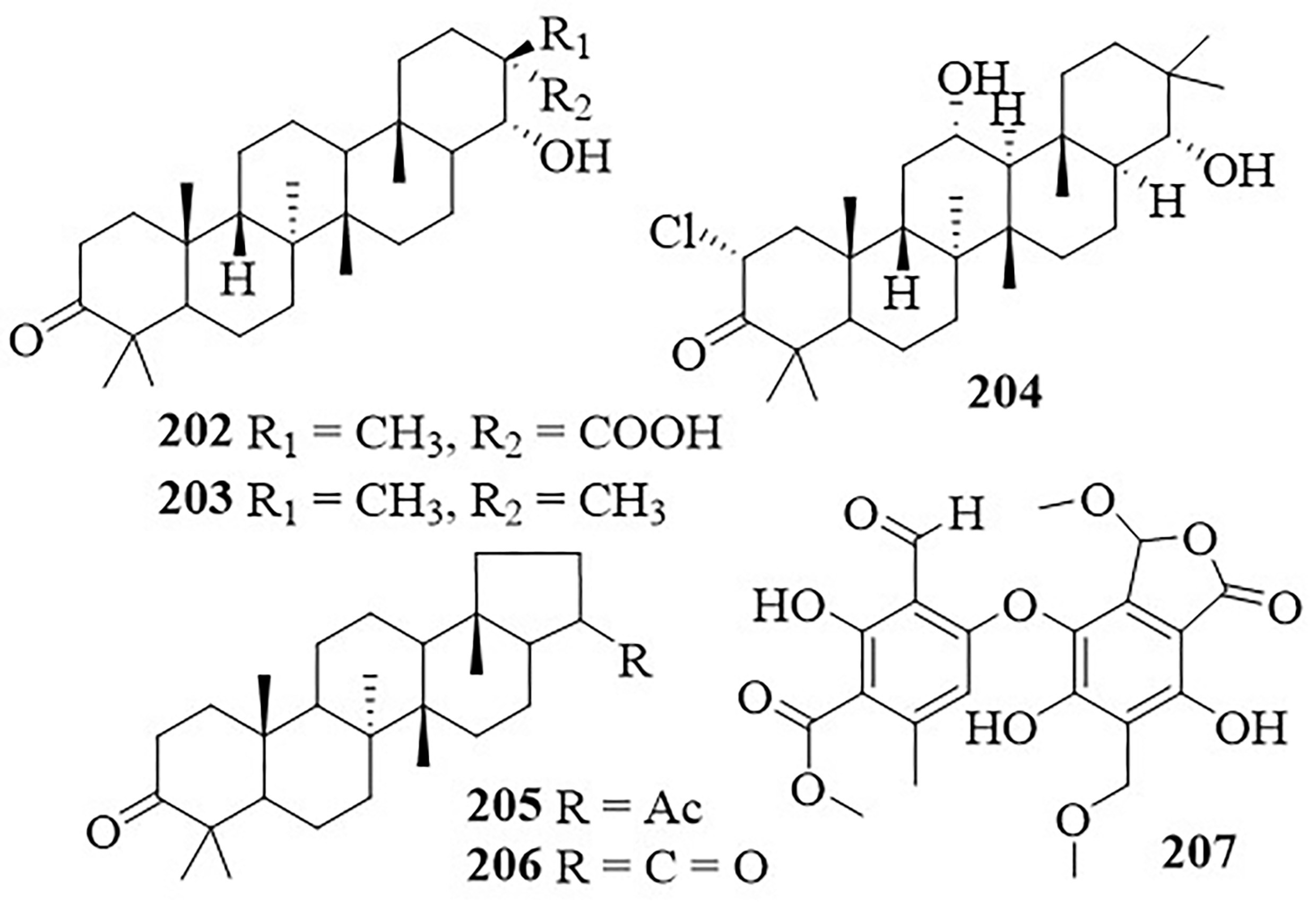
Total correlation spectroscopy (TOCSY) is an NMR experiment that reveals the relationships between all linked protons in a spin system (Diaz-Allen et al. 2021). First, the number of spin systems in the compound of interest must be determined, and then the connections between these spin systems form a unique "fingerprint". This fingerprint allows users to efficiently dereplicate known compounds from crude extracts and identify new compounds that are structurally related to known small molecules (Diaz-Allen et al. 2021; Diaz-Allen 2022). Using this approach, Diaz-Allen et al. (2021) discovered five new triterpenoids (202–206) (Fig. 33) from the lichen Niebla homalea and one new polyketone (207) (Fig. 33) from Niebla sp. However, the dereplication strategy based on 1D-TOCSY has its limitations, as it can only identify compounds with similar structures.
Dereplication strategy based on 13C-NMR
13C-NMR signals typically do not overlap easily and exhibit distinct peak shapes, making them an ideal data source for the development of various dereplication strategies (Sahayasheela et al. 2022).
NAPROC-13. Lopez-Perez et al. (2007) developed a 13C-NMR spectral database comprising over 6,000 natural compounds, facilitating rapid identification of known components in crude extracts and aiding structural elucidation of unknown compounds.
Pattern recognition strategy. Hubert et al. (2014) proposed a 13C NMR-based pattern recognition strategy, where crude extracts are fractionated by centrifugal partition extraction (CPE), and the 13C NMR spectra of each fraction are analyzed. Hierarchical cluster analysis (HCA) identifies chemical shift clusters, which are matched to a local database for dereplication and component identification. Oettl et al. (2014) identified six compounds in the lichen Pseudevernia furfuracea by utilizing an in-house 13C chemical shift library and pattern recognition method.
Computer-aided 13C NMR profiling of crude natural extracts. Bakiri et al. (2017) developed a computer-aided 13C NMR dereplication workflow that enables rapid identification of major constituents in natural mixtures without prefractionation. The algorithm compares experimental 13C NMR data with predicted spectra from a natural metabolite database, calculating a score function to evaluate the match quality. This approach reduces isolation steps and directly analyzes crude extracts, streamlining the dereplication process.
MixONat software. MixONat is a software developed for the automated dereplication of natural products using 13C-NMR data. It processes 13C-NMR, DEPT-135, and DEPT-90 spectra to filter carbon types (i.e., CH3, CH2, CH, and C), helping to identify known major compounds in complex mixtures. The software compares experimental or predicted chemical shifts (δC) with relevant databases, producing interactive results that can be refined based on the user’s phytochemical or metabolomic knowledge. MixONat is particularly useful for identifying stereoisomers and enhancing the efficiency of dereplication, and it is designed to work with both freely available and commercial δC datasets (Bruguière et al. 2020; 2021). Yin et al. (2023) employed the 13C-NMR-based MixONat strategy in combination with 2D NMR techniques to efficiently dereplicate known secondary metabolites in Aloe vera and successfully identify two new chromones.
acd_lotusv7 database. Bruguière et al. (2018) used experimental 13C-NMR data in ACD/Labs commercial software to predict δC with 73% accuracy, then matched the corresponding structures in a δC database to successfully identify Polycyclic Polyprenylated AcylPhloroglucinols (PPAPs) from Garcinia bancana extract. Nuzillard (2021) developed the free Python script CNMR_Predict, which supplements taxon-oriented search results from the LOTUS database (lotus.naturalproducts.net) with predicted 13C-NMR data from the ACD/Labs CNMR predictor and database software (acdlabs.com), creating easily searchable databases. In 2023, Nuzillard’s team further developed this concept into the acd_lotusv7 database (Kuhn & Nuzillard 2023). This open-source database integrates 13C-NMR data and can be easily accessed through the nmrshiftdb2 online interface, enabling free retrieval and analysis of compound structures recorded in acd_lotusv7 (Kuhn & Nuzillard 2023).
Dereplication strategy based on 2D-NMR
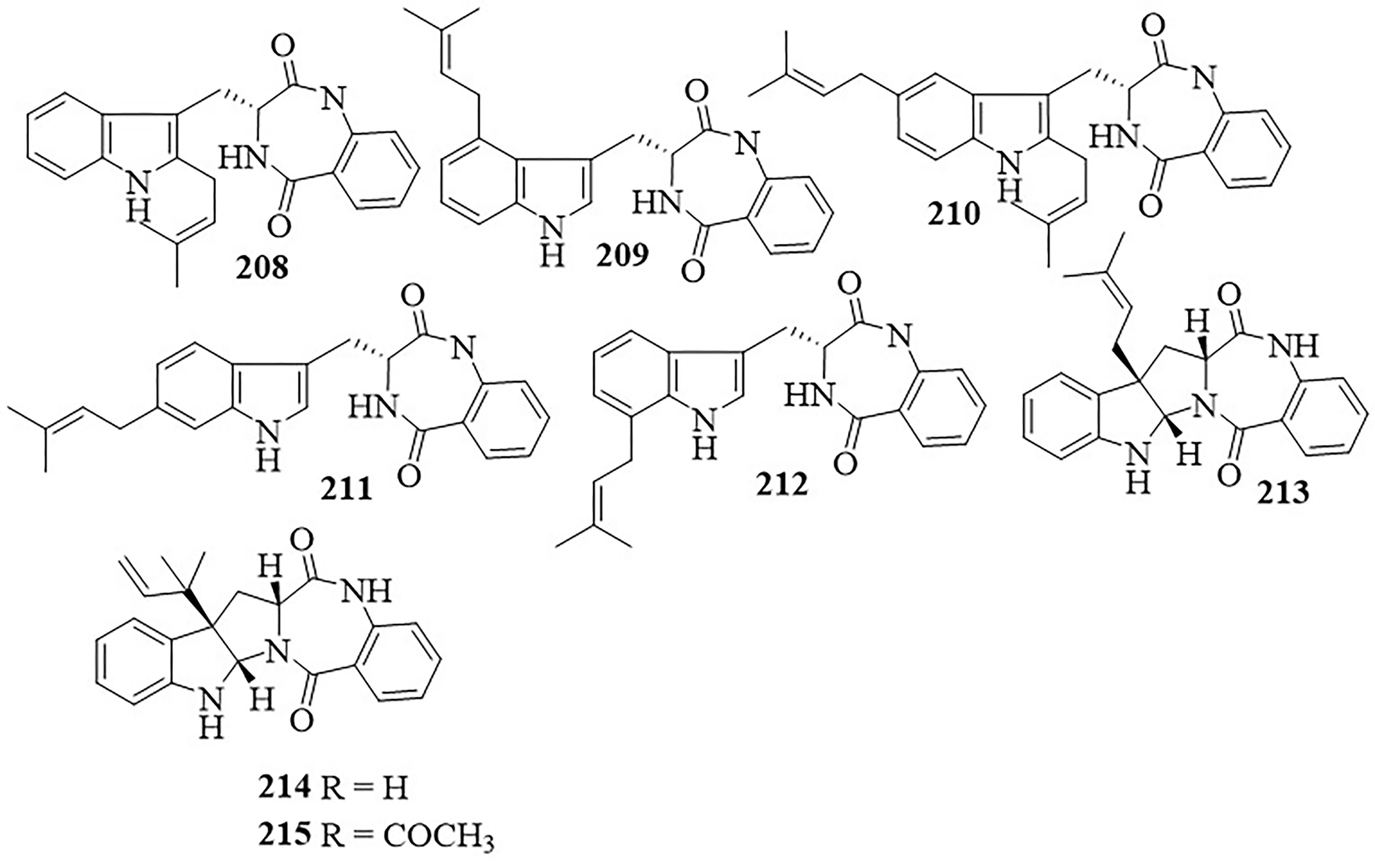
Small molecule accurate recognition technology (SMART). Zhang et al. (2017) introduced Small Molecule Accurate Recognition Technology (SMART), a deep-learning approach that combines Heteronuclear Single Quantum Coherence (HSQC) spectra with convolutional neural networks (CNNs) for the efficient dereplication of natural products. SMART employs a Siamese neural network to train on a dataset of HSQC spectra from 2054 natural products, constructing a node space where compounds with similar structures are spatially close, while those with larger structural differences are distant. This allows for rapid identification and dereplication of compounds in complex natural product mixtures by comparing new analytes to this node space. Reher et al. (2020) expanded the dataset to include 25,434 HSQC spectra from the JEOL database (JEOL) and 27,642 predicted spectra from ACD/Labs software, which led to the release of SMART 2.0 (SMART) (Reher et al. 2020). The expansion significantly improved the ability of SMART to identify natural products with diverse structural types by increasing the number of training sets. Guided by SMART and OSMAC strategies, eight new indole-benzodiazepine derivatives (asperdinones A–H, 208–215) (Fig. 34) were isolated from the mangrove-derived fungus Aspergillus spinosus strain WHUF0344 (Lu et al. 2024). These new compounds featured a range of unique structural motifs, including dimeric alkaloids and a rare pentacyclic skeleton, with some showing moderate inhibitory effects against α-glucosidase (IC50 values: 24.65–312.25 μM).
Metabolomics and dereplication by two-dimensional experiments (MADByTE). Linington's group developed a new data analysis platform for complex mixture analysis, called MADByTE (Metabolomics and Dereplication by Two-Dimensional Experiments) (Egan et al. 2021). This platform combines TOCSY and HSQC spectra to identify spin system features in complex mixtures and constructs a chemical similarity network to achieve dereplication by identifying common proton spin coupling systems (Egan et al. 2021). To assess MADByTE's performance, Flores-Bocanegra et al. (2022) used the platform to detect two classes of fungal secondary metabolites: resorcylic acid lactones (RALs) and spirobisnaphthalenes. The platform successfully clustered these compounds from seven fungal extracts by generating a rotating system feature network. NMR-guided isolation led to the discovery of three new palmarumycins (216−218) (Fig. 35) (Flores-Bocanegra et al. 2022).
Tomic novelty scoring technology. Clair’s team developed a method based on sorting atomic novelty to identify new features of secondary metabolites using HSQC data (Duggan et al. 2020). This approach involves listing 10,308 signal peaks from the Human Metabolome Database (HMDB) and BioMagResBank, then calculating the distance between each signal peak in the analyte and the nearest peak in the database to assign a score. The method efficiently identifies novel compounds with significant structural differences from known metabolites in the library. While effective in identifying novel compounds, false positives remain a challenge (Reher et al. 2020).
Diffusion ordered NMR spectroscopy (DOSY). In mixed samples, the diffusion rates of molecules in solution vary due to differences in their size and shape. Based on this principle, Carroll's group developed diffusion-ordered NMR spectroscopy (DOSY) to distinguish components of a mixture by their diffusion coefficients (D) (Morris & Johnson Jr 1992). By establishing a power law relationship between diffusion coefficient (D) and molecular weight (MW), molecular weights can be predicted from experimental diffusion values (D) (Kleks et al. 2021). Since many factors can influence D, Carroll’s team developed multiple linear regression equations that incorporate various physicochemical properties to accurately correlate experimental and predicted diffusion coefficients (Kleks et al. 2021). These equations, when combined with structural features obtained from DOSY and NMR analysis, enable the dereplication of known natural products in a mixture, without the need for MS data, by matching the experimental D values with predicted diffusion coefficients and computational structural features in the DEREP-NP database (Zani & Carroll 2017).
Integration of MS and NMR in Natural Product Discovery
DEREP-NP
In 2017, Zani and Carroll developed a new platform, DEREP-NP (DEREP-NP), designed to analyze NMR and MS spectroscopic data for inferring structural features in natural products, enabling dereplication (Zani & Carroll 2017). By counting the occurrences of specific structural features in an unknown compound—deduced from the analysis of its NMR (1H, HSQC, and/or HMBC) and/or MS data—the platform retrieves matching structures from the Universal Natural Products Database (UNPD) that share the same numeric combination of searched features (Zani & Carroll 2017). However, this methodology is limited to purified natural products and fractions containing a small number of individual compounds.
Eliciting nature's activities (ELIAN)
Grienke et al. (2019) developed a 1H NMR-MS workflow called ELIAN (Eliciting Nature's Activities), which utilizes statistical heterocovariance analysis (HetCA) of 1H NMR spectra to identify chemical features linked to biological activity before undertaking complex separations. Using this approach, the authors successfully discovered steroid sulfatase-inhibiting lanostane triterpenes in an extract from the polypore fungus Fomitopsis pinicola (Grienke et al. 2019).
Discussion
Traditional methods for isolating and identifying natural products often involve extensive effort, with a high likelihood of rediscovering known compounds. To address this challenge, various dereplication strategies using LC-MS/MS and NMR data have been developed. Among these, the GNPS platform is particularly popular for its ability to annotate, classify, and visualize compounds in crude extracts (Qin et al. 2022a). While mass spectrometry offers high sensitivity and can detect trace amounts of compounds, low-concentration compounds may be difficult to isolate for structural characterization (Kleks et al. 2021).
1H-NMR is less frequently used for dereplication due to the overlap of proton signals, which limits the development of proton-based dereplication strategies (Bruguière et al. 2020). In contrast, 13C-NMR provides more distinct peak shapes, though it suffers from challenges such as low natural abundance, long acquisition times, and high costs (Bruguière et al. 2020). Despite these drawbacks, 13C-NMR is particularly well-suited for identifying diastereomers (Clendinen et al. 2014; Wu et al. 2022).
Emerging artificial intelligence techniques, such as SMART 2.0, are overcoming bottlenecks in natural product research by enhancing the accuracy of 2D-NMR dereplication (Reher et al. 2020). Moreover, integrative strategies combining GNPS, MS2LDA, bioinformatics, and computational tools have further improved efficiency and facilitated the discovery of novel compounds (Reher et al. 2020; Egan et al. 2021; Hyde et al. 2024).
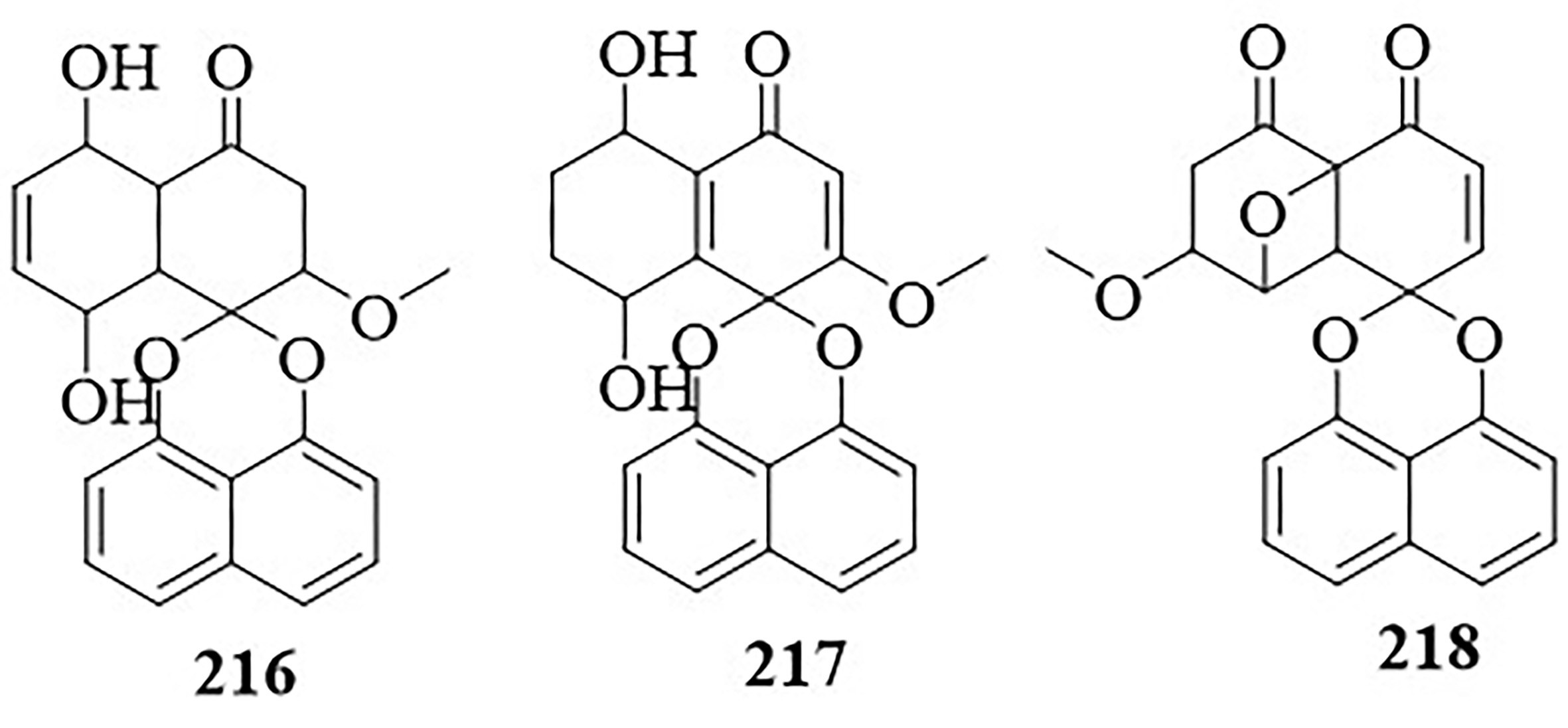
Combining multiple strategies for mining new natural products in fungi
In many cases, a single strategy may fail to produce satisfactory results. However, combining multiple approaches often leads to significant success. For instance, silent gene clusters are first successfully activated by altering culture conditions or through gene mining, followed by the accurate detection of new natural products using dereplication strategies based on LC-MS/MS and/or NMR, which ultimately enhances the effectiveness of targeted separation. Below are examples showcasing how different strategies have been combined to discover new fungal secondary metabolites.
GNPS + 1H-NMR
Integrating the cheminformatics-based MS/MS molecular networking approach with highly sensitive 1H-NMR allows for the elucidation of structural relationships while accelerating compound dereplication from crude extracts, thereby improving the efficiency of new compound discovery (Hou et al. 2019a). Using this combined technique, seven novel cyclohexadepsipeptides (216−222) (Fig. 36), chrysogeamides A−G, were identified from Penicillium chrysogenum CHNSCLM-0003, isolated from the gorgonian coral Carijoa sp. (GX-WZ-2010001) (Hou et al. 2019a). Among these, compounds 220 and 225 promoted angiogenesis in zebrafish at a concentration of 1.0 μg/mL, with no toxicity observed in zebrafish embryos at 100 μg/mL (Hou et al. 2019a). Notably, compound 222 contains a rare 3-hydroxy-4-methylhexanoic acid (HMHA) moiety (Hou et al. 2019a). Similarly, this approach led to the discovery of three new cycloheptapeptides, asperversiamides A–C (226–228) (Fig. 36), from the coral-derived fungus Aspergillus versicolor CHNSCLM-0063. All three compounds exhibited potent inhibitory activity against Mycobacterium marinum (Hou et al. 2019b).
LC-MS/MS + 1H-NMR + Epigenetic modifiers
The combination of histone deacetylase inhibitor (SAHA) and DNA methyltransferase inhibitor (5-Aza) significantly altered the HPLC profile and 1H-NMR spectra of the EtOAc extract from the marine-derived fungus Aspergillus versicolor strain XS-20090066, compared to the untreated control (Wu et al. 2020). MS/MS-based molecular networking led to the identification of two novel nucleoside derivatives, kipukasins K (229) and L (230), and a new bisabolane sesquiterpene, aspergillusene E (231) (Fig. 37). Compounds 229 and 231 exhibited antibacterial activity against Staphylococcus epidermidis and Staphylococcus aureus, with MIC values ranging from 8–16 µg/mL.
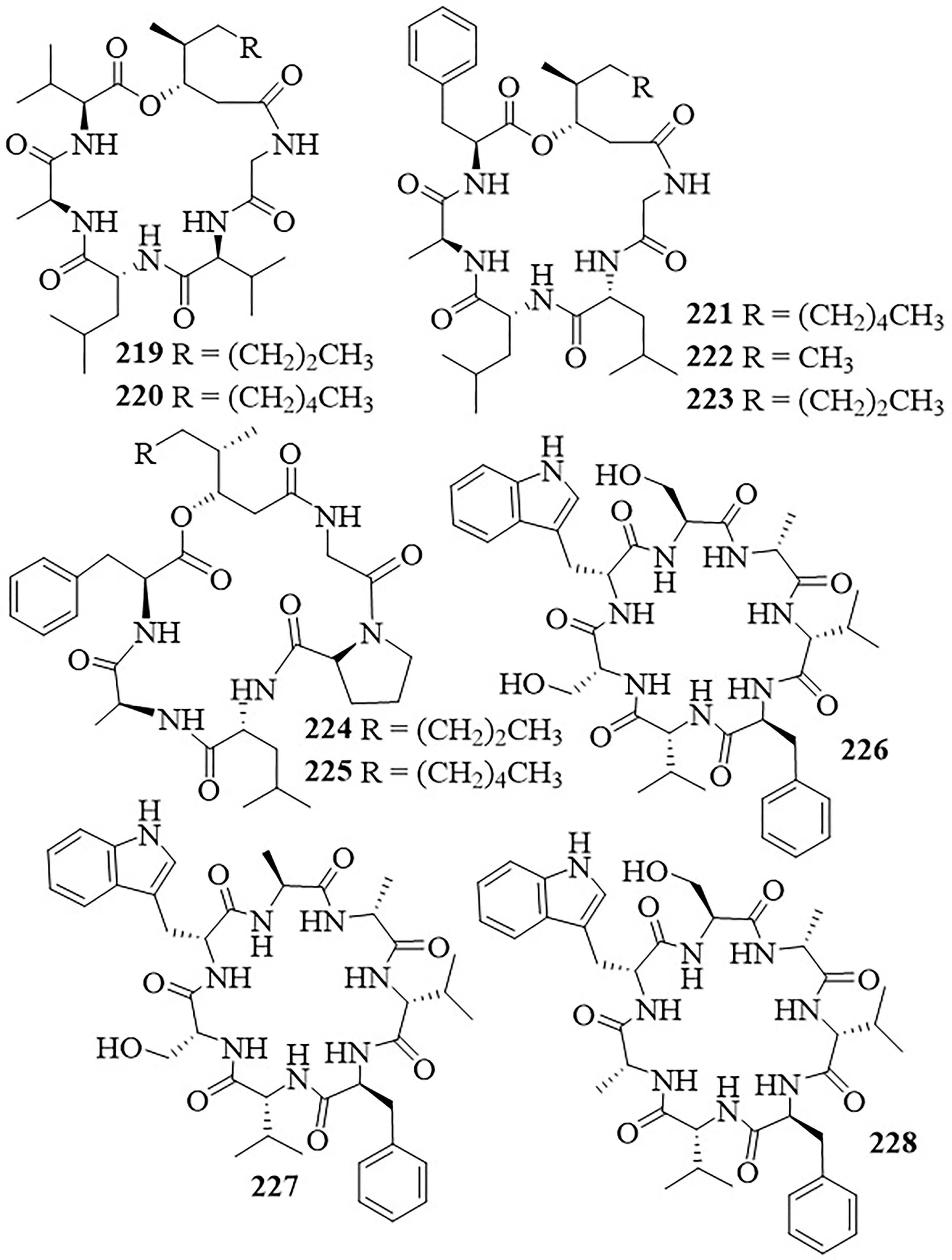
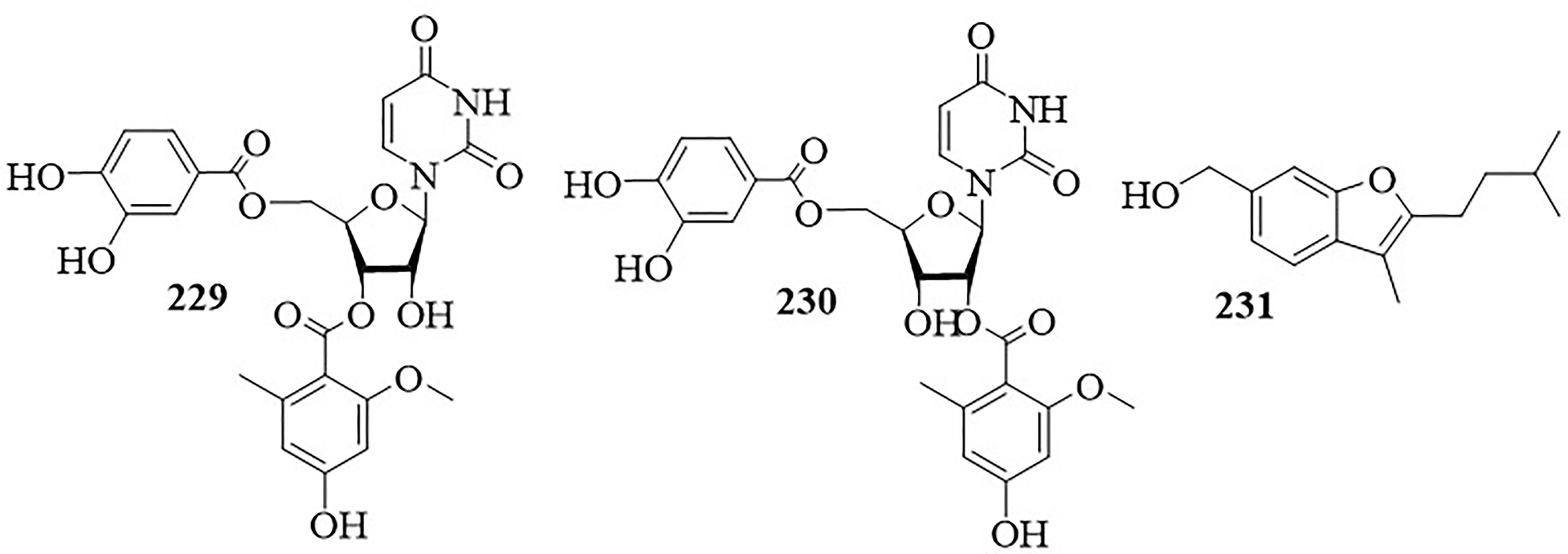
Co-culture + GNPS
Co-culturing of marine Cosmospora sp. with the phytopathogen Magnaporthe oryzae, coupled with molecular networking, led to the discovery of two new soudanones H and I (232–233) (Fig. 38) (Oppong-Danquah et al. 2022).
GNPS + OSMAC
Guided by molecular networking and the OSMAC approach, nine highly oxygenated meroterpenoids, peniciacetals A−I (234–242) (Fig. 39), were isolated from the mangrove-derived fungus Penicillium sp. HLLG-122 (Qin et al. 2023). Notably, peniciacetals A−B (234–235) feature a unique 6/6/6/6/5 pentacyclic structure, incorporating a 4,6-dimethyl-2,5-dioxohexahydro-6-carboxy-4H-furo[2,3-b]pyran moiety, while peniciacetals C−D (236–237) contain a rare 3,6-dimethyldihydro-4H-furo[2,3-b]pyran-2,5-dione unit with a fused 6/6/6/5/6 pentacyclic skeleton.
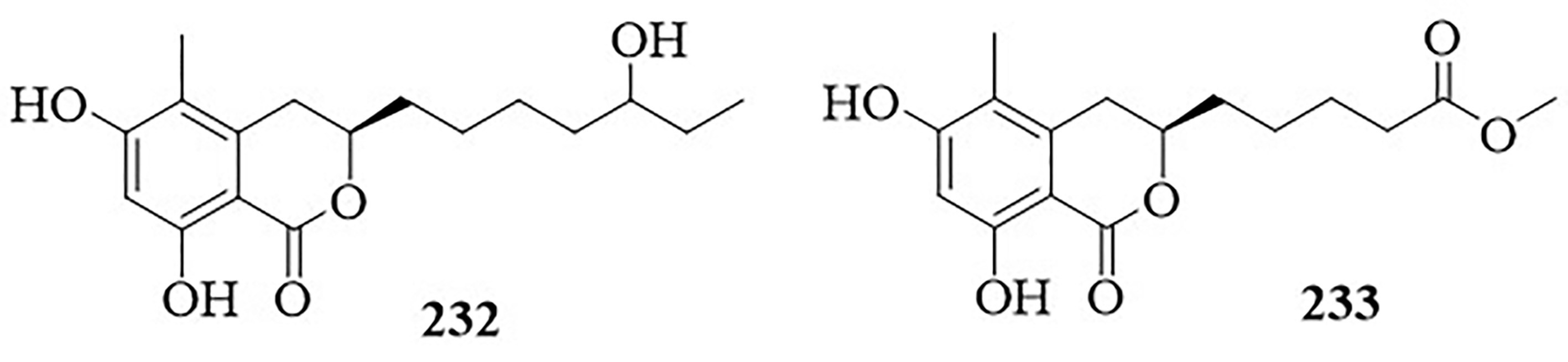
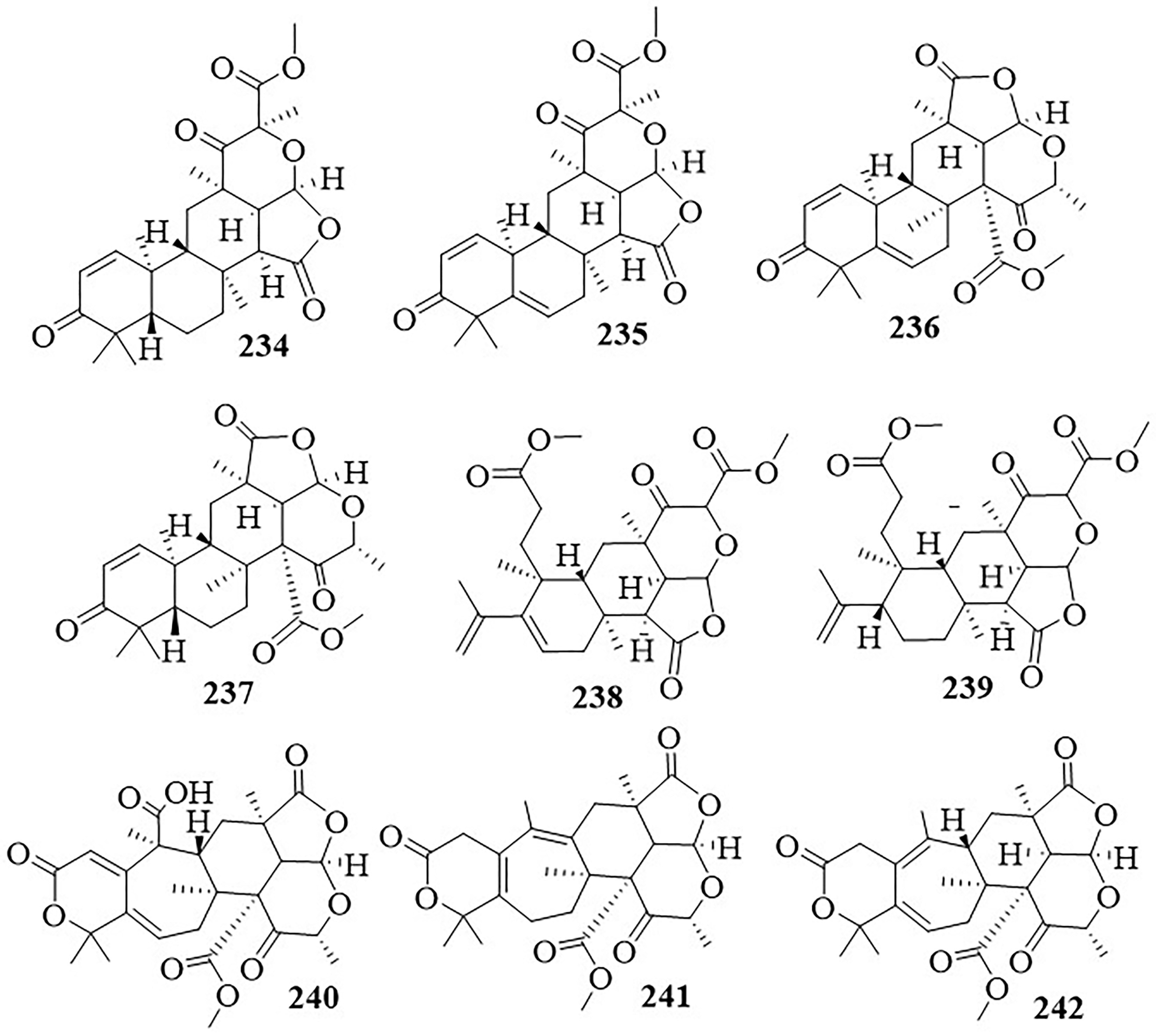
GNPS + Epigenetic modifiers
MS/MS networking revealed a large family of aspercryptins, with 13 members identified from a rpdAKD mutant of Aspergillus nidulans that exhibits constitutively lower levels of the HDAC RpdA (AN4493). Among them, the novel aspercryptins A1 (243) and A2 (244) were isolated and characterized (Fig. 40) (Henke et al 2016). Interestingly, the lipid tails of these lipopeptides are located at the C-terminus.
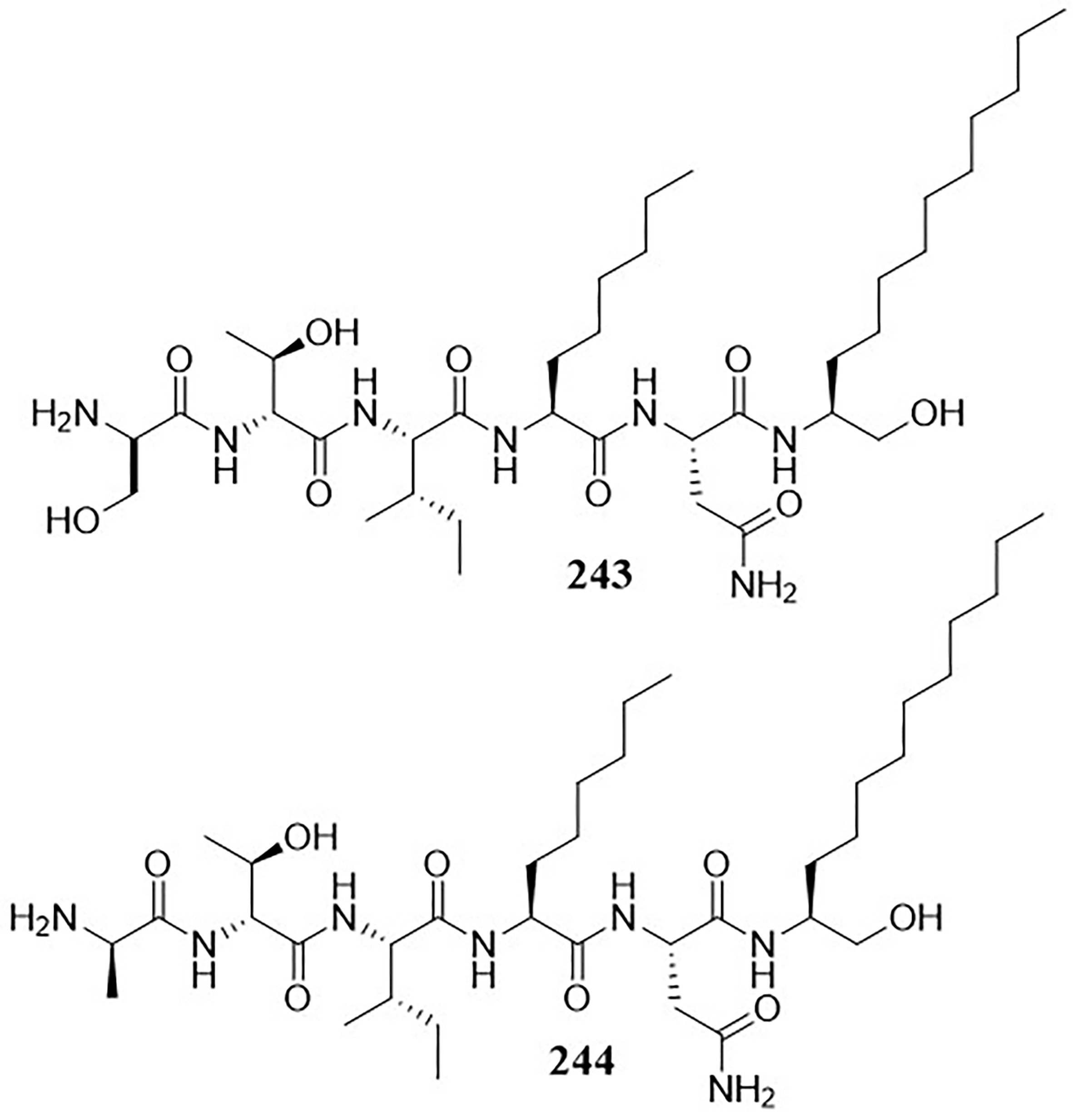
Heterologous expression + GNPS
Ten new asperterpenoids (245−254) (Fig. 41), possessing a rare 5/7/3/6/5 skeleton, were obtained from two Aspergillus oryzae transformants with heterologous expression of a terpene cyclase gene (AstC) and one or two P450 genes (AstB/A) under molecular networking guidance (Huang et al. 2019; Yang et al. 2022). Compounds 245−247 exhibited moderate to strong antimalarial activity against the chloroquine-sensitive P. falciparum strain 3D7, with EC50 values ranging from 2.1 to 19.3 μM. Five new indole diterpenoids (255−259) (Fig. 41) were activated by introducing the exogenous P450 gene (AstB) in Aspergillus oryzae transformants, also under molecular networking guidance (Yang et al. 2023).
Metabolic shunting + OSMAC
The endophytic fungus Penicillium dangeardii, isolated from the toxic plant Lysidice rhodostegia, predominantly produces rubratoxins under varied culture conditions, indicating that most other gene clusters are silent (Wei et al. 2021). Despite attempts to enhance rubratoxin production through epigenetic regulation and the OSMAC approach, high levels of rubratoxins were maintained. However, applying a metabolic shunting strategy—deleting the key gene rbtJ encoding the PKS responsible for rubratoxin biosynthesis—successfully activated multiple silent gene clusters, leading to the identification of 23 new compounds (260−282) (Fig. 42), including azaphilone monomers (260−265), glycosides (266−267), dimers (268−275), trimers (276−280), and two unclassified polyketides (281−282) (Wei et al. 2021).
Discussion
These cases demonstrate that combinatorial strategies not only improve the efficiency of discovering novel fungal natural products but also effectively minimize the redundant isolation of known compounds. However, several challenges remain. First, the activation of silent BGCs is inherently unpredictable—while genome mining can identify potential BGCs, their successful expression is not guaranteed. Second, the regulatory mechanisms governing fungal secondary metabolism are highly intricate. Third, dereplication strategies are still constrained by the limited coverage of current databases and the risk of misidentification due to signal overlap (Meunier et al. 2024). Fourth, Heterologous expression remains challenging, as fungal BGCs are typically large, making direct cloning and expression in heterologous hosts (e.g., E. coli, S. cerevisiae) difficult. Key obstacles include promoter incompatibility, differences in post-translational modifications, and potential toxicity of the expressed products (Keller 2019). Finally, integrating and interpreting multi-omics data remains a significant analytical challenge.
Conclusion and future perspectives
This review highlights the workflow and recent advancements in mining new natural products from fungi, reporting a total of 282 novel fungal secondary metabolites. Although traditional strategies are time-consuming, labor-intensive, and yield unpredictable results due to the complexity of factors influencing gene expression, they remain straightforward to implement, cost-effective, and broadly applicable. As such, these methods are promising for studying fungi whose genomes are not yet sequenced or fully characterized. Gene mining strategies, on the other hand, require genetic manipulation of the target fungi and demand substantial research funding. However, these approaches are highly targeted, yield significant returns, and represent an inevitable trend in the future development of natural product discovery.
Fungi have a long history of use in medicine. With the rapid advances in bioinformatics and sequencing technologies, a vast number of uncharacterized BGCs in fungi have been identified, indicating that fungi's full potential in producing novel natural products remains untapped. The development of BGC prediction tools, such as antiSMASH (Blin et al. 2023), Cluster ASSignment by Islands of Sites (CASSIS) (Lakhani et al. 2020), and Prediction Informatics for Secondary Metabolomes (PRISM) (Skinnider et al. 2020), has made significant contributions to fungal gene mining. These innovative bioinformatics tools provide more accurate predictions and reliable datasets for identifying BGCs.
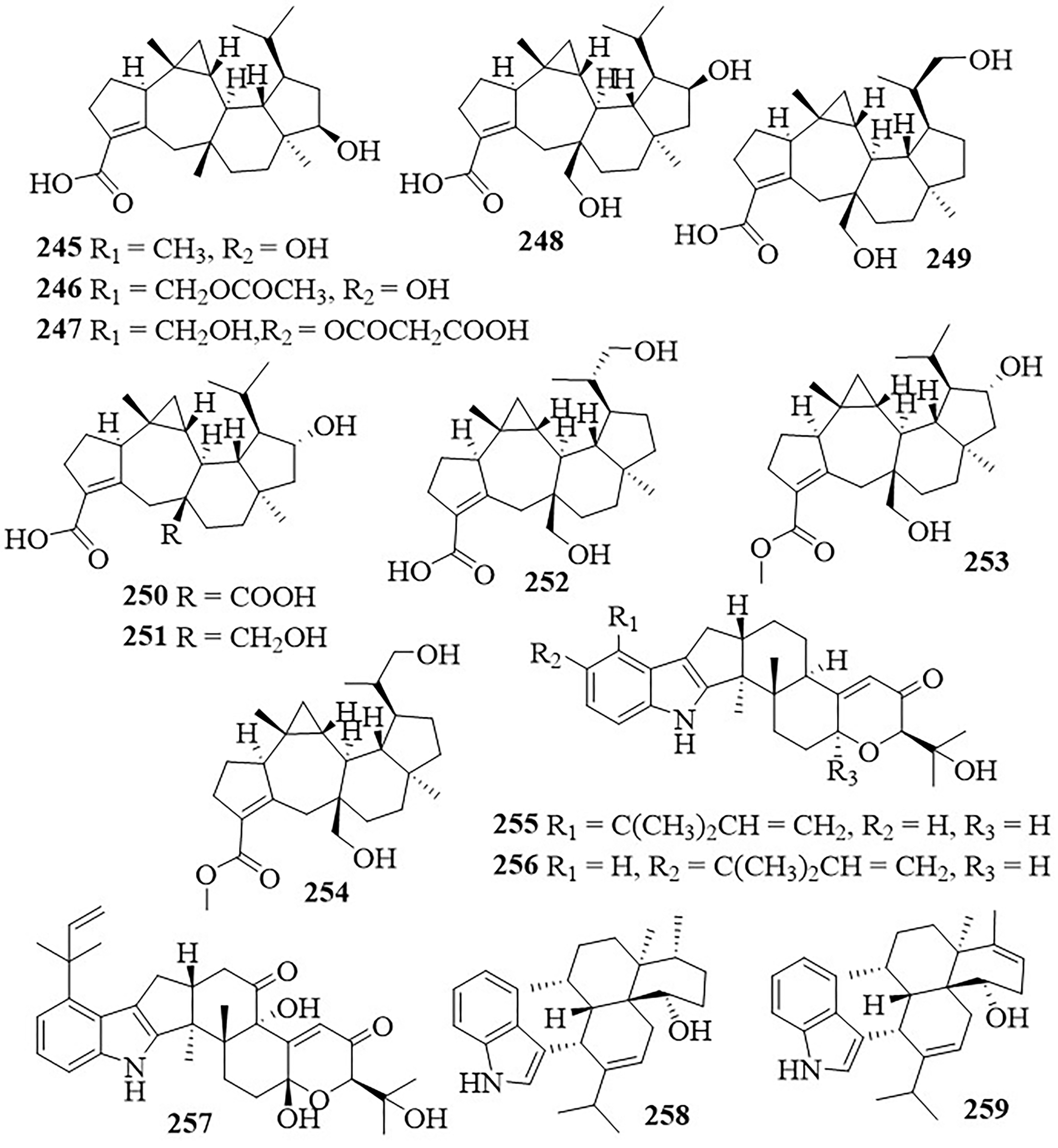
Whether using traditional approaches or gene mining strategies to obtain fungal natural products, the process invariably involves fermenting the strain, extracting metabolites, and performing separation and purification steps. This, in turn, inevitably leads to the challenge of redundant separation of known compounds. Meanwhile, dereplication strategies are advancing at an unprecedented pace. While foundational data acquisition still relies on NMR and LC-MS/MS, synthetic biology is rapidly transforming natural product production. In the future, enzyme-catalyzed synthesis of pseudo-natural products is expected to significantly broaden the chemical space (Vinogradov et al. 2022; Ye & Zhang 2023). The integration of multiple disciplines, such as computer science, bioinformatics, and metabolomics, is propelling the field of natural product discovery to new heights. Notably, the development of artificial intelligence (AI) is accelerating and refining the application of these strategies (Sahayasheela et al. 2022). Recent research from the teams of Wenbing Yin and Chunxiong Luo has demonstrated the power of combining advanced microfluidic platforms with mathematical modeling (Xu et al. 2024). This integration has enabled the quantitative characterization of Aspergillus nidulans gene regulatory circuits and facilitated the precise production of novel bioactive natural products (Xu et al. 2024). As a vast reservoir of natural products, fungi represent an invaluable treasure trove with immense potential for future development.
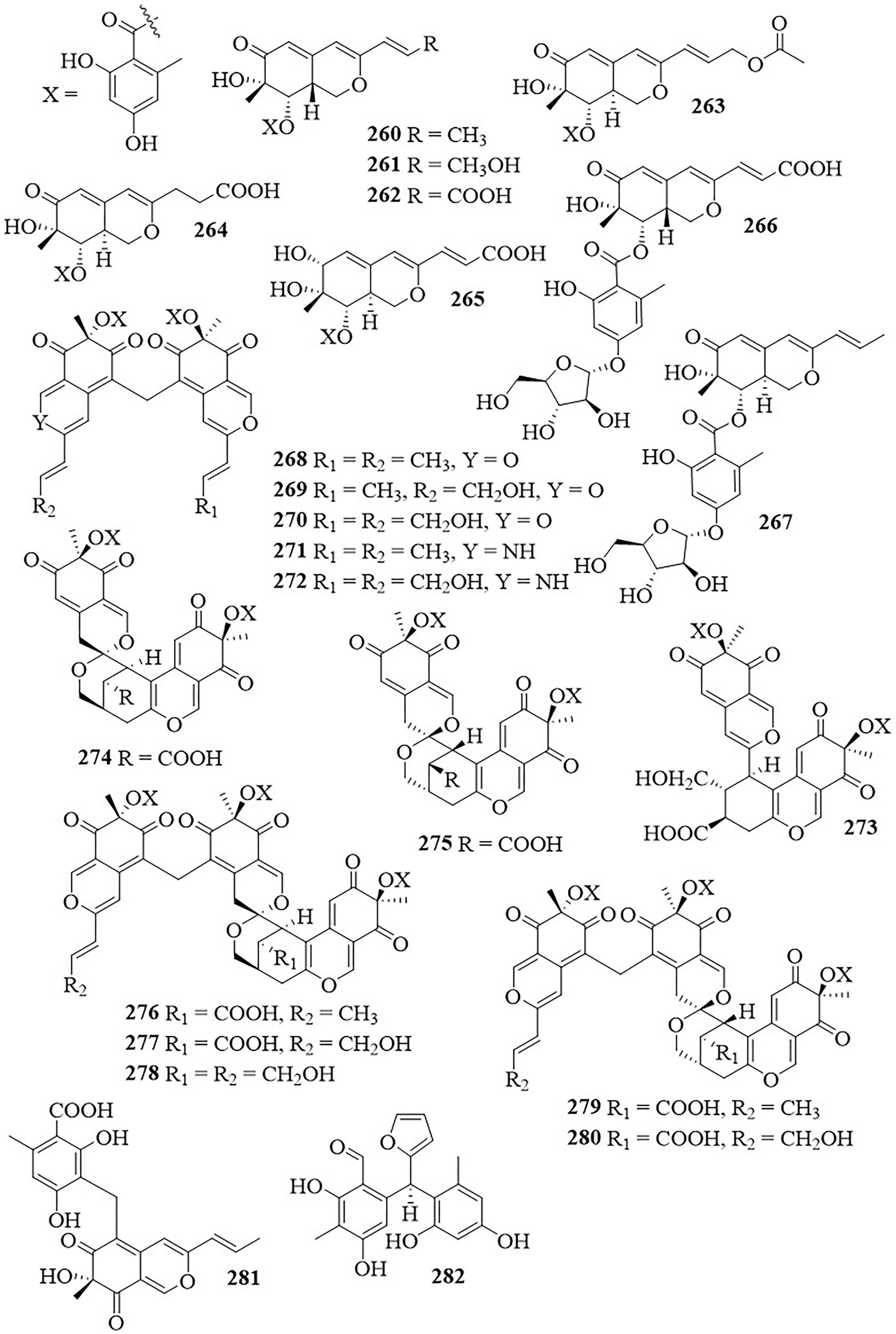
Acknowledgments
This work was financed by the National Natural Science Foundation of China (NSFC 32360011) and Guizhou Institute of Technology High-Level Talent Research Start-up Project (2023GCC069). K.D. Hyde was funded by the Distinguished Scientist Fellowship Program (DSFP), King Saud University, Kingdom of Saudi Arabia.
Author contributions
Conceptualization: Zhang LJ, Lu YZ, Sun JZ and Hyde KD; methodology: Zhang LJ, Jayawardena RS and Ausana M; formal analysis: Zhang LJ, Ma J and Xiao XJ; writing—original draft preparation: Zhang LJ, Jayawardena RS and Ausana M; writing—review & editing: Liu NG, Lu YZ, Sun JZ, Hyde KD, Xiao XJ, Xiao YP and Arttapon W; supervision: Lu YZ, Sun JZ and Hyde KD; project administration: Lu YZ and Sun JZ; funding acquisition: Lu YZ. All authors have read and agreed to the published version of the manuscript.
ORCID
Li-Juan Zhang: https://orcid.org/0000-0002-3234-6757
Ruvishika S. Jayawardena: https://orcid.org/0000-0001-7702-4885
Yong-Zhong Lu: https://orcid.org/0000-0002-1033-5782
Jing-Zu Sun: https://orcid.org/0000-0003-1893-1869
Conflict of interest statement
The author list includes members of the Editorial Board of PhytoMycology. They were not involved in the journal’s review of, or decisions related to, this manuscript. The authors declare no competing interests.
Supplementary Information
The online version contains supplemental information available at https://doi.org/10.65390/phytomyc.2026.2003
Rights and permissions
The Author(s) 2026. Published by BioAcademic Press on behalf of School of Life Science and Technology, University of Electronic Science and Technology of China and Faculty of Agriculture, Chiang Mai University. This is an open access article under the Creative Commons Attribution license (http://creativecommons.org/licenses/by/4.0), which permits use, distribution and reproduction in any medium, provided the original work is properly cited.
References
- Abraham E (1979) A glimpse of the early history of the cephalosporins. Reviews of Infectious Diseases:99–105.
https://doi.org/10.1093/clinids/1.1.99 - Ahuja M, Chiang YM, Chang SL, Praseuth MB, Entwistle R, Sanchez JF, Lo HC, Yeh HH, Oakley BR, Wang CCC (2012) Illuminating the diversity of aromatic polyketide synthases in Aspergillus nidulans. Journal of the American Chemical Society 134:8212–8221.
https://doi.org/10.1021/ja3016395 - Amaike S, Keller NP (2011) Aspergillus flavus. Annual Review of Phytopathology 49:107–133.
https://doi.org/10.1146/annurev-phyto-072910-095221 - Arora S, Hu W, Kothari PK (2018) An analysis of the t-SNE algorithm for data visualization. In: Conf Learn Theory, Proc Mach Learn Res 75:1455–1462.
https://proceedings.mlr.press/v75/arora18a.html - Asai T, Chung YM, Sakurai H, Ozeki T, Chang FR, Yamashita K, Oshima Y (2012) Tenuipyrone, a novel skeletal polyketide from the entomopathogenic fungus Isaria tenuipes cultivated in the presence of epigenetic modifiers. Organic Letters 14:513–515.
https://doi.org/10.1021/ol203097b - Asai T, Otsuki S, Sakurai H, Yamashita K, Ozeki T, Oshima Y (2013a) Benzophenones from an endophytic fungus, Graphiopsis chlorocephala, from Paeonia lactiflora cultivated in the presence of an NAD⁺-dependent HDAC inhibitor. Organic Letters 15:2058–2061.
https://doi.org/10.1021/ol400781b - Asai T, Yamamoto T, Shirata N, Taniguchi T, Monde K, Fujii I, Gomi K, Oshima Y (2013b). Structurally diverse chaetophenol productions induced by chemically mediated epigenetic manipulation of fungal gene expression. Organic Letters 15:3346–3349.
https://doi.org/10.1021/ol401386w - Bai M, Zhang YY, Dong SH, Ren H, Chen JJ, Yao GD, Liu QB, Lin B, Huang XX, Song SJ (2020) Targeted isolation of cytotoxic germacranolide sesquiterpenes from Elephantopus scaber L. using small molecule accurate recognition technology. Bioorganic Chemistry 104:104314.
https://doi.org/10.1016/j.bioorg.2020.104314 - Bai Y, Gao M, Wen LL, He C, Chen Y, Liu C, Fu X, Huang S (2018) Applications of microfluidics in quantitative biology. Biotechnology Journal 13:1700170.
https://doi.org/10.1002/biot.201700170 - Bakiri A, Hubert J, Reynaud R, Lanthony S, Harakat D, Renault JH, Nuzillard JM (2017) Computer-aided 13C NMR chemical profiling of crude natural extracts without fractionation. Journal of Natural Products 80:1387–1396.
https://doi.org/10.1021/acs.jnatprod.6b01063 - Balkovec JM, Hughes DL, Masurekar PS, Sable CA, Schwartz RE, Singh SB (2014) Discovery and development of first-in-class antifungal caspofungin (CANCIDAS®)—A case study. Natural Product Reports 31:15–34.
https://doi.org/10.1039/C3NP70070D - Bartholomew HP, Bradshaw M, Jurick WM II, Fonseca JM (2021) The good, the bad, and the ugly: mycotoxin production during postharvest decay and their influence on tritrophic host–pathogen–microbe interactions. Frontiers in Microbiology 12:611881.
https://doi.org/10.3389/fmicb.2021.611881 - Baskiyar S, Ren C, Heck KL, Hall AM, Gulfam M, Packer S, Seals CD, Calderón AI (2022) Bioactive natural products identification using automation of molecular networking software. Journal of Chemical Information and Modeling 62:6378–6385.
https://doi.org/10.1021/acs.jcim.2c00307 - Berger T, Alenfelder J, Steinmüller S, Heimann D, Gohain N, Petras D, Wang M, Berger R, Kostenis E, Reher R (2024) A MassQL-integrated molecular networking approach for the discovery and substructure annotation of bioactive cyclic peptides. Journal of Natural Products 87:692–704.
https://doi.org/10.1021/acs.jnatprod.3c00750 - Bertrand S, Bohni N, Schnee S, Schumpp O, Gindro K, Wolfender JL (2014) Metabolite induction via microorganism co-culture: a potential way to enhance chemical diversity for drug discovery. Biotechnology Advances 32:1180–1204.
https://doi.org/10.1016/j.biotechadv.2014.03.001 - Bethe B (1994) Ausarbeitung von Methoden und Konzepten zum Auffinden und Bewerten von Biosyntheseleistungen im Sekundarstoffwechsel sowie Isolierung und Strukturaufklärung der Sekundarstoffe des Streptomyceten Stammes Go 40/41. PhD thesis, Universität Göttingen.
- Bian G, Hou A, Yuan Y, Hu B, Cheng S, Ye Z, Di Y, Deng Z, Liu T (2018) Metabolic engineering-based rapid characterization of a sesquiterpene cyclase and the skeletons of fusariumdiene and fusagramineol from Fusarium graminearum. Organic Letters 20:1626–1629.
https://doi.org/10.1021/acs.orglett.8b00366 - Bind S, Bind S, Sharma A, Chaturvedi P (2022) Epigenetic modification: A key tool for secondary metabolite production in microorganisms. Frontiers in Microbiology 13:784109.
https://doi.org/10.3389/fmicb.2022.784109 - Blin K, Shaw S, Augustijn HE, Reitz ZL, Biermann F, Alanjary M, Fetter A, Terlouw BR, Metcalf WW, Helfrich EJN et al (2023) antiSMASH 7.0: new and improved predictions for detection, regulation, chemical structures and visualisation. Nucleic Acids Research 51:W46–W50.
https://doi.org/10.1093/nar/gkad344 - Blumenthal T (2004) Operons in eukaryotes. Briefings in Functional Genomics 3:199–211.
https://doi.org/10.1093/bfgp/3.3.199 - Bo G (2000) Giuseppe Brotzu and the discovery of cephalosporins. Clinical Microbiology and Infection 6:6–8.
https://doi.org/10.1111/j.1469-0691.2000.tb02032.x - Bode HB, Bethe B, Höfs R, Zeeck A (2002) Big effects from small changes: possible ways to explore nature's chemical diversity. ChemBioChem 3:619–627.
https://doi.org/10.1002/1439-7633(20020703)3:7<619::AID-CBIC619>3.0.CO;2-9 - Bruguière A, Derbré S, Bréard D, Tomi F, Nuzillard JM, Richomme P (2021) 13C NMR dereplication using MixONat software: a practical guide to decipher natural products mixtures. Planta Medica 87:1061–1068.
https://doi.org/10.1055/a-1470-0446 - Bruguière A Derbré S Coste C Le Bot M Siegler B Leong ST Sulaiman SN Awang K Richomme P (2018) 13C-NMR dereplication of Garcinia extracts: Predicted chemical shifts as reliable databases. Fitoterapia 131:59–64.
https://doi.org/10.1016/j.fitote.2018.09.010 - Bruguière A, Derbré S, Dietsch J, Leguy J, Rahier V, Pottier Q, Bréard D, Suor-Cherer S, Viault G, Le Ray AM et al (2020) MixONat, a software for the dereplication of mixtures based on 13C NMR spectroscopy. Analytical Chemistry 92:8793–8801.
https://doi.org/10.1021/acs.analchem.0c00193 - Burmeister A, Grünberger A (2020) Microfluidic cultivation and analysis tools for interaction studies of microbial co-cultures. Current Opinion in Biotechnology 62:106–115.
https://doi.org/10.1016/j.copbio.2019.09.001 - Cao L, Guler M, Tagirdzhanov A, Lee YY, Gurevich A, Mohimani H (2021) MolDiscovery: learning mass spectrometry fragmentation of small molecules. Nature Communications 12:3718.
https://www.nature.com/articles/s41467-021-23986-0 - Chen L, Wu H, Liu H, Li E, Ren J, Wang W, Wang S, Yin WB (2019) Genetic dereplication of Trichoderma hypoxylon reveals two novel polycyclic lactones. Bioorganic Chemistry 91:103185.
https://doi.org/10.1016/j.bioorg.2019.103185 - Chen Y, Yang W, Zou G, Wang G, Kang W, Yuan J, She Z (2022) Cytotoxic bromine- and iodine-containing cytochalasins produced by the mangrove endophytic fungus Phomopsis sp. QYM-13 using the OSMAC approach. Journal of Natural Products 85:1229–1238.
https://doi.org/10.1021/acs.jnatprod.1c01115 - Chiang YM, Ahuja M, Oakley CE, Entwistle R, Asokan A, Zutz C, Wang CCC, Oakley BR (2016) Development of genetic dereplication strains in Aspergillus nidulans results in the discovery of aspercryptin. Angew Chem Int Ed 55:1662–1665.
https://doi.org/10.1002/anie.201507097 - Chung YM, El-Shazly M, Chuang DW, Hwang TL, Asai T, Oshima Y, Ashour ML, Wu YC, Chang FR (2013) Suberoylanilide hydroxamic acid, a histone deacetylase inhibitor, induces the production of anti-inflammatory cyclodepsipeptides from Beauveria felina. Journal of Natural Products 76:1260–1266.
https://doi.org/10.1021/np400143j - Clendinen CS, Lee-McMullen B, Williams CM, Stupp GS, Vandenborne K, Hahn DA, Walter GA, Edison AS (2014) ¹³C NMR metabolomics: applications at natural abundance. Analytical Chemistry 86:9242–9250.
https://doi.org/10.1021/ac502346h - D’Ambrosio S, Ventrone M, Alfano A, Schiraldi C, Cimini D (2021) Microbioreactor (micro-Matrix) potential in aerobic and anaerobic conditions with different industrially relevant microbial strains. Biotechnology Progress 37:e3184.
https://doi.org/10.1002/btpr.3184 - Diaz-Allen C (2022) Developing a 1D-TOCSY NMR-based dereplication technique to facilitate the isolation of new, cytotoxic compounds from natural products. PhD thesis, The Ohio State University.
- Diaz-Allen C, Spjut RW, Kinghorn AD, Rakotondraibe HL (2021) Prioritizing natural product compounds using 1D-TOCSY NMR spectroscopy. Trends in Organic Chemistry 22:99–114.
- Ding W, Tian D, Chen M, Xia Z, Tang X, Zhang S, Wei J, Li X, Yao X, Wu B et al (2023) Molecular networking-guided isolation of cyclopentapeptides from the hydrothermal vent sediment derived fungus Aspergillus pseudoviridinutans TW58-5 and their anti-inflammatory effects. Journal of Natural Products 86:1919–1930.
https://doi.org/10.1021/acs.jnatprod.3c00287 - Ding Z, Wang X, Kong FD, Huang HM, Zhao YN, Liu M, Wang ZP, Han J (2020) Overexpression of global regulator Talae1 leads to the discovery of new antifungal polyketides from endophytic fungus Trichoderma afroharzianum. Frontiers in Microbiology 11:622785.
https://doi.org/10.3389/fmicb.2020.622785 - Dong QY, Wang Y, Wang ZQ, Liu YF, Yu H (2022) Phylogeny and systematics of the genus Tolypocladium (Ophiocordycipitaceae, Hypocreales). Journal of Fungi 8:1158.
https://doi.org/10.3390/jof8111158 - Duggan BM, Cullum R, Fenical W, Amador LA, Rodríguez AD, La Clair JJ (2020) Searching for small molecules with an atomic sort. Angewandte Chemie 132:1160–1164.
https://doi.org/10.1002/ange.201911862 - Dührkop K, Fleischauer M, Ludwig M, Aksenov AA, Melnik AV, Meusel M, Dorrestein PC, Rousu J, Böcker S (2019) SIRIUS 4: a rapid tool for turning tandem mass spectra into metabolite structure information. Nature Methods 16:299–302.
https://doi.org/10.1038/s41592-019-0344-8 - Dührkop K, Nothias LF, Fleischauer M, Reher R, Ludwig M, Hoffmann MA, Petras D, Gerwick WH, Rousu J, Dorrestein PC et al (2021) Systematic classification of unknown metabolites using high-resolution fragmentation mass spectra. Nature Biotechnology 39:462–471.
https://doi.org/10.1038/s41587-020-0740-8 - Edison AS, Colonna M, Gouveia GJ, Holderman NR, Judge MT, Shen X, Zhang S (2020) NMR: unique strengths that enhance modern metabolomics research. Analytical Chemistry 93:478–499.
https://doi.org/10.1021/acs.analchem.0c04414 - Egan JM, van Santen JA, Liu DY, Linington RG (2021) Development of an NMR-based platform for the direct structural annotation of complex natural products mixtures. Journal of Natural Products 84:1044–1055.
https://doi.org/10.1021/acs.jnatprod.0c01076 - El-Elimat T, Figueroa M, Ehrmann BM, Cech NB, Pearce CJ, Oberlies NH (2013) High-resolution MS, MS/MS, and UV database of fungal secondary metabolites as a dereplication protocol for bioactive natural products. Journal of Natural Products 76:1709–1716.
https://doi.org/10.1021/np4004307 - Ernst RR, Bodenhausen G, Wokaun A (1990) Principles of nuclear magnetic resonance in one and two dimensions. Oxford University Press, New York.
- Espinosa-Ortiz EJ, Rene ER, Gerlach R (2022). Potential use of fungal-bacterial co-cultures for the removal of organic pollutants. Critical Reviews in Biotechnology 42:361–383.
https://doi.org/10.1080/07388551.2021.1940831 - Fan A, Mi W, Liu Z, Zeng G, Zhang P, Hu Y, Fang W, Yin WB (2017). Deletion of a histone acetyltransferase leads to the pleiotropic activation of natural products in Metarhizium robertsii. Organic Letters 19:1686–1689.
https://doi.org/10.1021/acs.orglett.7b00476 - Fan B, Dewapriya P, Li F, Blümel M, Tasdemir D (2020) Pyrenosetins A–C, new decalinoylspirotetramic acid derivatives isolated by bioactivity-based molecular networking from the seaweed-derived fungus Pyrenochaetopsis sp. FVE-001. Marine Drugs 18:47.
https://doi.org/10.3390/md18010047 - Fan B, Grauso L, Li F, Scarpato S, Mangoni A, Tasdemir D (2022) Application of feature-based molecular networking for comparative metabolomics and targeted isolation of stereoisomers from algicolous fungi. Marine Drugs 20:210.
https://doi.org/10.3390/md20030210 - Feng T, Wei C, Deng X, Chen D, Wen Z, Xu J (2022) Epigenetic manipulation induced production of immunosuppressive chromones and cytochalasins from the mangrove endophytic fungus Phomopsis asparagi DHS-48. Marine Drugs 20:616.
https://doi.org/10.3390/md20100616 - Fischedick JT, Johnson SR, Ketchum RE, Croteau RB, Lange BM (2015) NMR spectroscopic search module for Spektraris, an online resource for plant natural product identification – taxane diterpenoids from Taxus × media cell suspension cultures as a case study. Phytochemistry 113:87–95.
https://doi.org/10.1016/j.phytochem.2014.11.020 - Fleming A (1929) On the antibacterial action of cultures of a penicillium, with special reference to their use in the isolation of B. influenzae. British Journal of Experimental Pathology 10:226.
- Flores-Bocanegra L, Al Subeh ZY, Egan JM, El-Elimat T, Raja HA, Burdette JE, Pearce CJ, Linington RG, Oberlies NH (2022) Dereplication of fungal metabolites by NMR-based compound networking using MADByTE. Journal of Natural Products 85:614–624.
https://doi.org/10.1021/acs.jnatprod.1c00841 - Floss HG (2006) Combinatorial biosynthesis—potential and problems. Journal of Biotechnology 124:242–257.
https://doi.org/10.1016/j.jbiotec.2005.12.001 - Freire VF, Gubiani JR, Spencer TM, Hajdu E, Ferreira AG, Ferreira DAS, de Castro Levatti EV, Burdette JE, Camargo CH, Tempone AG et al (2022) Feature-based molecular networking discovery of bromopyrrole alkaloids from the marine sponge Agelas dispar. Journal of Natural Products 85:1340–1350.
https://doi.org/10.1021/acs.jnatprod.2c00094 - Fuchser J, Zeeck A (1997) Aspinolides and aspinonene/aspyrone co-metabolites, new pentaketides produced by Aspergillus ochraceus. Liebigs Annalen 1:87–95.
- Gacek A, Strauss J (2012) The chromatin code of fungal secondary metabolite gene clusters. Applied Microbiology and Biotechnology 95:1389–1404.
https://doi.org/10.1007/s00253-012-4208-8 - Galappaththi MC, Patabendige NM, Premarathne BM, Hapuarachchi KK, Tibpromma S, Dai DQ, Suwannarach N, Rapior S, Karunarathna SC (2022) A review of Ganoderma triterpenoids and their bioactivities. Biomolecules 13:24.
https://doi.org/10.3390/biom13010024 - Gaudêncio SP, Pereira F (2015) Dereplication: racing to speed up the natural products discovery process. Natural Product Reports 32:779–810.
https://doi.org/10.1039/C4NP00134F - Grienke U, Foster PA, Zwirchmayr J, Tahir A, Rollinger JM, Mikros E (2019) ¹H NMR-MS-based heterocovariance as a drug discovery tool for fishing bioactive compounds out of a complex mixture of structural analogues. Scientific Reports 9:11113.
https://doi.org/10.1038/s41598-019-47434-8 - Guijas C, Montenegro-Burke JR, Domingo-Almenara X, Palermo A, Warth B, Hermann G, Koellensperger G, Huan T, Uritboonthai W, Aisporna AE et al (2018) METLIN: a technology platform for identifying knowns and unknowns. Analytical Chemistry 90:3156–3164.
https://doi.org/10.1021/acs.analchem.7b04424 - Guo C, Dai H, Zhang M, Liao H, Zhang R, Chen B, Han J, Liu H (2022) Molecular networking assisted discovery and combinatorial biosynthesis of new antimicrobial pleuromutilins. European Journal of Medicinal Chemistry 243:114713.
https://doi.org/10.1016/j.ejmech.2022.114713 - Guo DL, Qiu L, Feng D, He X, Li XH, Cao ZX, Gu YC, Mei L, Deng F, Deng Y (2020) Three new α-pyrone derivatives induced by chemical epigenetic manipulation of Penicillium herquei, an endophytic fungus isolated from Cordyceps sinensis. Natural Product Research 34:958–964.
https://doi.org/10.1080/14786419.2018.1544974 - Guo W, Peng J, Zhu T, Gu Q, Keyzers RA, Li D (2013) Sorbicillamines A–E, nitrogen-containing sorbicillinoids from the deep-sea-derived fungus Penicillium sp. F23-2. Journal of Natural Products 76:2106–2112.
https://doi.org/10.1021/np4006647 - Hannigan GD, Prihoda D, Palicka A, Soukup J, Klempir O, Rampula L, Durcak J, Wurst M, Kotowski J, Chang D et al (2019) A deep learning genome-mining strategy for biosynthetic gene cluster prediction. Nucleic Acids Research 47:e110.
https://doi.org/10.1093/nar/gkz654 - He QF, Wu ZL, Li L, Sun W, Wang G, Jiang R, Hu L, Shi L, He R, Wang Y et al (2021) Discovery of neuritogenic Securinega alkaloids from Flueggea suffruticosa by a building blocks-based molecular network strategy. Angew Chem Int Ed 60:19609–19613.
https://doi.org/10.1002/anie.202103878 - He Y, Wang B, Chen W, Cox RJ, He J, Chen F (2018) Recent advances in reconstructing microbial secondary metabolites biosynthesis in Aspergillus spp. Biotechnology Advances 36:739–783.
https://doi.org/10.1016/j.biotechadv.2018.02.001 - Hebra T, Elie N, Poyer S, Van Elslande E, Touboul D, Eparvier V (2021) Dereplication, annotation, and characterization of 74 potential antimicrobial metabolites from Penicillium sclerotiorum using t-SNE molecular networks. Metabolites 11:444.
https://doi.org/10.3390/metabo11070444 - Henke MT, Soukup AA, Goering AW, McClure RA, Thomson RJ, Keller NP, Kelleher NL (2016) New aspercryptins, lipopeptide natural products, revealed by HDAC inhibition in Aspergillus nidulans. ACS Chemical Biology 11:2117–2123.
https://doi.org/10.1021/acschembio.6b00398 - Hou XM, Li YY, Shi YW, Fang YW, Chao R, Gu YC, Wang CY, Shao CL (2019a) Integrating molecular networking and ¹H NMR to target the isolation of chrysogeamides from a library of marine-derived Penicillium fungi. Journal of Organic Chemistry 84:1228–1237.
https://doi.org/10.1021/acs.joc.8b02614 - Hou XM, Liang TM, Guo ZY, Wang CY, Shao CL (2019b) Discovery, absolute assignments, and total synthesis of asperversiamides A–C and their potent activity against Mycobacterium marinum. Chemical Communications 55:1104–1107.
https://doi.org/10.1039/C8CC09347D - Hu Y, Zhao X, Song Y, Jiang J, Long T, Cong M, Miao Y, Liu Y, Yang Z, Zhu Y et al (2024) Anti-inflammatory and neuroprotective α-pyrones from a marine-derived strain of the fungus Arthrinium arundinis and their heterologous expression. Journal of Natural Products 87:1975–1982.
https://doi.org/10.1021/acs.jnatprod.4c00393 - Huang JH, Lv JM, Wang QZ, Zou J, Lu YJ, Wang QL, Chen DN, Yao XS, Gao H, Hu D (2019) Biosynthesis of an anti-tuberculosis sesterterpenoid asperterpenoid A. Organic & Biomolecular Chemistry 17:248–251.
https://doi.org/10.1039/C8OB02832J - Hubert J, Nuzillard JM, Purson S, Hamzaoui M, Borie N, Reynaud R, Renault JH (2014) Identification of natural metabolites in mixture: a pattern recognition strategy based on ¹³C NMR. Analytical Chemistry 86:2955–2962.
https://doi.org/10.1021/ac403223f - Hyde KD, Baldrian P, Chen Y, Thilini Chethana KW, De Hoog S, Doilom M, de Farias ARG, Gonçalves MFM, Gonkhom D, Gui H et al (2024) Current trends, limitations and future research in the fungi. Fungal Diversity 1–71.
https://doi.org/10.1007/s13225-023-00532-5 - Jackman CM, Deans KW, Forney LJ, Lin XN (2019) Microdroplet co-cultivation and interaction characterization of human vaginal bacteria. Integrative Biology 11:69–78.
https://doi.org/10.1093/intbio/zyz006 - Jin LQ, Jin WR, Ma ZC, Shen Q, Cai X, Liu ZQ, Zheng YG (2019) Promoter engineering strategies for the overproduction of valuable metabolites in microbes. Applied Microbiology and Biotechnology 103:8725–8736.
https://doi.org/10.1007/s00253-019-10172-y - Johnston CW, Skinnider MA, Wyatt MA, Li X, Ranieri MRM, Yang L, Zechel DL, Ma B, Magarvey NA (2015) An automated Genomes-to-Natural Products platform (GNP) for the discovery of modular natural products. Nature Communications 6:8421.
https://doi.org/10.1038/ncomms9421 - Kankanamge S, Khalil ZG, Sritharan T, Capon RJ (2023) Noonindoles G–L: indole diterpene glycosides from the Australian marine-derived fungus Aspergillus noonimiae CMB-M0339. Journal of Natural Products 86:508–516.
https://doi.org/10.1021/acs.jnatprod.2c01024 - Keller NP (2019) Fungal secondary metabolism: regulation, function, and drug discovery. Nature Reviews Microbiology 17:167–180.
https://doi.org/10.1038/s41579-018-0121-1 - Khaldi N, Seifuddin FT, Turner G, Haft D, Nierman WC, Wolfe KH, Fedorova ND (2010) SMURF: genomic mapping of fungal secondary metabolite clusters. Fungal Genetics and Biology 47:736–741.
https://doi.org/10.1016/j.fgb.2010.06.003 - Khlebodarova TM, Bogacheva NV, Zadorozhny AV, Bryanskaya AV, Vasilieva AR, Chesnokov DO, Pavlova EI, Peltek SE (2024) Komagataella phaffii as a platform for heterologous expression of enzymes used for industry. Microorganisms 12:346.
https://doi.org/10.3390/microorganisms12020346 - Kleks G, Holland DC, Porter J, Carroll AR (2021) Natural products dereplication by diffusion ordered NMR spectroscopy (DOSY). Chemical Science 12:10930–10943.
https://doi.org/10.1039/D1SC02940A - Knowles SL, Raja HA, Roberts CD, Oberlies NH (2022) Fungal–fungal co-culture: a primer for generating chemical diversity. Natural Product Reports 39:1557–1573.
https://doi.org/10.1039/D1NP00070E - Kuhn S, Nuzillard JM (2023) Easy structural dereplication of natural products by means of predicted carbon-13 nuclear magnetic resonance spectroscopy data. Chemistry - Methods 3:e202200054.
https://doi.org/10.1002/cmtd.202200054 - Lakhani J, Khunteta A, Chowdhary A, Harwani D (2020) In silico detection tools to identify fungal secondary metabolites and their biosynthetic gene clusters. In: Gupta VK, Rodriguez-Couto S, Sharma GD (eds) New and Future Developments in Microbial Biotechnology and Bioengineering: Recent Advances in Application of Fungi and Fungal Metabolites. Elsevier, Amsterdam, pp 23–35.
https://doi.org/10.1016/B978-0-12-821008-6.00003-7 - Lei H, Zhao P (2019) Advances in research on mining fungal secondary metabolites. Science China Life Sciences 49:865–873.
https://doi.org/10.1360/SSV-2019-0091 - Li CY, Chung YM, Wu YC, Hunyadi A, Wang CCC, Chang FR (2020) Natural products development under epigenetic modulation in fungi. Phytochemistry Reviews 19:1323–1340.
https://doi.org/10.1007/s11101-020-09684-7 - Li HT, Zhou H, Duan RT, Li HY, Tang LH, Yang XQ, Yang YB, Ding ZT (2019) Inducing secondary metabolite production by co-culture of the endophytic fungus Phoma sp. and the symbiotic fungus Armillaria sp. Journal of Natural Products 82:1009–1013.
https://doi.org/10.1021/acs.jnatprod.8b00685 - Li ZJ, Song CX, Yang JY, et al (2024) Clustering algorithm based on DINNSM and its application in gene expression data analysis. Technology and Health Care 32:229–239.
https://doi.org/10.3233/thc-248020 - Li ZW, Fan CL, Sun B, Huang L, Wang Z, Huang X, Zhang S, Ye W, Wu Z, Zhang X (2024) Discovery of unusual ajmaline-macroline type bisindole alkaloids from Alstonia macrophylla by building blocks-based molecular networking. Chemistry - A European Journal 30:e202303519.
https://doi.org/10.1002/chem.202303519 - Ligon BL (2004) Penicillin: its discovery and early development. Seminars in Pediatric Infectious Diseases 15:52–57.
https://doi.org/10.1053/j.spid.2004.02.001 - Lin S, Huang J, Zeng H, Tong Q, Zhang X, Yang B, Ye Y, Wang J, Hu Z, Zhang Y (2022) Distachydrimanes A–F, phenylspirodrimane dimers and hybrids with cytotoxic activity from the coral-derived fungus Stachybotrys chartarum. Chinese Chemical Letters 33:4587–4594.
https://doi.org/10.1016/j.cclet.2022.03.064 - Lin TS, Chen B, Chiang YM, Wang CCC (2019) Discovery and elucidation of the biosynthesis of aspernidgulenes: novel polyenes from Aspergillus nidulans by using serial promoter replacement. ChemBioChem 20:329–334.
https://doi.org/10.1002/cbic.201800486 - Lin Z, Zhu T, Wei H, Zhang G, Wang H, Gu Q (2009) Spicochalasin A and new aspochalasins from the marine-derived fungus Spicaria elegans. European Journal of Organic Chemistry 2009:3045–3051.
https://doi.org/10.1002/ejoc.200801085 - Lin ZJ, Zhu TJ, Chen L, Gu QQ (2010) Three new aspochalasin derivatives from the marine-derived fungus Spicaria elegans. Chinese Chemical Letters 21:824–826.
https://doi.org/10.1016/j.cclet.2010.02.019 - Liu DS, Rong XG, Kang HH, Ma LY, Hamann MT, Liu WZ (2018) Raistrickiones A–E from a highly productive strain of Penicillium raistrickii generated through thermo change. Marine Drugs 16:213.
https://doi.org/10.3390/md16060213 - Liu H, Pu YH, Ren JW, Li EW, Guo LX, Yin WB (2020) Genetic dereplication driven discovery of a tricinoloniol acid biosynthetic pathway in Trichoderma hypoxylon. Organic & Biomolecular Chemistry 18:5344–5348.
https://doi.org/10.1039/D0OB01202E - Liu L, Wang B, Duan G, Wang J, Pan Z, Ou M, Bai X, Wang P, Zhao D, Nan N et al (2023) Histone deacetylase UvHST2 is a global regulator of secondary metabolism in Ustilaginoidea virens. Journal of Agricultural and Food Chemistry 71:13124–13136.
https://doi.org/10.1021/acs.jafc.3c01782 - Liu W, Zhai S, Zhang L, Chen Y, Liu Z, Ma W, Zhang T, Zhang W, Ma L, Zhang C et al (2024a) Expanding the chemical diversity of grisechelins via heterologous expression. Journal of Natural Products 87:371–380.
https://doi.org/10.1021/acs.jnatprod.3c01132 - Liu WZ, Ma LY, Liu DS, Huang YL, Wang CH, Shi SS, Pan XH, Song XD, Zhu RX (2014) Peniciketals A–C, new spiroketals from saline soil derived Penicillium raistrichii. Organic Letters 16:90–93.
https://doi.org/10.1021/ol403076s - Liu Y, Ding L, Shi Y, Yan X, Wu B, He S (2022) Molecular networking-driven discovery of antibacterial perinadines, new tetracyclic alkaloids from the marine sponge-derived fungus Aspergillus sp. ACS Omega 7:9909–9916.
https://doi.org/10.1021/acsomega.2c00402 - Liu Y, Li P, Qi C, Zha Z, Meng J, Liu C, Han J, Zhou Q, Luo Z, Wang J et al (2024b) Cryptic piperazine derivatives activated by knocking out the global regulator LaeA in Aspergillus flavipes. Bioorganic & Medicinal Chemistry 103:117685.
https://doi.org/10.1016/j.bmc.2024.117685 - Lopez-Perez JL, Theron R, del Olmo E, Díaz D (2007) NAPROC-13: a database for the dereplication of natural product mixtures in bioassay-guided protocols. Bioinformatics 23:3256–3257.
https://doi.org/10.1093/bioinformatics/btm516 - Lu P, Shi Y, Zhang J, Hong K, Xue Y, Liu L (2024) New prenylated indole-benzodiazepine-2,5-diones with α-glucosidase inhibitory activities from the mangrove-derived Aspergillus spinosus. International Journal of Biological Macromolecules 257:128808.
https://doi.org/10.1016/j.ijbiomac.2023.128808 - Ludwig M, Fleischauer M, Dührkop K, Hoffmann MA, Böcker S (2020a) De novo molecular formula annotation and structure elucidation using SIRIUS 4. In: Li S (ed) Computational Methods and Data Analysis for Metabolomics. Methods Mol Biol. Humana, New York, pp 185–207.
https://doi.org/10.1007/978-1-0716-0239-3_11 - Ludwig M, Nothias LF, Dührkop K, Koester I, Fleischauer M, Hoffmann MA, Petras D, Vargas F, Morsy M, Aluwihare L et al (2020b) Database-independent molecular formula annotation using Gibbs sampling through ZODIAC. Nature Machine Intelligence 2:629–641.
https://doi.org/10.1038/s42256-020-00234-6 - Lyu HN, Liu HW, Keller NP, Yin WB (2020) Harnessing diverse transcriptional regulators for natural product discovery in fungi. Natural Product Reports 37:6–16.
https://doi.org/10.1039/C8NP00027A - Lyu JM, Cao ZQ, Huang JH, et al (2022) Research progress in strategies for activating fungal silent gene clusters. Progress in Pharmaceutical Sciences 46:173–183
- Ma C, Zhang K, Zhang X, Liu G, Zhu T, Che Q, Li D, Zhang G (2021) Heterologous expression and metabolic engineering tools for improving terpenoids production. Current Opinion in Biotechnology 69:281–289.
https://doi.org/10.1016/j.copbio.2021.02.008 - Mafezoli J, Xu YM, Hilário F, Freidhof B, Espinosa-Artiles P, dos Santos LC, de Oliveira MCF, Gunatilaka AAL (2018) Modulation of polyketide biosynthetic pathway of the endophytic fungus Anteaglonium sp. FL0768 by copper(II) and anacardic acid. Phytochemistry Letters 28:157–163.
https://doi.org/10.1016/j.phytol.2018.10.011 - Marø CE (2020) Manipulating the epigenetic machinery of marine fungi through the application of epigenetic modifiers to induce the biosynthesis of novel secondary metabolites. MS thesis, UiT The Arctic University of Norway.
- Medema MH, Kottmann R, Yilmaz P, Cummings M, Biggins JB, Blin K, de Bruijn I, Chooi YH, Claesen J, Coates RC et al (2015) Minimum information about a biosynthetic gene cluster. Nature Chemical Biology 11:625–631.
https://doi.org/10.1038/nchembio.1890 - Meng LH, Liu Y, Li XM, Xu GM, Ji NY, Wang BG (2015) Citrifelins A and B, citrinin adducts with a tetracyclic framework from cocultures of marine-derived isolates of Penicillium citrinum and Beauveria felina. Journal of Natural Products 78:2301–2305.
https://doi.org/10.1021/acs.jnatprod.5b00450 - Merhej J, Richard-Forget F, Barreau C (2011) The pH regulatory factor Pac1 regulates Tri gene expression and trichothecene production in Fusarium graminearum. Fungal Genetics and Biology 48:275–284.
https://doi.org/10.1016/j.fgb.2010.11.008 - Merwin NJ, Mousa WK, Dejong CA, Skinnider MA, Cannon MJ, Li H, Dial K, Gunabalasingam M, Johnston C, Magarvey NA (2020) DeepRiPP integrates multiomics data to automate discovery of novel ribosomally synthesized natural products. Proceedings of the National Academy of Sciences of the United States of America 117:371–380.
https://doi.org/10.1073/pnas.1901493116 - Meunier M, Schinkovitz A, Derbré S (2024) Current and emerging tools and strategies for the identification of bioactive natural products in complex mixtures. Natural Product Reports 41:1766–1786.
https://doi.org/10.1039/D4NP00006D - Mohimani H, Gurevich A, Mikheenko A, Garg N, Nothias LF, Ninomiya A, Takada K, Dorrestein PC, Pevzner PA (2017) Dereplication of peptidic natural products through database search of mass spectra. Nature Chemical Biology 13:30–37.
https://doi.org/10.1038/nchembio.2219 - Mohimani H, Gurevich A, Shlemov A, Mikheenko A, Korobeynikov A, Cao L, Shcherbin E, Nothias LF, Dorrestein PC, Pevzner PA (2018) Dereplication of microbial metabolites through database search of mass spectra. Nature Communications 9:4035.
https://doi.org/10.1038/s41467-018-06082-8 - Moon H, Lee MK, Bok I, Bok JW, Keller NP, Yu JH (2023) Unraveling the gene regulatory networks of the global regulators VeA and LaeA in Aspergillus nidulans. Microbiology Spectrum 11:e00166-23.
https://doi.org/10.1128/spectrum.00166-23 - Morehouse NJ, Clark TN, McMann EJ, van Santen JA, Haeckl FPJ, Gray CA, Linington RG (2023) Annotation of natural product compound families using molecular networking topology and structural similarity fingerprinting. Nature Communications 14:308.
https://doi.org/10.1038/s41467-022-35734-z - Morris KF, Johnson CS Jr (1992) Diffusion-ordered two-dimensional nuclear magnetic resonance spectroscopy. Journal of the American Chemical Society 114:3139–3141.
https://doi.org/10.1021/ja00034a071 - Niego AGT, Rapior S, Thongklang N, Raspé O, Hyde KD, Mortimer P (2023) Reviewing the contributions of macrofungi to forest ecosystem processes and services. Fungal Biology Reviews 44:100294.
https://doi.org/10.1016/j.fbr.2022.11.002 - Nishad JH, Singh A, Bharti R, Prajapati P, Sharma VK, Gupta VK, Kharwar RN (2021) Effect of the histone methyltransferase specific probe BRD4770 on metabolic profiling of the endophytic fungus Diaporthe longicolla. Frontiers in Microbiology 12:725463.
https://doi.org/10.3389/fmicb.2021.725463 - Niu S, Liu D, Shao Z, Liu J, Fan A, Lin W (2021) Chemical epigenetic manipulation triggers the production of sesquiterpenes from the deep-sea derived Eutypella fungus. Phytochemistry 192:112978.
https://doi.org/10.1016/j.phytochem.2021.112978 - Nothias LF, Nothias-Esposito M, Da Silva R, Wang M, Protsyuk I, Zhang Z, Sarvepalli A, Leyssen P, Touboul D, Costa J et al (2018) Bioactivity-based molecular networking for the discovery of drug leads in natural product bioassay-guided fractionation. Journal of Natural Products 81:758–767.
https://doi.org/10.1021/acs.jnatprod.7b00737 - Nothias LF, Petras D, Schmid R, Dührkop K, Rainer J, Sarvepalli A, Protsyuk I, Ernst M, Tsugawa H, Fleischauer M et al (2020) Feature-based molecular networking in the GNPS analysis environment. Nature Methods 17:905–908.
https://doi.org/10.1038/s41592-020-0933-6 - Nuzillard JM (2021) Taxonomy-focused natural product databases for carbon-13 NMR-based dereplication. Analytica 2:50–56.
https://doi.org/10.3390/analytica2030006 - Oettl SK, Hubert J, Nuzillard JM, Stuppner H, Renault JH, Rollinger JM (2014) Dereplication of depsides from the lichen Pseudevernia furfuracea by centrifugal partition chromatography combined to 13C nuclear magnetic resonance pattern recognition. Analytica Chimica Acta 846:60–67.
https://doi.org/10.1016/j.aca.2014.07.009 - Ogbe AA, Finnie JF, Van Staden J (2020) The role of endophytes in secondary metabolites accumulation in medicinal plants under abiotic stress. South African Journal of Botany 134:126–134.
https://doi.org/10.1016/j.sajb.2020.06.023 - Oikawa H (2020) Reconstitution of biosynthetic machinery of fungal natural products in heterologous hosts. Bioscience, Biotechnology, and Biochemistry 84:433–444.
https://doi.org/10.1080/09168451.2019.1690976 - Olivon F, Elie N, Grelier G, Roussi F, Litaudon M, Touboul D (2018) MetGem software for the generation of molecular networks based on the t-SNE algorithm. Analytical Chemistry 90:13900–13908.
https://doi.org/10.1021/acs.analchem.8b03099 - Oppong-Danquah E, Blümel M, Scarpato S, Mangoni A, Tasdemir D (2022) Induction of isochromanones by co-cultivation of the marine fungus Cosmospora sp. and the phytopathogen Magnaporthe oryzae. International Journal of Molecular Sciences 23:782.
https://doi.org/10.3390/ijms23020782 - Pan R, Bai X, Chen J, Zhang H, Wang H (2019) Exploring structural diversity of microbe secondary metabolites using OSMAC strategy: a literature review. Frontiers in Microbiology 10:294.
https://doi.org/10.3389/fmicb.2019.00294 - Park J, Kerner A, Burns MA, Lin XN (2011) Microdroplet-enabled highly parallel co-cultivation of microbial communities. PLOS ONE 6:e17019.
https://doi.org/10.1371/journal.pone.0017019 - Peng XY, Wu JT, Shao CL, Li ZY, Chen M, Wang CY (2021) Co-culture: stimulate the metabolic potential and explore the molecular diversity of natural products from microorganisms. Marine Life Science & Technology 3:363–374.
https://doi.org/10.1007/s42995-020-00077-5 - Pfannenstiel BT, Keller NP (2019) On top of biosynthetic gene clusters: how epigenetic machinery influences secondary metabolism in fungi. Biotechnology Advances 37:107345.
https://doi.org/10.1016/j.biotechadv.2019.02.001 - Phelan VV, Liu WT, Pogliano K, Dorrestein PC (2012) Microbial metabolic exchange—the chemotype-to-phenotype link. Nature Chemical Biology 8:26–35.
https://doi.org/10.1038/nchembio.739 - Prakash S, Kumari H, Minakshi, Kumar A (2024) Epigenetic regulation of fungal secondary metabolites for the enhancement of therapeutically active compounds. In: Deshmukh SK, Takahashi JA, Saxena S (eds) Fungi bioactive metabolites. Springer, Singapore, pp 605–632.
https://doi.org/10.1007/978-981-99-5696-8_19 - Pretsch E, Bühlmann P, Badertscher M (2020) Structure determination of organic compounds: tables of spectral data, 5th ed. Springer, Berlin Heidelberg.
https://doi.org/10.1007/978-3-662-62439-5 - Qian Z, Bruhn T, D’Agostino PM, Herrmann A, Haslbeck M, Antal N, Fiedler HP, Brack-Werner R, Gulder TAM (2020) Discovery of the streptoketides by direct cloning and rapid heterologous expression of a cryptic PKS II gene cluster from Streptomyces sp. Tü 6314. Journal of Organic Chemistry 85:664–673.
https://doi.org/10.1021/acs.joc.9b02741 - Qin GF, Zhang X, Zhu F, Huo ZQ, Yao QQ, Feng Q, Liu Z, Zhang GM, Yao JC, Liang HB (2022a) MS/MS-based molecular networking: an efficient approach for natural products dereplication. Molecules 28:157.
https://doi.org/10.3390/molecules28010157 - Qin M, Li Y, Cai L, Yin X, He Z, Kang J (2022b) Overexpression of the global regulator FnVeA upregulates antitumor substances in endophytic Fusarium nematophilum. Canadian Journal of Microbiology 68:531–541.
https://doi.org/10.1139/cjm-2022-0067 - Qin Y, Zou L, Lei X, Su J, Yang R, Xie W, Li W, Chen G (2023) OSMAC strategy integrated with molecular networking discovery peniciacetals A−I, nine new meroterpenoids from the mangrove-derived fungus Penicillium sp. HLLG-122. Bioorganic Chemistry 130:106271.
https://doi.org/10.1016/j.bioorg.2022.106271 - Ran H, Yin W (2023) Research progress in discovery of novel natural products driven by microbial interactions. Progress in Pharmaceutical Sciences 47:260–272.
- Reher R, Kim HW, Zhang C, Mao HH, Wang M, Nothias LF, Caraballo-Rodriguez AM, Glukhov E, Teke B, Leao T et al (2020) A convolutional neural network-based approach for the rapid annotation of molecularly diverse natural products. Journal of the American Chemical Society 142:4114–4120.
https://doi.org/10.1021/jacs.9b13786 - Rokas A, Mead ME, Steenwyk JL, Raja HA, Oberlies NH (2020) Biosynthetic gene clusters and the evolution of fungal chemodiversity. Natural Product Reports 37:868–878.
https://doi.org/10.1039/C9NP00045C - Rutledge PJ, Challis GL (2015) Discovery of microbial natural products by activation of silent biosynthetic gene clusters. Nature Reviews Microbiology 13:509–523.
https://doi.org/10.1038/nrmicro3496 - Sahayasheela VJ, Lankadasari MB, Dan VM, Dastager SG, Pandian GN, Sugiyama H (2022) Artificial intelligence in microbial natural product drug discovery: current and emerging role. Natural Product Reports 39:2215–2230.
https://doi.org/10.1039/D2NP00035K - Salim AA, Khalil ZG, Elbanna AH, Wu T, Capon RJ (2021) Methods in microbial biodiscovery. Marine Drugs 19:503.
https://doi.org/10.3390/md19090503 - Satyanarayana U (2013) Biochemistry, 4th ed. Elsevier Health Sci, Amsterdam.
- Schiewe HJ, Zeeck A (1999) Cineromycins, γ-butyrolactones and ansamycins by analysis of the secondary metabolite pattern created by a single strain of Streptomyces. The Journal of Antibiotics 52:635–642.
https://doi.org/10.7164/antibiotics.52.635 - Schmid R, Petras D, Nothias LF, Wang M, Aron AT, Jagels A, Tsugawa H, Rainer J, Garcia-Aloy M, Dührkop K et al (2021) Ion identity molecular networking for mass spectrometry-based metabolomics in the GNPS environment. Nature Communications 12:3832.
https://doi.org/10.1038/s41467-021-23953-9 - Selegato DM, Freire RT, Tannús A, Castro-Gamboa I (2016) New dereplication method applied to NMR-based metabolomics on different Fusarium species isolated from rhizosphere of Senna spectabilis. Journal of the Brazilian Chemical Society 27:1421–1431.
https://doi.org/10.5935/0103-5053.20160139 - Selegato DM, Zanatta AC, Pilon AC, Veloso JH, Castro-Gamboa I (2023) Application of feature-based molecular networking and MassQL for the MS/MS fragmentation study of depsipeptides. Frontiers in Molecular Biosciences 10:1238475.
https://doi.org/10.3389/fmolb.2023.1238475 - Shang Z, Salim AA, Capon RJ (2017) Chaunopyran A: co-cultivation of marine mollusk-derived fungi activates a rare class of 2-alkenyl-tetrahydropyran. Journal of Natural Products 80:1167–1172.
https://doi.org/10.1021/acs.jnatprod.7b00144 - Sharma A, Srivastava A, Shukla AK, Srivastava K, Srivastava AK, Saxena AK (2020) Entomopathogenic fungi: a potential source for biological control of insect pests. In: Solanki M, Kashyap P, Kumari B (eds) Phytobiomes: current insights and future vistas. Springer, Singapore, pp 225–250.
https://doi.org/10.1007/978-981-15-3151-4_9 - Sharma S, Ciufo S, Starchenko E, Darji D, Chlumsky L, Karsch-Mizrachi I, Schoch CL (2018) The NCBI biocollections database. Database (Oxford) 2018:bay006.
https://doi.org/10.1093/database/bay006 - Sheng Y, Wang J, Liu S, Jiang Y (2024) IMN4NPD: an integrated molecular networking workflow for natural product dereplication. Analytical Chemistry 96:2990–2997.
https://doi.org/10.1021/acs.analchem.3c04746 - Siridechakorn I, Yue Z, Mittraphab Y, Lei X, Pudhom K (2017) Identification of spirobisnaphthalene derivatives with anti-tumor activities from the endophytic fungus Rhytidhysteron rufulum AS21B. Bioorganic & Medicinal Chemistry 25:2878–2882.
https://doi.org/10.1016/j.bmc.2017.02.054 - Skellam E, Rajendran S, Li L (2024) Combinatorial biosynthesis for the engineering of novel fungal natural products. Communications Chemistry 7:89.
https://doi.org/10.1038/s42004-024-01172-9 - Skinnider MA, Johnston CW, Gunabalasingam M, Merwin NJ, Kieliszek AM, MacLellan RJ, Li H, Ranieri MRM, Webster ALH, Cao MPT et al (2020) Comprehensive prediction of secondary metabolite structure and biological activity from microbial genome sequences. Nature Communications 11:6058.
https://doi.org/10.1038/s41467-020-19986-1 - Souza CCd, Guimarães JM, Pereira SdS, et al (2021) The multifunctionality of expression systems in Bacillus subtilis: emerging devices for the production of recombinant proteins. Experimental Biology and Medicine 246:2443–2453.
https://doi.org/10.1177/15353702211030189 - Steffan BN, Venkatesh N, Keller NP (2020) Let’s get physical: bacterial–fungal interactions and their consequences in agriculture and health. Journal of Fungi 6:243.
https://doi.org/10.3390/jof6040243 - Swift CL, Louie KB, Bowen BP, Olson HM, Purvine SO, Salamov A, Mondo SJ, Solomon KV, Wright AT, Northen TR et al (2021) Anaerobic gut fungi are an untapped reservoir of natural products. Proceedings of the National Academy of Sciences 118:e2019855118.
https://doi.org/10.1073/pnas.2019855118 - Tan JY, Wang S, Dick GJ, Young VB, Sherman DH, Burns MA, Lin XN (2020) Co-cultivation of microbial sub-communities in microfluidic droplets facilitates high-resolution genomic dissection of microbial ‘dark matter’. Integrative Biology 12:263–274.
https://doi.org/10.1093/intbio/zyaa021 - Thissera B, Alhadrami H, Hassan M, Hassan HM, Behery FA, Bawazeer M, Yaseen M, Belbahri L, Rateb ME (2020) Induction of cryptic antifungal pulicatin derivatives from Pantoea agglomerans by microbial co-culture. Biomolecules 10:268.
https://doi.org/10.3390/biom10020268 - van der Hooft JJJ, Wandy J, Barrett MP, Burgess KEV, Rogers S (2016) Topic modeling for untargeted substructure exploration in metabolomics. Proceedings of the National Academy of Sciences 113:13738–13743.
https://doi.org/10.1073/pnas.1608041113 - VanderMolen KM, Darveaux BA, Chen WL, Swanson SM, Pearce CJ, Oberlies NH (2014) Epigenetic manipulation of a filamentous fungus by the proteasome-inhibitor bortezomib induces the production of an additional secondary metabolite. RSC Advances 4:18329–18335.
https://doi.org/10.1039/C4RA00274A - Vieira R, de Sousa KA, Castro-Gamboa I (2024) LUMIOS–label using machine in organic samples–a software for dereplication, molecular docking, and combined machine and deep learning. Expert Systems with Applications 248:123447.
https://doi.org/10.1016/j.eswa.2024.123447 - Viggiano A (2020) Exploring the metabolic potential of Penicillium rubens. PhD thesis, University of Groningen.
https://doi.org/10.33612/diss.126598491 - Vinogradov AA, Zhang Y, Hamada K, Chang JS, Okada C, Nishimura H, Terasaka N, Goto Y, Ogata K, Sengoku T et al (2022) De novo discovery of thiopeptide pseudo-natural products acting as potent and selective TNIK kinase inhibitors. Journal of the American Chemical Society 144:20332–20341.
https://doi.org/10.1021/jacs.2c07937 - Waddington CH (2012) The epigenotype. International Journal of Epidemiology 41:10–13.
https://doi.org/10.1093/ije/dyr184 - Wakefield J, Hassan HM, Jaspars M, Ebel R, Rateb ME (2017) Dual induction of new microbial secondary metabolites by fungal–bacterial co-cultivation. Frontiers in Microbiology 8:1284.
https://doi.org/10.3389/fmicb.2017.01284 - Walsh CT, Tang Y (2017) Natural product biosynthesis: chemical logic and enzymatic machinery. Royal Society of Chemistry, Cambridge.
- Wang C, Timári I, Zhang B, Li DW, Leggett A, Amer AO, Bruschweiler-Li L, Kopec RE, Brüschweiler R (2020a) COLMAR lipids web server and ultrahigh-resolution methods for two-dimensional nuclear magnetic resonance- and mass spectrometry-based lipidomics. Journal of Proteome Research 19:1674–1683.
https://doi.org/10.1021/acs.jproteome.9b00845 - Wang G, Kell DB, Borodina I (2021) Harnessing the yeast Saccharomyces cerevisiae for the production of fungal secondary metabolites. Essays in Biochemistry 65:277–291.
https://doi.org/10.1042/EBC20200137 - Wang M, Carver JJ, Phelan VV, Sanchez LM, Garg N, Peng Y, Nguyen DD, Watrous J, Kapono CA, Luzzatto-Knaan T et al (2016) Sharing and community curation of mass spectrometry data with Global Natural Products Social Molecular Networking. Nature Biotechnology 34:828–837.
https://doi.org/10.1038/nbt.3597 - Wang R, Zhao S, Wang Z, Koffas MA (2020b) Recent advances in modular co-culture engineering for synthesis of natural products. Current Opinion in Biotechnology 62:65–71.
https://doi.org/10.1016/j.copbio.2019.09.004 - Wang X, Sena Filho JG, Hoover AR, King JB, Ellis TK, Powell DR, Cichewicz RH (2010) Chemical epigenetics alters the secondary metabolite composition of guttate excreted by an Atlantic-forest-soil-derived Penicillium citreonigrum. Journal of Natural Products 73:942–948.
https://doi.org/10.1021/np100142h - Wang Y, Mao XM (2025) Mining silent biosynthetic gene clusters for natural products in filamentous fungi. Chemistry & Biodiversity 22:e202402715.
https://doi.org/10.1002/cbdv.202402715 - Watrous J, Roach P, Alexandrov T, Heath BS, Yang JY, Kersten RD, van der Voort M, Pogliano K, Gross H, Raaijmakers JM et al (2012) Mass spectral molecular networking of living microbial colonies. Proceedings of the National Academy of Sciences 109:E1743–E1752.
https://doi.org/10.1073/pnas.1203689109 - Webster NS (2014) Cooperation, communication, and co-evolution: grand challenges in microbial symbiosis research. Frontiers in Microbiology 5:82293.
https://doi.org/10.3389/fmicb.2014.00164 - Wei Q, Bai J, Yan D, Bao X, Li W, Liu B, Zhang D, Qi X, Yu D, Hu Y (2021) Genome mining combined metabolic shunting and OSMAC strategy of an endophytic fungus leads to the production of diverse natural products. Acta Pharmaceutica Sinica B 11:572–587.
https://doi.org/10.1016/j.apsb.2020.07.020 - Wu G, Zhou H, Zhang P, Wang X, Li W, Zhang W, Liu X, Liu HW, Keller NP, An Z et al (2016) Polyketide production of pestaloficiols and macrodiolide ficiolides revealed by manipulations of epigenetic regulators in an endophytic fungus. Organic Letters 18:1832–1835.
https://doi.org/10.1021/acs.orglett.6b00562 - Wu JS, Yao GS, Shi XH, Rehman SU, Xu Y, Fu XM, Zhang XL, Liu Y, Wang CY (2020) Epigenetic agents trigger the production of bioactive nucleoside derivatives and bisabolane sesquiterpenes from the marine-derived fungus Aspergillus versicolor. Frontiers in Microbiology 11:513465.
https://doi.org/10.3389/fmicb.2020.00085 - Wu Z, Wang Y, Ye W (2022) Advances in research on novel strategies and approaches for the efficient discovery of bioactive natural molecules. Progress in Pharmaceutical Sciences 46:163–172.
- Xiao N, Suzuki K, Nishimiya Y, Kondo H, Miura A, Tsuda S, Hoshino T (2010) Comparison of functional properties of two fungal antifreeze proteins from Antarctomyces psychrotrophicus and Typhula ishikariensis. FEBS Journal 277:394–403.
https://doi.org/10.1111/j.1742-4658.2009.07490.x - Xie CL, Liu Q, He ZH, Gai YB, Zou ZB, Shao ZZ, Liu GM, Chen HF, Yang XW (2021) Discovery of andrastones from the deep-sea-derived Penicillium allii-sativi MCCC 3A00580 by OSMAC strategy. Bioorganic Chemistry 108:104671.
https://doi.org/10.1016/j.bioorg.2021.104671 - Xie CL, Xia JM, Lin T, Lin YJ, Lin YK, Xia ML, Chen HF, Luo ZH, Shao ZZ, Yang XW (2019) Andrastone A from the deep-sea-derived fungus Penicillium allii-sativi acts as an inducer of caspase- and RXRα-dependent apoptosis. Frontiers in Chemistry 7:692.
https://doi.org/10.3389/fchem.2019.00692 - Xie F, Li HT, Wang M, Chen JY, Duan HJ, Xia DD, Xie TP, Gao YH, Zhou H, Ding ZT (2022) Phialocetones A–J, C12 lactones from the rhizospheric soil-derived fungus Phialocephala sp. YUD18001 associated with Gastrodia elata. Phytochemistry 202:113359.
https://doi.org/10.1016/j.phytochem.2022.113359 - Xie F, Sun Y, Zi ZF, Wang WJ, Wan DY, Zhou H, Ding ZT (2023) Discovery of pyranonaphthoquinones and an eighteen-membered ring macrolide from the rhizospheric soil-derived fungus Phialocephala sp. YUD18001 by OSMAC strategy. Fitoterapia 171:105690.
https://doi.org/10.1016/j.fitote.2023.105690 - Xu N, Wei L, Liu J (2019) Recent advances in the applications of promoter engineering for the optimization of metabolite biosynthesis. World Journal of Microbiology and Biotechnology 35:1–10.
https://doi.org/10.1007/s11274-019-2606-0 - Xu XR, Sun YH, Zhang AX, Li S, Zhang S, Chen S, Lou C, Cai L, Chen Y, Luo C et al (2024) Quantitative characterization of gene regulatory circuits associated with fungal secondary metabolism to discover novel natural products. Advanced Science 11:2407195.
https://doi.org/10.1002/advs.202407195 - Xue M, Hou X, Fu J, Zhang J, Wang J, Zhao Z, Xu D, Lai D, Zhou L (2023) Recent advances in search of bioactive secondary metabolites from fungi triggered by chemical epigenetic modifiers. Journal of Fungi 9:172.
https://doi.org/10.3390/jof9020172 - Yadav A, Mohite S (2020) Production of statins by fungal fermentation. International Journal of Scientific Research in Chemistry 5:59–64.
https://doi.org/10.26438/ijsrch/v5i6.5964 - Yamazaki H, Takahashi O, Murakami K, Namikoshi M (2015) Induced production of a new unprecedented epitrithiodiketopiperazine, chlorotrithiobrevamide, by a culture of the marine-derived Trichoderma cf. brevicompactum with dimethyl sulfoxide. Tetrahedron Letters 56:6262–6265.
https://doi.org/10.1016/j.tetlet.2015.09.113 - Yang JY, Sanchez LM, Rath CM, Liu X, Boudreau PD, Bruns N, Glukhov E, Wodtke A, de Felicio R, Fenner A et al (2013) Molecular networking as a dereplication strategy. Journal of Natural Products 76:1686–1699.
https://doi.org/10.1021/np400413s - Yang W, Chen T, Chen Y, Tan Q, Ou Y, Li G, Wang B, Hu D, Yao H, She Z (2022) Antiplasmodial asperterpenoids from two Aspergillus oryzae transformants with heterologous expression of sesterterpene genes. Journal of Organic Chemistry 87:16807–16819.
https://doi.org/10.1021/acs.joc.2c02501 - Yang W, Chen T, Tan Q, Zang Z, Chen Y, Ou Y, Li G, Hu D, Wang B, Yao H et al (2023) Plasmodium-resistant indole diterpenoid biosynthesis gene cluster derived from Aspergillus oryzae was activated by exogenous P450 gene AstB. Journal of Natural Products 86:1392–1401.
https://doi.org/10.1021/acs.jnatprod.2c01172 - Yang X, Feng P, Yin Y, Bushley K, Spatafora JW, Wang C (2018) Cyclosporine biosynthesis in Tolypocladium inflatum benefits fungal adaptation to the environment. mBio 9:e01028–18.
https://doi.org/10.1128/mbio.01211-18 - Ye Y, Zhang Y (2023) New interdisciplinary strategies for the research on natural products. Progress in Pharmaceutical Sciences 47:241–243
- Yin T, Yu Y, Liu Q, Zhu G, Bai L, Zhang W, Jiang Z (2023) 13C-NMR-based MixONat strategy coupled with 2D NMR for rapid dereplication and identification of new secondary metabolites from Aloe vera. Journal of Food Composition and Analysis 115:104975.
https://doi.org/10.1016/j.jfca.2022.104975 - Yu H, Zheng Y, Du Y, et al (2021) Microbial promoter engineering strategies in synthetic biology. Synth Biol J 2:598
- Yu Z, Gao J, Igbalajobi O, Skoneczny M, Sieńko M, Maciejewska AM, Brzywczy J, Fischer R (2021) The sulfur metabolism regulator MetR is a global regulator controlling phytochrome-dependent light responses in Aspergillus nidulans. Science Bulletin 66:592–602.
https://doi.org/10.1016/j.scib.2020.11.001 - Yuan B, Zhou Z, Jiang B, Kamal GM, Zhang X, Li C, Zhou X, Liu M (2021) NMR for mixture analysis: concentration-ordered spectroscopy. Analytical Chemistry 93:9697–9703.
https://doi.org/10.1021/acs.analchem.1c00831 - Yuan MX, Qiu Y, Ran YQ, Feng GK, Deng R, Zhu XF, Lan WJ, Li HJ (2019) Exploration of indole alkaloids from marine fungus Pseudallescheria boydii F44-1 using an amino acid-directed strategy. Marine Drugs 17:77.
https://doi.org/10.3390/md17020077 - Zani CL, Carroll AR (2017) Database for rapid dereplication of known natural products using data from MS and fast NMR experiments. Journal of Natural Products 80:1758–1766.
https://doi.org/10.1021/acs.jnatprod.6b01093 - Zhang C, Idelbayev Y, Roberts N, Tao Y, Nannapaneni Y, Duggan BM, Min J, Lin EC, Gerwick EC, Cottrell GW et al (2017) Small molecule accurate recognition technology (SMART) to enhance natural products research. Scientific Reports 7:14243.
https://doi.org/10.1038/s41598-017-13923-x - Zhang C, Idelbayev Y, Roberts N, Tao Y, Nannapaneni Y, Duggan BM, Min J, Lin EC, Gerwick EC, Cottrell GW et al (2020) Author correction: small molecule accurate recognition technology (SMART) to enhance natural products research. Scientific Reports 10:4724.
https://doi.org/10.1038/s41598-020-60108-0 - Zhang H, Wang X (2016) Modular co-culture engineering, a new approach for metabolic engineering. Metabolic Engineering 37:114–121.
https://doi.org/10.1016/j.ymben.2016.05.007 - Zhang JJ, Tang X, Moore BS (2019) Genetic platforms for heterologous expression of microbial natural products. Natural Product Reports 36:1313–1332.
https://doi.org/10.1039/C9NP00025A - Zhang M, Otsuki K, Li W (2023) Molecular networking as a natural products discovery strategy. Acta Materia Medica 2:126–141.
https://doi.org/10.15212/AMM-2023-0007 - Zhang MW, Chen MR, Liu SW, et al (2020) The roles of LaeA in secondary metabolism, growth and development and other important biological processes of filamentous fungi: a review. Mycosystema 39:548–555.
https://doi.org/10.13346/j.mycosystema.190284 - Zhang T, Pang X, Zhao J, Guo Z, He W, Cai G, Su J, Cen S, Yu L (2022) Discovery and activation of the cryptic cluster from Aspergillus sp. CPCC 400735 for asperphenalenone biosynthesis. ACS Chemical Biology 17:1524–1533.
https://doi.org/10.1021/acschembio.2c00204 - Zhang T, Wan J, Zhan Z, Bai J, Liu B, Hu Y (2018) Activation of an unconventional meroterpenoid gene cluster in Neosartorya glabra leads to the production of new berkeleyacetals. Acta Pharmaceutica Sinica B 8:478–487.
https://doi.org/10.1016/j.apsb.2017.12.005 - Zhang WY, Zhong Y, Yu Y, Shi DF, Huang HY, Tang XL, Wang YH, Chen GD, Zhang HP, Liu CL et al (2020) 4-Hydroxy pyridones from heterologous expression and cultivation of the native host. Journal of Natural Products 83:3338–3346.
https://doi.org/10.1021/acs.jnatprod.0c00675 - Zhang Y, Gallant É, Park JD, Seyedsayamdost MR (2022) The small-molecule language of dynamic microbial interactions. Annual Review of Microbiology 76:641–660.
https://doi.org/10.1146/annurev-micro-042722-091052 - Zhao L, Li L, Xu Y, Hu M, Fang Y, Dong N (2024) Heterologous expression and activity of α-helical antimicrobial peptide SW in Bacillus subtilis. Biochemical Engineering Journal 203:109224.
https://doi.org/10.1016/j.bej.2024.109224 - Zhen X, Gong T, Wen YH, Yan DJ, Chen JJ, Zhu P (2018) Chrysoxanthones A–C, three new xanthone–chromanone heterodimers from sponge-associated Penicillium chrysogenum HLS111 treated with histone deacetylase inhibitor. Marine Drugs 16:357.
https://doi.org/10.3390/md16100357 - Zhou K, Qiao K, Edgar S, Stephanopoulos G (2015) Distributing a metabolic pathway among a microbial consortium enhances production of natural products. Nature Biotechnology 33:377–383.
https://doi.org/10.1038/nbt.3095 - Zhu W, Zhang H (2024) Enhancing chemical diversity of fungal secondary metabolites by OSMAC strategy. In: Deshmukh SK, Takahashi JA, Saxena S (eds) Fungi bioactive metabolites. Springer, Singapore, pp 567–604.
https://doi.org/10.1007/978-981-99-5696-8_18